




Watching cameras at work doesn’t automatically mean you need an SIA licence. Whether you do depends on why you’re watching, who employs you, and which licence you already hold. This guide explains when an SIA CCTV licence (public space surveillance) is a legal requirement, and when it isn’t.
Key Takeaways
- You need a CCTV licence if you use CCTV to identify people or monitor their activities to guard premises against disorder or damage, or to guard people against injury or assault, and you’re supplied under a contract.
- Viewing recorded footage counts as well as live monitoring.
- In-house staff employed directly by the business that uses the cameras usually don’t need a licence. Door supervision at licensed premises is the exception.
- Door supervisor, security guard and close protection licences cover CCTV used to guard against unauthorised access or to protect property from damage or theft. Using CCTV to guard against disorder or assault needs the CCTV licence.
- The licence costs £204 and lasts 3 years. You need the Level 2 CCTV operator qualification first.
- The Home Office consulted until 12 March 2026 on licensing in-house CCTV operators too. No decision has been published, so the current rules apply.
What The CCTV Licence Covers
The SIA’s CCTV licence is officially called the public space surveillance (PSS) licence. According to GOV.UK, you need one if you use CCTV to identify people or monitor their activities for either or both of these purposes:
- to guard premises against disorder or damage
- to guard people against being injured or assaulted because of someone else’s unlawful conduct
That includes using CCTV to stop these things happening, and to provide information about them afterwards, including by viewing recorded footage.
The type of camera doesn’t matter. In an FOI response, the SIA said licensable activity isn’t determined by the type of camera, such as pan-tilt-zoom.
The CCTV licence also lets you use CCTV for security guarding.
Contract Or In-House: The Question That Decides It
SIA licensing applies when you work under a contract for services. That means you, or your employer, have a contract to supply your services to another organisation. A security company that places you in a council control room or a shopping centre and charges for your time is the classic example.
If you’re employed directly by the business that uses the cameras, you’re in-house. GOV.UK’s own example is a supermarket chain employing its own security guards in its shops, and those staff don’t usually need an SIA licence.
There are two exceptions where you need a licence even when you’re in-house: door supervision at licensed premises, and vehicle immobilising in Northern Ireland.
Does Your Door Supervisor Or Security Guard Licence Cover CCTV?
Partly. GOV.UK says door supervisor, close protection and security guard licences let you use CCTV to guard premises against unauthorised access, or to guard property against damage or theft.
For anything beyond that, you need the CCTV licence. GOV.UK says so explicitly for the security guard licence: it doesn’t cover CCTV used to guard against disorder, damage to premises, or injury and assault, including by viewing recorded footage.
Some officers hold both licences. If you apply for more than one licence in the same application, the SIA applies a 50% discount to the additional licences. Since 1 June 2026, that discount no longer applies to a licence added later, so check GOV.UK before you apply.
Need your CCTV licence? Our 3-day CCTV operator course qualifies you to apply.
Real Situations: Licence Or No Licence?
These examples apply the GOV.UK rules. They’re illustrations, not SIA rulings, so check your own duties.
| Situation | CCTV licence needed? |
|---|---|
| You work for a security company monitoring a council’s town-centre cameras | Yes |
| You’re employed directly by a supermarket and watch its store cameras | No (in-house) |
| You’re a contracted security guard checking site cameras for intruders | No, your security guard licence covers it |
| You’re contracted to a shopping centre and use cameras to spot fights and anti-social behaviour | Yes |
| You’re contracted and review recorded footage after an assault to help the police | Yes, viewing recorded footage counts |
| You’re a contracted door supervisor whose duties include watching CCTV for disorder | Yes, as well as your door supervisor licence |
Do You Need A Licence To Monitor Employees On CCTV?
Usually not if you’re employed directly by the business. In-house staff don’t usually need an SIA licence, and the licence is about guarding premises or people rather than monitoring staff. That’s our reading of the rules rather than an SIA ruling, so check with the SIA if your situation is unusual. Data protection law still applies to workplace CCTV, so employers should follow the ICO’s video surveillance guidance.
How To Get Your CCTV Licence
- Get qualified. Complete a Level 2 CCTV operator (public space surveillance) qualification from an awarding organisation the SIA approves. The SIA’s minimum is 3 days with self-study or 4 days without, and ours runs over 3 days.
Our guide to doing an SIA course online explains what that means. The SIA’s first aid requirement covers door supervision, security guarding and close protection training. CCTV isn’t on that list, so you don’t need a first aid certificate before CCTV training. - Apply through your SIA online account. The fee is £204, and the licence lasts 3 years. See our licence cost breakdown.
- Wait for your decision. Don’t start licensable CCTV work until your licence is granted.
One awarding body has changed. The SIA has ended its recognition of BIIAB, which can’t issue new licence-linked qualifications from 10 August 2026. The SIA won’t accept BIIAB qualifications granted on or after 11 August 2026, and still accepts earlier ones.
For CCTV, its approved awarding organisations are now Highfield Qualifications, Pearson BTEC, Qualifications Network, SFJ Awards and Trident Awards (Laser Learning Awards), so check which one certified your course. Training is also under review for 2027, and our guide covers what the proposed changes mean for CCTV operators.
Could In-House CCTV Operators Need A Licence Soon?
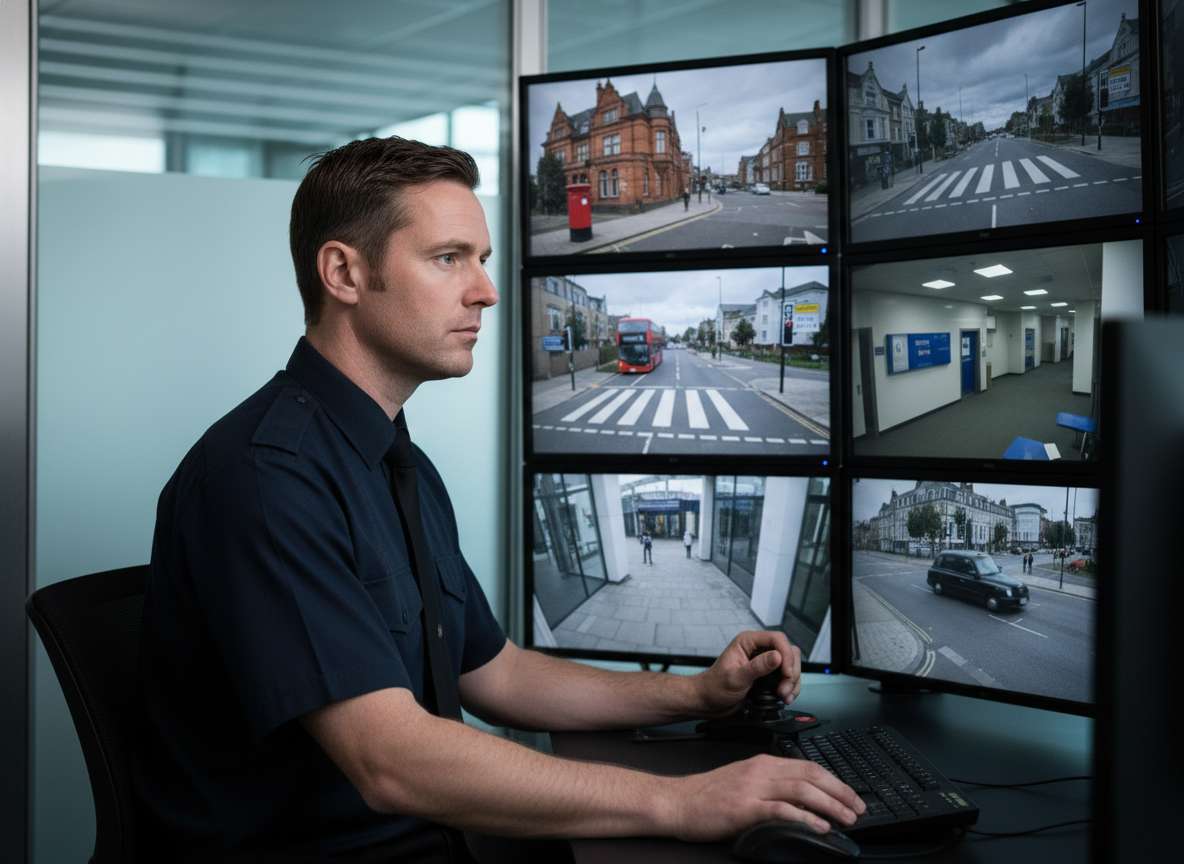
Possibly. After the Manchester Arena Inquiry, the Home Office ran a 12-week consultation from 18 December 2025 to 12 March 2026. It asked about licensing in-house security staff, with options including extending licensing to in-house CCTV operators only, to CCTV operators and security guards, and to further roles.
The Home Office said it had no preferred option, and at the time of writing GOV.UK says it is still analysing feedback. Until a decision is published, the current rules apply.
Frequently Asked Questions
Only if you’re supplied under a contract for services and you use CCTV to identify people or monitor their activities to guard premises against disorder or damage, or people against injury or assault. Viewing recorded footage counts.
It covers CCTV used to guard against unauthorised access or to protect property from damage or theft. CCTV used to guard against disorder or assault needs the CCTV licence.
Yes. Public space surveillance (PSS) is the SIA’s official name for the CCTV licence.
£204 for 3 years, plus the cost of your training course.
Not in a role that needs a licence. Wait until your licence is granted.
Ready To Get Your CCTV Licence?
If your role involves contracted CCTV work, the licence isn’t optional. Find a CCTV operator course near you and get qualified in 3 days, then see our CCTV licence page for the next steps.