



The Security Industry Authority has published new FOI data on how many foreign nationals have been issued security guard licences in the UK. It’s a small release with big implications for operatives, for employers, and for anyone renewing an SIA licence in the coming months.
Here’s what the numbers say, why they matter, and what you need to check before your next shift.
What the SIA Figures Actually Show
The FOI response confirms what most people in the industry already suspected: a meaningful share of the UK’s security guard licences goes to foreign nationals. Between 1 September 2019 and 30 April 2026, the SIA issued 25,299 security guard licences to foreign nationals, according to data correct as of 16 June 2026.
Two things worth knowing before you take that figure at face value. It’s a count of licences, not people — someone who renewed or re-applied during that window may account for more than one licence in the total. And it’s a licences-issued total over a roughly seven-year window, not a live headcount of everyone currently holding a security guard licence today.
The headline point isn’t the exact number; it’s the reminder that the UK’s frontline security workforce is genuinely international. That has always been true in London, Manchester, Birmingham and other big city centres. The data just puts a figure to it.
Recommended Reading: Working In Security As An Immigrant
Why This Matters Right Now: eVisas and the End of BRPs
The timing is important. In parallel with Home Office announcements earlier this month, the government has continued rolling out the switch from Biometric Residence Permits (BRPs) to eVisas. Physical BRP cards issued before 2025 have largely expired, and status is now checked digitally through a UKVI account.
For SIA operatives and their employers, that changes the mechanics of proving the right to work. The document in your wallet may no longer be the document that counts.
What the SIA Already Checks
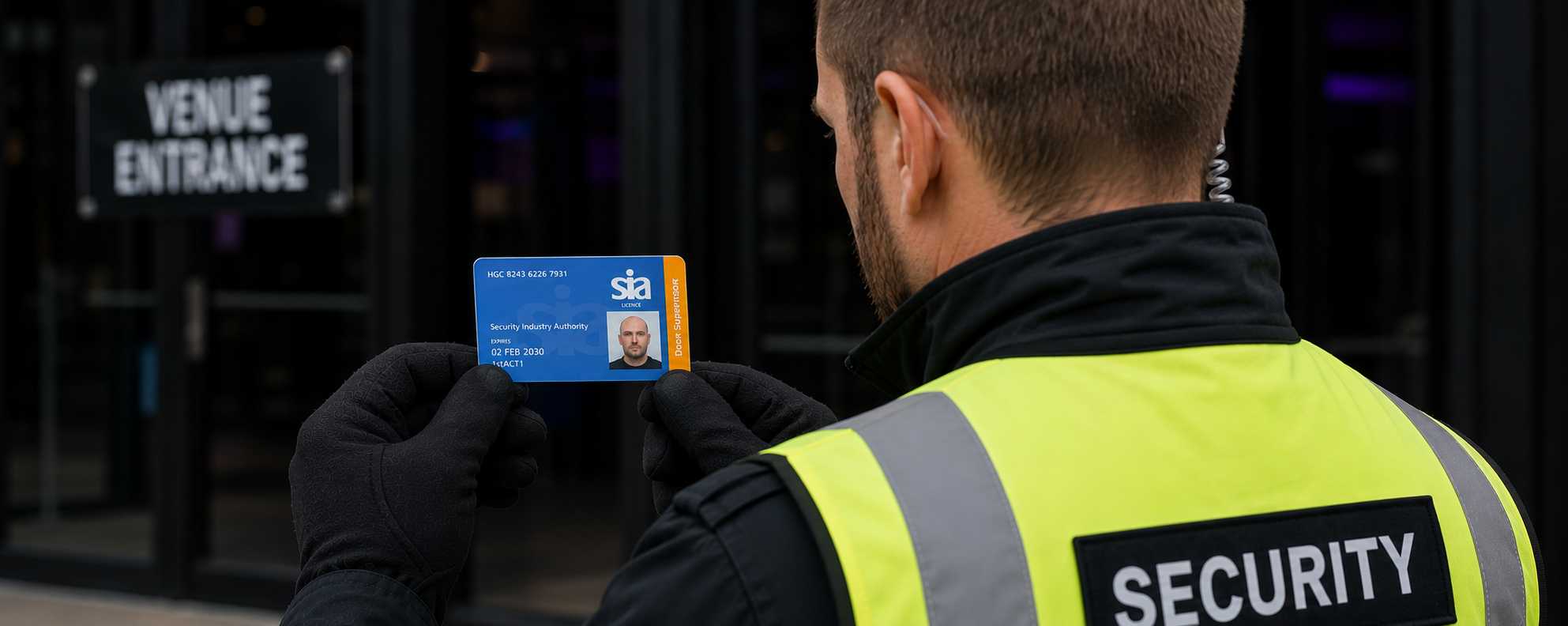
When you apply for or renew an SIA licence as a foreign national, the SIA runs a right-to-work check as part of the process. The SIA has confirmed it checks all front-line licence applicants for the right to work, and will not issue a front-line licence to anyone who doesn’t hold it. That includes:
- Confirming your immigration status permits paid employment in the UK
- Verifying any restrictions on hours or type of work (relevant for student visas)
- Cross-checking your identity documents against Home Office records
The SIA has been clear for years: if your right to work lapses, your licence is at risk. That hasn’t changed. What has changed is how that check gets done.

What Employers Must Verify Before Deploying Staff
This is where a lot of security firms are getting caught out. Holding a valid SIA licence is not the same as having a current right to work. The two checks are separate legal duties. Deploying an operative with a valid badge but expired status can still trigger a civil penalty — now up to £60,000 per illegal worker for repeat breaches.
Before rostering a foreign-national operative, employers should:
- Run an online right-to-work check using the Home Office share code service. The operative generates a share code from their UKVI account which can be verified on gov.uk.
- Record the check. Save the PDF confirmation. Keep it for two years after employment ends.
- Diary the expiry date. If the operative has time-limited leave, employers must repeat the check before it expires.
- Verify more than just the SIA licence alone. The badge shows they were compliant on the day they applied. It doesn’t prove ongoing status.
What Operatives Should Do
If you’re a foreign national working in security, take five minutes to make sure your UKVI account is set up and your details are current. When an employer asks for a share code, you should be able to generate one on your phone in under a minute.
If you’re due to renew your licence, expect the SIA to lean more heavily on digital status checks. Any mismatch between your passport, your UKVI record and your licence application will slow things down — and in some cases stop the renewal entirely.
The Bigger Picture for the Security Industry
The SIA’s FOI release is a quiet reminder that the UK security industry runs on international labour. Door supervisors, CCTV operators, retail security officers — a serious chunk of the workforce started their careers on a work visa, a student visa, or as a settled migrant.
That’s not a problem to solve. It’s a workforce to protect. Sloppy right-to-work admin doesn’t just risk fines — it costs experienced operatives their jobs when a badge gets suspended over a paperwork gap that could have been fixed in a phone call.
With eVisas now the default and BRPs on the way out, the smart move for every security firm is the same: audit your foreign-national staff files this month. Refresh any check older than two years. Diary the expiries. If your own licence renewal is coming up, our SIA licence renewal checklist covers everything you need to get it right first time.
If you get that right, the SIA’s numbers are just interesting reading. Get it wrong, and they’re the beginning of a much harder conversation.