



The Duke and Duchess of Sussex are back in the news for their security arrangements. Ravec is reviewing whether they still qualify for publicly funded police protection now that they’ve moved to the UK full-time. But most of the coverage glosses over a distinction worth actually understanding: state-funded protection and commercial close protection aren’t different tiers of the same thing. They’re two completely separate systems, run by different people, under different rules, and only one of them is a career a security professional can actually build.
Two Completely Different Jobs
State protection (the kind Ravec decides on) is delivered by the Metropolitan Police’s Protection Command, specifically its Royalty and Specialist Protection branch. These are armed police officers with powers of arrest, not private contractors, and the role isn’t open to civilians. It exists for a small, defined list of people: senior royals, the Prime Minister, and others the state has assessed as facing a genuine threat.
Everyone else — however wealthy, well-known, or exposed to risk — arranges their own security on the commercial market. That’s where the UK’s SIA-licensed close protection industry comes in, and it’s a much bigger, more varied field than most people expect:
- Executive protection for corporate principals and their families
- High-net-worth private clients, often with residential security teams
- Media, sports, and entertainment figures on tours or public appearances
- Visiting foreign clients who don’t qualify for state protection
- Journalists, executives, and NGO staff working in hostile environments
One detail is worth being clear on, because it comes up constantly: none of this involves firearms in the UK. Private security operatives cannot legally carry weapons here, full stop — that’s a hard legal line, not a matter of licensing tier or cost. Commercial CP operators in Britain work unarmed, and that’s the single biggest practical difference between the domestic industry and CP work overseas.
What A Close Protection Licence Actually Lets You Do
To work commercial CP in the UK, you need an SIA Close Protection licence. To get one, you complete a Level 3 Close Protection training course, pass identity and criminality checks, and apply through the SIA.
The Level 3 course is the industry’s entry point, and it’s a serious commitment; typically 16 to 19 days, covering threat and risk assessment, route planning and reconnaissance, foot and vehicle formations, venue security, surveillance awareness, conflict management, and CP-relevant first aid.
Recommended Reading: Guide to Close Protection Training in the UK
Two things worth being clear on before you book anything:
- The licence lets you work as a CP operative for a licensed employer. It doesn’t, on its own, make you a team leader, and it doesn’t qualify you to run a detail.
- It’s a domestic licence for domestic work. Hostile environment roles need additional qualifications, and usually prior operational experience, on top of the base Level 3 course.
The Realistic Pathway From Door Work Into CP
A lot of people in CP came through the military or police. Plenty didn’t. Many working CP operators started on the door, and if you’re already a licensed door supervisor, the honest version of that pathway looks like this:
- Build a genuinely clean track record on the door. CP employers ask for references, and incident logs, reliability, and conflict management under real pressure are all directly relevant experience — not a detour from CP work, but preparation for it.
- Add useful side skills. An advanced driving qualification, a proper first aid certificate, and a clean licence go a long way. Languages help too.
- Do the Level 3 CP course with a serious provider. Ask how many hours are genuinely in-person, who the instructors are, and what their placement record looks like. Cheapest is rarely best here.
- Expect to start on residential security or event work, not personal escort roles for a principal. New CP licence holders build up to that; they don’t walk straight into it.
- Network properly. Most CP work isn’t advertised. It comes through team leaders and operators who’ve worked with you and are willing to vouch for you.
Coming from the military rather than the door? The pathway shifts slightly; our guide for ex-forces starting a security career covers how that background translates into CP work specifically.
If you’re weighing this move against staying in your current role, our guide on transferring your SIA licence between security roles is worth reading first. CP licences can’t be topped up from another category, so it’s a genuine investment decision, not a quick add-on.
The Takeaway
Even at the very top end of the industry, security decisions come down to unglamorous practicalities: routes, timings, and risk assessments, not the cinematic version most people imagine. That’s just as true for a corporate principal’s residential detail as it is for anything reported about the Sussexes this week.
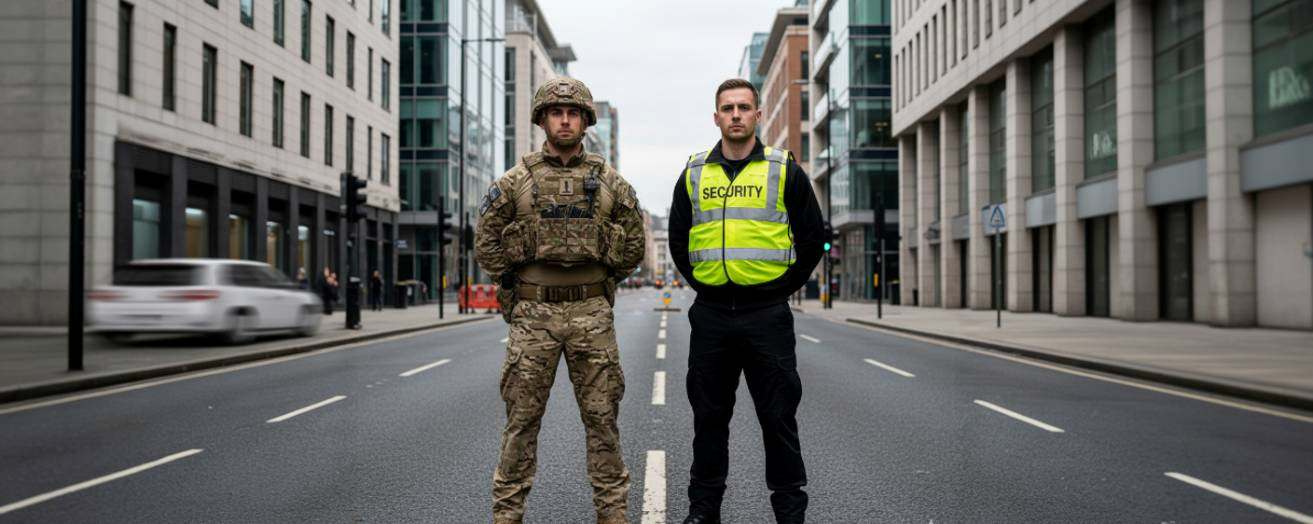
The clearer lesson for anyone in the industry is the line between the two systems: the state protects a small, defined list of people through armed police officers, and everyone else buys security on the open commercial market — a market that a Level 3 licence is a genuine, well-trodden route into, whether you’re coming from the military, the police, or the door.
If you’re already licensed and ready to make that move, you can book your Close Protection training course and start working toward your SIA licence directly.