


I watched a short clip recently of Lord Sarfraz talking about robots.
He wasn’t hyped.
He wasn’t defensive.
He wasn’t trying to impress anyone.
He was calm.
His point was simple: don’t be scared.
Robots are coming. Not in a sci-fi way. Not marching down the street. In quiet, practical ways. Picking fruit. Supporting agriculture. Restarting manufacturing in the UK. Doing the kind of repetitive, physical work that’s hard to staff, hard to sustain, and hard to scale.
They don’t take holidays. They don’t need GP appointments. They don’t bring families with them. They’re not migrants.
They’re tools.
And tools have always changed the world.
What struck me wasn’t the technology. It was the tone. The lack of fear. The lack of drama. Just acceptance — and curiosity.
We’ve Been Here Before
History tells us something very boring but very true: civilisations that resist technology don’t preserve anything. They just fall behind.
Every generation thinks this time is different. That this technology is dangerous. That it will take something essential away from us.
The printing press. Electricity. Cars. Computers. The internet.
Same story. Same fear. Same outcome.
Technology Isn’t a Choice — It’s a Force
Kevin Kelly once described technology as a force of nature. Not something we vote on. Not something we opt out of. A force — like evolution. Or gravity.
And that makes sense. Because who builds technology?
Humans do.
We didn’t stop evolving. We just changed how we do it. Instead of growing claws or sharper teeth, we built tools. We extended ourselves. A hammer is an extension of the fist. A telescope extends the eye. A computer extends the brain.
AI is just the next extension. It’s not anti-human; it’s deeply human.
Which brings me to security.
The Next Chapter For Security
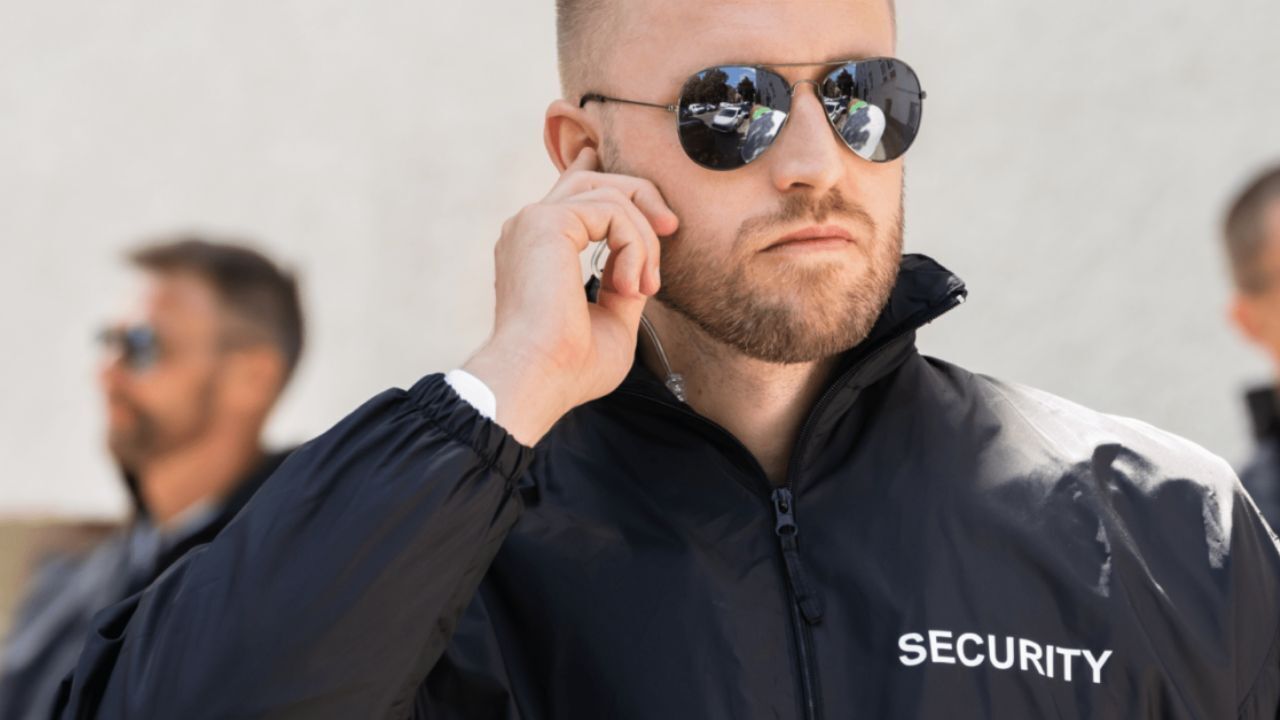
I don’t believe security officers are going to disappear. I’ve never believed that. If anything, I think the opposite is true. But the idea of the lone, under-equipped, reactive guard? That era is over.
The future is the augmented security officer. A human being — but with better tools. Better information. Better awareness. Faster context. Less guesswork.
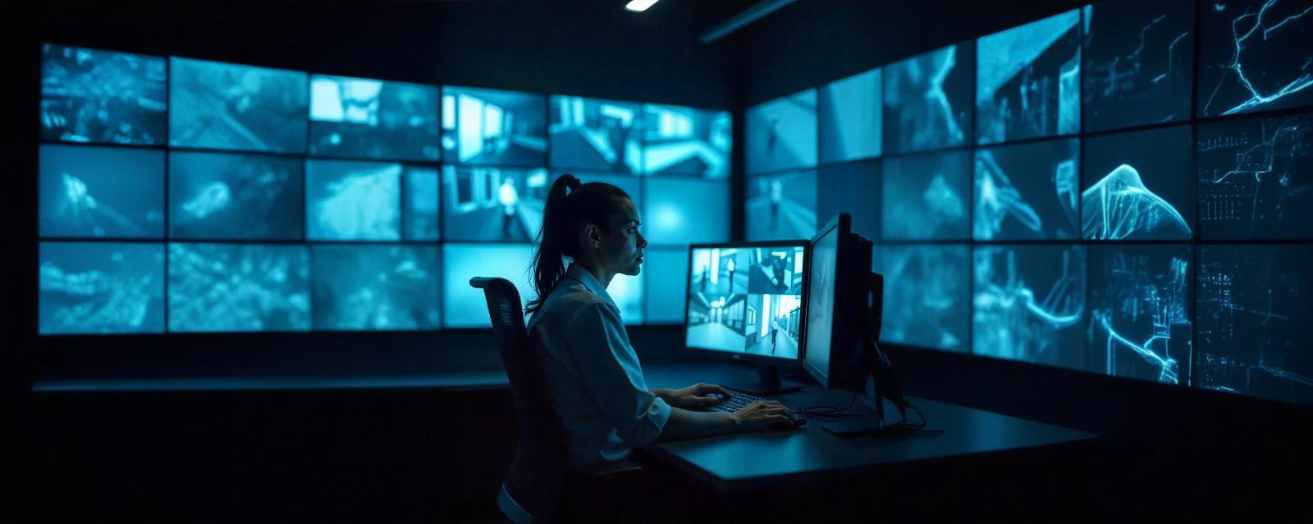
I can easily imagine officers using AI-assisted systems. Real-time intelligence. Augmented eyewear that highlights risk. Predictive alerts instead of panicked radio calls after something has already happened.
Not Terminator. More R2-D2.
Technology doing what it’s good at — pattern recognition, repetition, scale. Humans doing what only humans can do — judgement, empathy, de-escalation, presence.
Because security isn’t really about force.
It’s about presence.
And presence is human.
Recommended Reading: Future of Physical Security
Safety Isn’t Just Measured — It’s Felt
I spend most of my waking hours thinking about efficiency. Not in a cold way. In a human way.
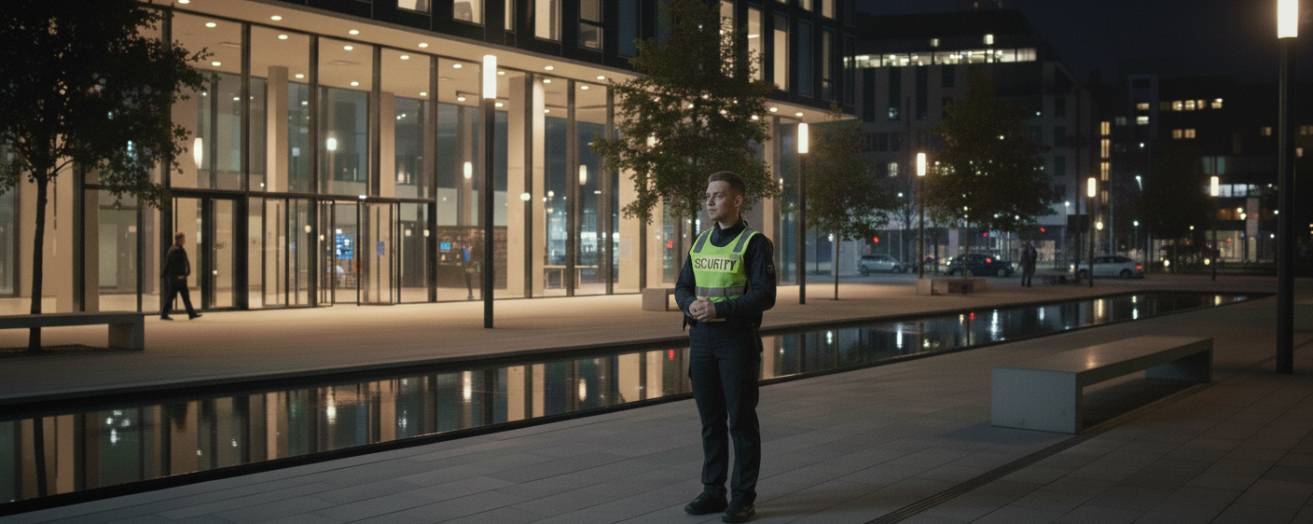
How do we make the world safer? Not just statistically safer — but felt safer.
Because safety has two sides. There’s the objective side: fewer incidents, faster response, better outcomes. And then there’s the subjective side: how safe people feel in their homes, on their streets, in their communities.
Technology helps with both. But only if it’s designed with intent. Fear-based security models — endless alarms, sirens, cameras everywhere — optimise for anxiety. They tell people something bad is always about to happen.
A better model says something quieter: You’re not alone.
If something happens, someone will respond. And they’ll be informed, equipped, and human.
That’s the future I’m interested in.
Recommended Reading: Can AI Robots Replace Door Supervisors?
Where We Stand
At Get Licensed, we don’t see technology as a threat to the security industry. We see it as a responsibility. A way to raise standards. A way to remove drudgery. A way to give professionals the tools they deserve.
Technology doesn’t remove responsibility. It sharpens it. It doesn’t replace dignity. It restores it. The real question isn’t whether robots, AI, or automation are coming. They are.
The question is whether we meet them with fear — or with maturity. Whether we use them to make work better. Communities calmer. Security more professional. Response more human.
Lord Sarfraz is right. There’s nothing to be afraid of. The future of security isn’t less human. It’s human, supported.
And if we get that right, we don’t just build safer systems — we build a more confident society.