

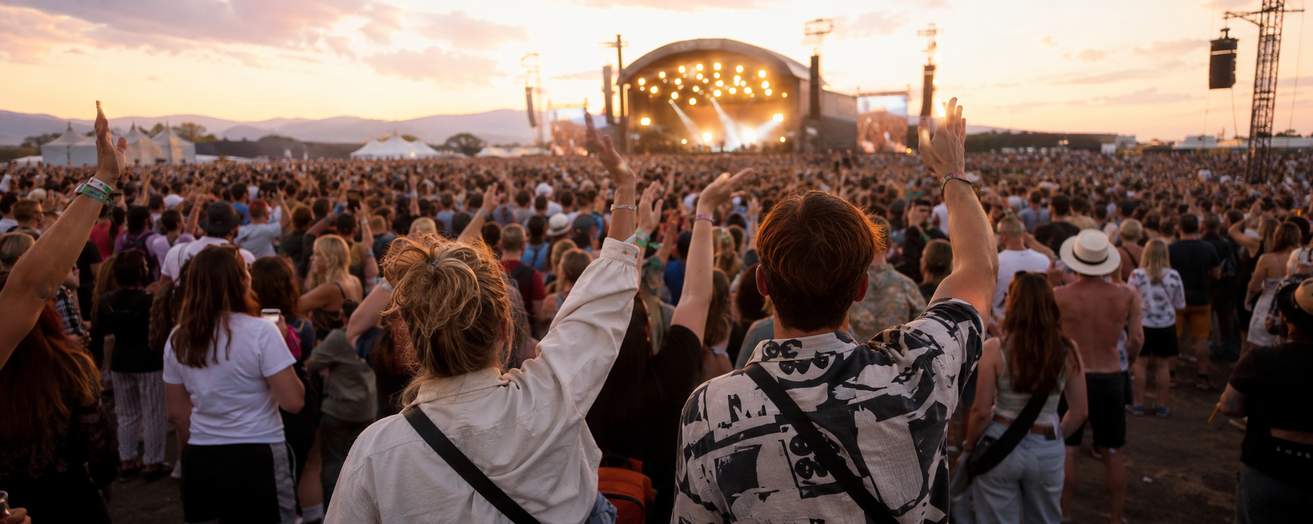


The UK festival season is in full swing. Glastonbury returns next year, but Reading, Leeds, Creamfields, and dozens of smaller events are still ahead, and millions of people will be at them over the next few weeks.
Festivals are generally safe, well-managed events. But they create a specific combination of conditions like sustained heat, dense crowds, alcohol, and temporary infrastructure that concentrates a handful of risks in ways that catch people off guard. Festival safety isn’t about avoiding festivals; it’s about knowing what to prepare for. Not because they’re dangerous places, but because the risks are different from everyday life, and most people don’t think about them until they’re already in the middle of one.
This isn’t a generic safety checklist. It’s what the data actually shows.
Key Takeaways
- 1 in 10 festival-goers lose or have their phone stolen. London events like Wireless see theft rates more than five times the national average.
- Heat exhaustion is the most underestimated risk. At Glastonbury 2022, heat-related conditions were among the top medical presentations. The sun is strongest between 11 am and 3 pm (exactly when most people are at the main stage).
- Spiking doesn’t always look like someone passing out. Muscle stiffness, jaw locking, and sudden confusion are common symptoms. Don’t wait to see if it passes.
- Crowd crush gives warning signs before it becomes dangerous. Knowing what to look for and what to do makes a real difference.
- Mobile networks fail at festivals. Agree on a physical meeting point before you split up.
Prepare for the Heat
This is the risk people underestimate most, and the data backs that up. A peer-reviewed study of Glastonbury 2022 found that heat and environment-related conditions were among the most common medical presentations across the five-day event. The Isle of Wight Festival medical team reported a 15% rise in heat-related incidents in 2023 compared to the previous year, and had expected it to be even higher.
What makes it catch people out is the combination: you’re standing in a field for eight hours, probably drinking, possibly not eating enough, and the sun is at its strongest between 11 am and 3 pm, which is exactly when most people are packed in front of the main stage.
What most people don’t know: Alcohol raises your core body temperature. That means you can feel fine, even cold, while your body is actually overheating. By the time you feel thirsty, you’re already dehydrated. Thirst is a late signal, not an early one.
What To Do:
- Drink water consistently throughout the day, not in large amounts when you suddenly feel thirsty
- If you’re drinking alcohol, have water alongside it, not instead of it later
- Use the 11 am–3 pm window to find shade and rest, not to stand in an exposed crowd
- Find the water refill stations on the site map when you arrive; most festivals have them dotted around
Warning signs to act on immediately: Dizziness, confusion, stopping sweating despite the heat, or a rapid heartbeat. These are signs of heat exhaustion moving towards heatstroke. Get to the first aid tent — don’t sit it out.

Protect Your Valuables
Over 1 in 10 UK festival-goers report losing or having their phone stolen at events, according to research by Uswitch. That’s around 2.15 million devices lost, damaged or stolen across the festival circuit each year. Research using police data found that London events like Wireless, BST Hyde Park, and Summertime Ball see theft rates of 11.5 per 1,000 attendees — more than five times the national festival average of 1.9.
Phones are the primary target because they’re valuable, easy to spot, and easy to grab in a crowd. The most common method is simple opportunism: a phone in a back pocket, an open-top bag, or left charging in an unattended tent.
What most people don’t know: Leaving your phone charging in your tent while you’re at a stage is one of the highest-risk things you can do. Thieves work campsites specifically during headline sets, when they know most people are away from their tents.
What To Do:
- Keep your phone in a cross-body bag that sits in front of you, or a zipped inside pocket, not a back pocket or open bag
- Don’t leave anything valuable in your tent unattended, especially during headline acts
- Enable location tracking before you leave (Find My iPhone or Google Find My Device)
- Consider taking an old or cheap handset if you have one — it’s a genuine option and removes the anxiety entirely
If your phone is stolen, report it to festival security for a crime reference number and contact your network provider to block the IMEI. Our guide to phone theft in the UK covers what happens to stolen phones and how to act fast.
Be Cautious of Drink Spiking
Research by Drinkaware found that nearly one million UK adults were spiked in the past year, and the vast majority of incidents go unreported. Spiking happens at festivals, and it’s more common than most people assume.
What most people don’t know: Spiking doesn’t always look like someone quietly passing out. Different substances produce very different effects. Muscle stiffness, jaw locking, sudden confusion, or feeling far more intoxicated than the amount you’ve drunk should explain — these are all documented symptoms. A video of 18-year-old Millie Taplin went viral, showing exactly this: she was conscious throughout, but rigid and unable to move. That’s what spiking can actually look like.
Symptoms typically appear within 5 to 20 minutes of ingestion. Some substances, particularly GHB, become undetectable within a few hours — which is why acting quickly matters.
What To Do:
- Never leave your drink unattended, and never accept an opened drink from someone you don’t know
- If you need to use the toilets, finish your drink first or take it with you
- Many festival bars and welfare tents now stock protective drink covers (small caps that fit over cups). Use them if they’re available
- If something feels wrong for you or a friend, get to the medical tent immediately. Don’t wait to see if it passes
For a detailed breakdown of what spiking looks like and exactly what to do, including the new Home Office-backed testing scheme now available at some venues, read our full guide on how to tell if your drink has been spiked.
Know How to Navigate Crowds
Most festivals are well-managed. Crowd incidents are rare and don’t typically pose as festival safety risks. But crowd crush gives warning signs before it becomes dangerous, and knowing what they are is genuinely useful.
The warning signs of a dangerous crowd build gradually:
- People around you can no longer move their arms freely
- The crowd starts swaying in waves, what crowd safety experts call the “field of wheat effect”
- You can feel pressure on your chest that makes it harder to breathe
- You lose the ability to choose your direction of movement
By the time it feels dangerous, it’s already late. The time to act is when you first notice the crowd becoming uncomfortably dense — not when you’re already struggling.
What To Do:
- When you arrive, spend five minutes finding the nearest emergency exits, medical tents, and welfare areas on the site map. Most people don’t do this. It takes five minutes and matters if you need it.
- If the crowd is becoming too dense, keep your arms raised and bent at the elbows to protect your ribcage, and move diagonally towards the edge rather than pushing directly against the flow
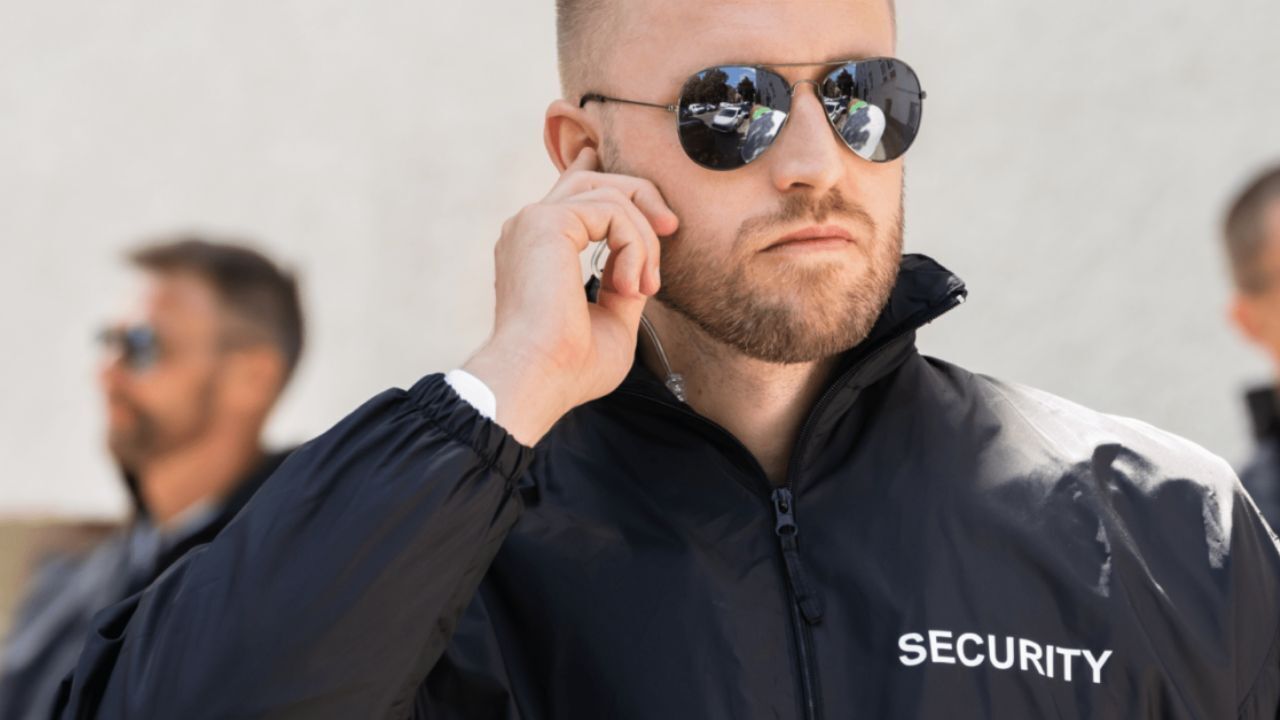
- If you’re near a barrier and feeling crushed, communicate with the security staff at the front — they can pull people over the barrier to safety
- If you see someone in distress, alert the nearest security officer rather than trying to intervene yourself

Plan Ahead With Your Group
Mobile networks at festivals are notoriously unreliable. With tens of thousands of people trying to connect to the same local masts, you often can’t make calls or send messages at peak times. Research from Uswitch found that over half of festival-goers (52%) say phone reception is still not reliable at UK festivals.
What To Do:
- Agree on a specific, easy-to-find meeting point (for e.g. a named stage entrance, a food stall, a landmark on the site map) and a set time to regroup before you split up
- Make sure everyone knows the location of the medical tent and the welfare area
- If anyone in your group has a medical condition, make sure at least one other person knows about it and knows what to do
- Take a photo of your festival wristband and email it to yourself — some festivals can reissue wristbands with proof of purchase if yours is lost or stolen
If Something Goes Wrong
Festival safety doesn’t end when something goes wrong. Almost every festival has a welfare tent and a medical team on site. If something goes wrong, for e.g. a health issue, a theft, or something more serious, that’s your first port of call. Festival security and welfare staff deal with these situations regularly and are there specifically to help.
If you’re the victim of a crime, ask for a crime reference number. You’ll need it for any insurance claim and for follow-up with police.
For a broader look at staying safe in public spaces across the UK, including what to do after a theft, how to spot scams, and personal safety advice, our UK Safety Guide covers the full picture.
Enjoy the music. Just go prepared.