



In April 2026, a video of 18-year-old Millie Taplin went viral again, showing her rigid, jaw locked, unable to move after accepting a drink from a stranger on her birthday night out. She was conscious throughout. She just couldn’t control her body. Here’s what spiking actually looks like, and what to do if it happens to you or someone with you.
Millie’s case happened in 2021, but it’s resurfacing now because it captures something most people can’t picture until they see it: spiking isn’t someone quietly passing out. It can look strange, sudden, and frightening — and it can happen after just a few sips. According to Drinkaware and Anglia Ruskin University research published in March 2026, nearly one million UK adults were spiked in the past year. Only 1 in 4 reported it. This piece covers what to look for, what not to dismiss, and exactly what to do. For the broader picture of staying safe on a night out, see our UK safety guide.
What Spiking Actually Does to the Body
Different substances produce different effects, which is part of why spiking is hard to spot — and easy to mistake for ordinary drunkenness. Symptoms typically appear within 5 to 20 minutes of ingestion. The most commonly used substances in UK spiking cases include GHB, Rohypnol, ketamine, and benzodiazepines, though alcohol itself can be the spike — spirits added to a soft drink without the person’s knowledge.
Common physical effects include:
- Sudden dizziness or loss of balance out of proportion to what’s been drunk
- Confusion or difficulty speaking (slurred words that come on unusually fast)
- Nausea and feeling faint
- Blurred or double vision
- Muscle stiffness or involuntary movements (as in Millie Taplin’s case, where her jaw locked and her hands contracted into claws)
- Numbness, particularly in the face or limbs
- Rapid, unexpected loss of consciousness
The key signal is disproportionality — feeling far more intoxicated than the amount drunk would normally cause, or coming on unusually quickly. If someone has had two drinks and is behaving like they’ve had ten, that’s the red flag.
Some substances, particularly GHB, can become undetectable within just a few hours. Don’t wait.
Spiking Isn’t Always in a Drink
Most people picture spiking as something dropped into a glass. The reality is broader:
- Injection spiking — where a needle is used to administer a substance directly — has been reported in UK venues since 2021 and continues to be documented. Symptoms may appear slightly later and without any change in taste to prompt suspicion, which makes it harder to identify in the moment.
- Vape or food spiking is less common but has been flagged by Anglia Ruskin University researchers as an emerging and underreported form — drugs inhaled or ingested without the victim realising anything has been added.
- Extra alcohol added to a non-alcoholic or low-alcohol drink counts as spiking under UK law. Less dramatic, but it can impair someone significantly beyond what they expected or consented to.
What to Do If You Think You’ve Been Spiked
Don’t wait to see if it passes. The window for testing narrows quickly, and some substances are undetectable after a few hours.
If You’re at the Venue
- Tell a friend immediately; don’t try to manage it alone
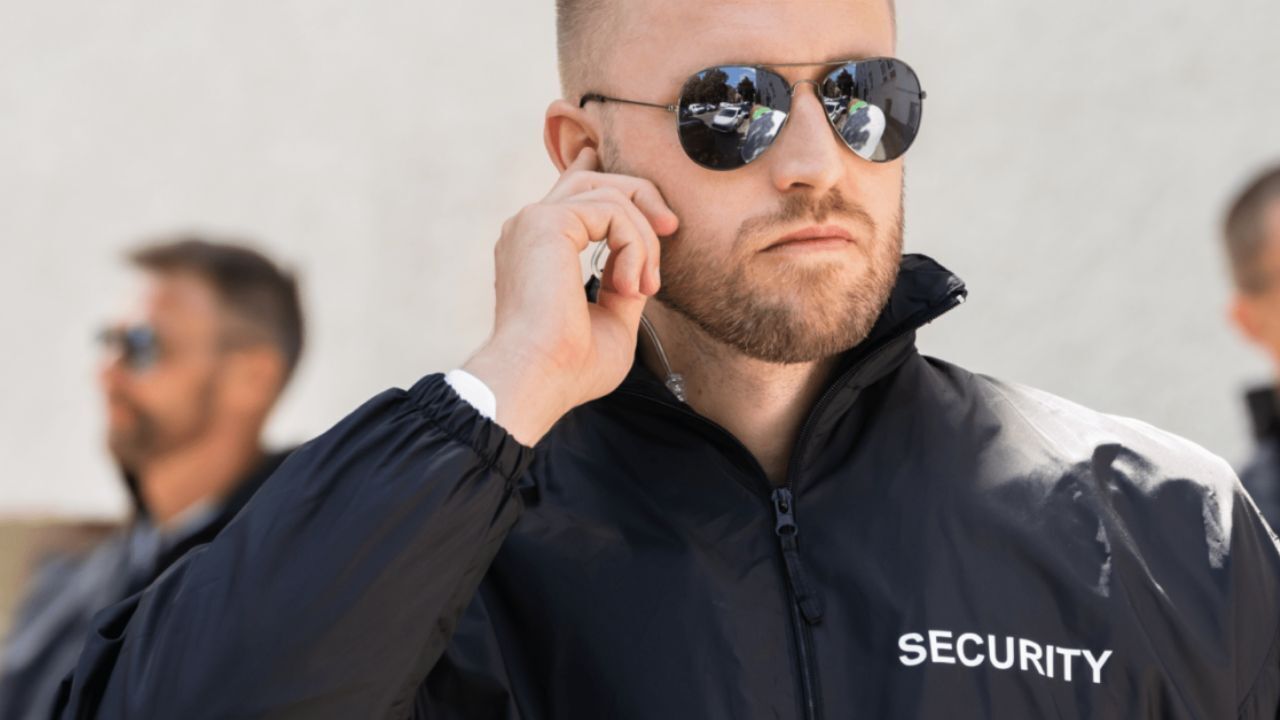
- Get to venue security or bar staff straight away. SIA-licensed door supervisors are trained to handle this. Good venues have procedures specifically for suspected spiking
- Sit down somewhere safe and visible
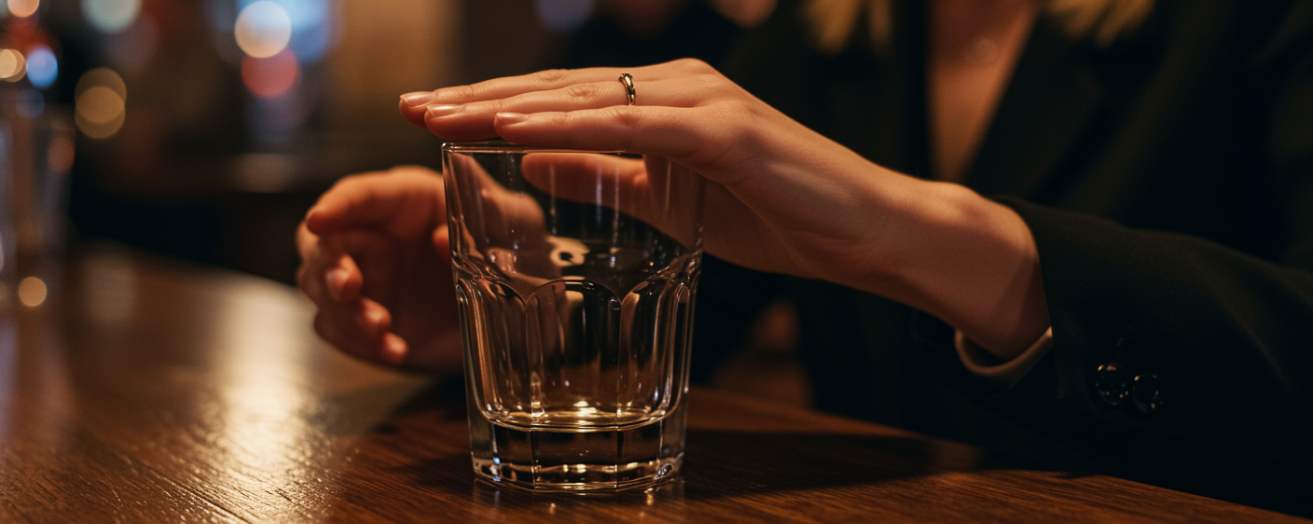
- Don’t drink anything else, including water from a stranger
- Don’t leave with anyone you don’t know and completely trust
If Symptoms Are Severe
Call 999. If someone has lost consciousness, is struggling to breathe, or cannot be woken, this is a medical emergency. Put them in the recovery position and call immediately.
Reporting and Testing
Report to the police as soon as possible, ideally the same night. From April 2026, a new Home Office-backed testing scheme means that after reporting a suspected spiking incident, victims can access multi-drug urine test kits from partner venues, hospitals, and health centres. The crime reference number given when you report is needed to access a kit. More details are available via your local police force.
Even if you’re not sure you were spiked, report it. Police have said explicitly that uncertainty is not a reason not to come forward, and reports help build the picture of where and how spiking is happening.
Why Most People Don’t Report — and Why It Matters
The Drinkaware research found the two main reasons people didn’t report: they couldn’t remember what had happened clearly, and they didn’t think police would take action.
Both are understandable. But both also mean the majority of incidents go unrecorded, which makes it harder for venues and police to understand where spiking is concentrated and take action. Nottinghamshire Police — running the new testing scheme — stated specifically that reports are taken seriously even with incomplete memories, and that your prior alcohol consumption doesn’t affect whether your report is treated as legitimate.
If you’ve experienced spiking or something that felt like it, Victim Support and Rape Crisis England & Wales both offer free, confidential support regardless of whether you’ve reported to the police. You don’t need a crime reference number to access either service.

Recognising It in Someone Else
If you’re watching a friend and something feels wrong, trust that instinct. The signs to act on:
- They’re far more affected than the amount they’ve had should explain
- Sudden change in behaviour — confusion, distress, or unusual stillness
- Difficulty standing, speaking, or keeping their eyes open
- They mention their drink tasted strange or felt off
Don’t leave them alone. Don’t let them leave the venue with someone they’ve just met, even if they say they’re fine. Get them to security, get medical help if needed, and stay with them until you know they’re safe. For women specifically, our women’s safety guide covers the additional risks and tools that apply after dark.
Spiking is illegal under existing UK law, including the Offences Against the Person Act 1861 and the Sexual Offences Act 2003, and carries up to 10 years in prison. It is taken seriously. Report it.
If you or someone you know has been affected by spiking or sexual assault, Rape Crisis England & Wales can be reached on 0808 500 2222. Victim Support is available on 0808 168 9111. Both lines are free and confidential.