



The SIA has proposed a new independent English language requirement test for people applying for a security licence. Most of the coverage has treated this as a brand-new requirement. It isn’t. There’s already an English standard for SIA training, and it’s been there for years. What’s on the table is a change to how you prove you meet it.
Here’s the difference, and what it means if you’re about to book a course.
Key Takeaways
- There is already an English language requirement for SIA licence-linked training: B2 on the CEFR scale, or an accepted equivalent.
- Right now your training provider checks that evidence before putting you forward, and keeps the record for at least three years.
- The SIA is proposing an additional, independent test, plus more standardised testing by awarding organisations.
- The level, format, test provider and pass mark are not yet confirmed — that’s part of what the consultation is asking about.
- The consultation closes at 11:59 pm on Friday 23 October 2026. Final specifications are due in winter 2026, with new qualifications launching in 2027.
- Nothing changes for your current licence. If you’re booking a course now, you’re booking under the existing rules.
What The Requirement Is Today
To take an SIA licence-linked qualification, you need language skills in reading, writing, speaking and listening equivalent to B2 on the Common European Framework of Reference. This standard has been in place since 1 April 2021, when the SIA overhauled its licence-linked qualifications following its own public consultation the year before.
In practice, the SIA accepts a range of evidence for that. Any one of these does the job:
- B2 level qualification from the Home Office’s list of recognised English tests
- B2 CEFR
- ESOL Level 1 (England, Wales and Northern Ireland)
- ESOL at SCQF Level 5 (Scotland)
- Functional Skills Level 1 in English
- SQA Core Skills in Communication at SCQF Level 5
- Essential Skills Wales Communication Level 1
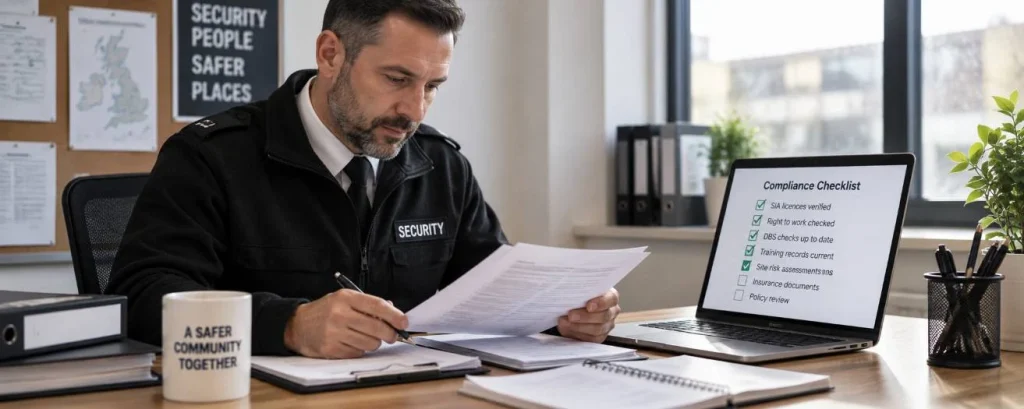
Assessment can be carried out in English or Welsh, and the responsibility currently sits with the training centre. They have to satisfy themselves that you have sufficient language skills across all four competencies before they enrol you, and hold that record for a minimum of three years.
That last point is the one worth understanding, because it’s the thing the SIA is proposing to change.
What’s Being Proposed
The SIA’s consultation proposes “a new, additional, independent English language test“, introduced alongside more standardised testing from awarding organisations. The stated aim is to “ensure learners have the level of functional English required to safely conduct their duties”.
Read that carefully. The word is additional. This isn’t replacing the B2 standard — it’s adding an independent check on top of a system where, at the moment, verification happens locally at the training centre and varies between them.
The SIA’s own skills research found 81% of survey respondents considered communication skills important to security work, which is the evidence base it’s leaning on.
| Now | Proposed | |
|---|---|---|
| Standard | B2 CEFR or accepted equivalent | Not yet confirmed |
| Who verifies it | Your training centre, before enrolment | An independent test, plus standardised awarding organisation testing |
| Evidence accepted | ESOL, Functional Skills, Home Office-recognised tests and others | Not yet confirmed |
| Record keeping | Training centre, minimum 3 years | Not yet confirmed |
The blanks in that right-hand column are real. The test provider, the format and the pass standard haven’t been decided — which is precisely why there’s a consultation rather than an announcement.
Thinking about getting licensed? The current rules still apply, and courses running now are unaffected. Our complete guide to getting your SIA licence walks through the full process, current requirements included.
What This Actually Means For You
If you already hold a licence: nothing changes. This affects licence-linked qualifications, and the proposals are aimed at people taking training. Your existing licence runs to its expiry date as normal.
If you’re booking training now or in the next few months: you’re under the current rules. New qualifications aren’t expected until 2027, after final specifications land in winter 2026.
If English isn’t your first language and you’re planning to train in 2027 or later: the useful move is to get a recognised qualification on paper rather than rely on a centre’s assessment. Functional Skills Level 1 in English or ESOL Level 1 both meet the current standard; they’re widely available, and they’re yours permanently. Whatever the SIA lands on, holding formal evidence puts you in a stronger position than not holding it — much like keeping proper records for your licence application documents generally works in your favour.
If you think an independent test would be unfair or overdue: the consultation is open to licence holders and the public, not just employers and training providers. You can respond online through the SIA’s survey, or in writing to SIA, PO Box 74957, London, E14 1UG.
Why The SIA Is Looking At This
Communication is the job. A door supervisor refusing entry, a security officer giving a witness account, a CCTV operator talking a colleague towards an incident over the radio — all of it depends on being understood the first time, under pressure, often in noise.
The SIA’s position is that the standard exists but confidence in how consistently it’s applied doesn’t. Whether an independent test is the right fix is a fair argument, and it’s the argument the consultation is for.
Read more about the consultation and what might be changing soon in our blog: SIA consultation 2026

Frequently Asked Questions
No. The proposals concern licence-linked qualifications and training, not existing licences.
Not confirmed. The level, format and pass mark are still open, which is what the consultation is seeking views on.
Not a separate test. There’s an English standard — B2 CEFR or an accepted equivalent — in place since April 2021, and your training centre checks you meet it before enrolling you.
Final specifications are expected in winter 2026, with new qualifications launching in 2027.
Online via the SIA’s consultation survey, or by post to SIA, PO Box 74957, London, E14 1UG. It closes at 11:59pm on 23 October 2026.
Get Qualified Under The Current Rules
The requirements haven’t changed yet, and courses running now follow the existing standard. If you’ve been putting off getting licensed, there’s no advantage in waiting for 2027.
Whether you’re aiming for Door Supervisor training or Security Guard training, book your course today and start your SIA licence application under the rules as they stand presently.