

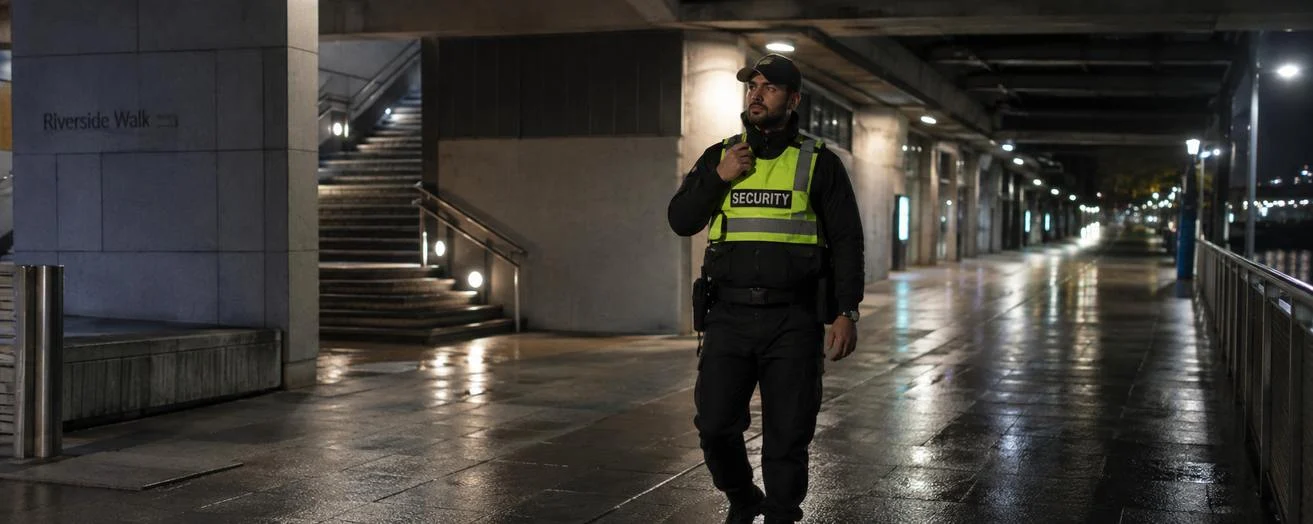



A security team’s alertness, a fast decision, and preserved evidence. Here’s what working officers can take from a case where the basics did the heavy lifting.
In the early hours of 14 March this year, a security team at Canary Wharf noticed a man behaving suspiciously near the station underpass. They stayed alert, then intervened directly to stop him attempting to rape a woman, detained him until police arrived, and helped preserve the evidence that later secured a six-year sentence at Snaresbrook Crown Court, according to the Metropolitan Police’s own statement on the case.
For anyone working a door, a patrol, or a control room tonight, it’s a case worth studying carefully that goes right to the question of when security should intervene, with real respect for the woman at the centre of it.
Before the working practice: a woman was seriously harmed in a public space. Nothing about the officers’ response undoes that. This piece isn’t a celebration; it’s an honest look at what a security team can actually do when things go wrong, so more teams are ready if they ever have to be.
Three Decisions That Shaped The Outcome
Strip the reporting back and it comes down to three decisions the team got right. Each one is trainable. None of them require heroics.
1. They Stayed Alert On Patrol
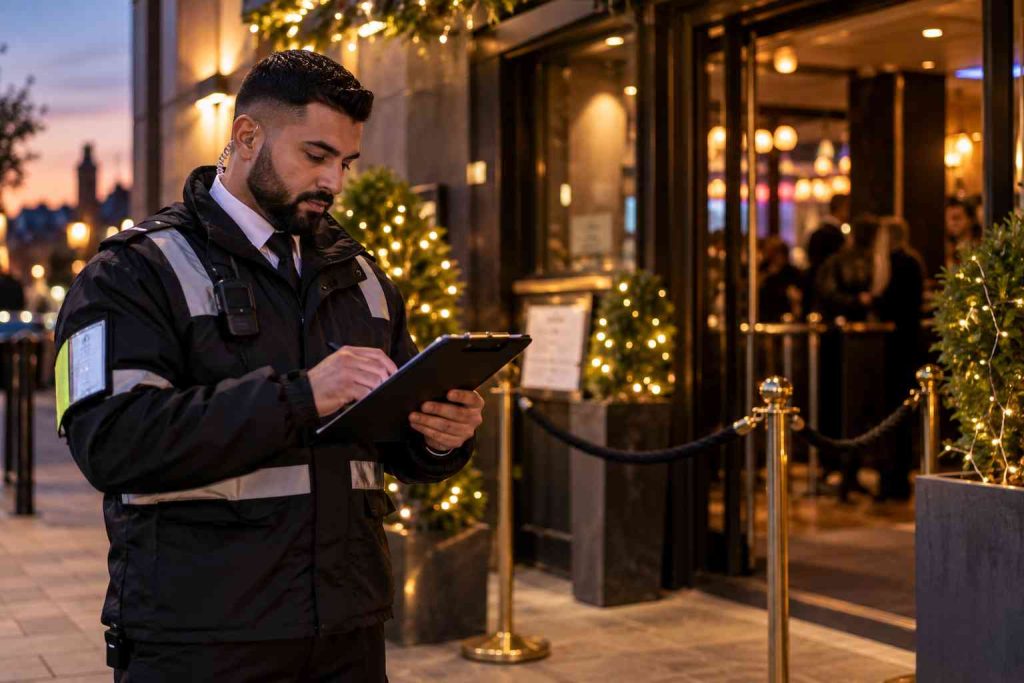
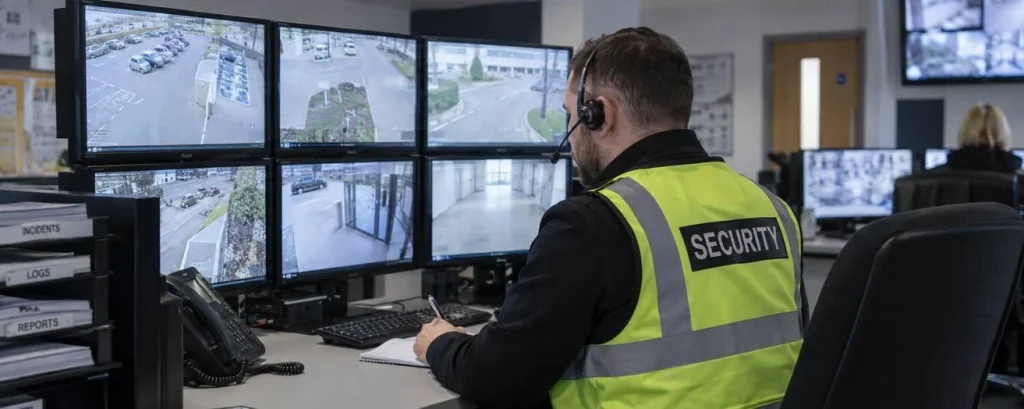
The Met’s account is straightforward: the security team observed the suspect acting suspiciously while on patrol, and intervened when the behaviour escalated into an assault. That’s the core of the job. Loitering near quiet walkways in the early hours is behaviour worth watching closely. Not because every person doing it is a threat, but because the cost of paying attention is nothing, and the cost of not paying attention can be enormous.
If your team’s culture is “nothing ever happens on this site,” that’s the culture that misses the one shift when something does. Our guide to how security officers keep the public safe covers more on what this kind of everyday vigilance actually looks like across the industry.
2. They Moved Fast When It Turned Serious
When the team saw the assault happening, they intervened directly to stop it. In a live attack on a vulnerable person, the standard observe-and-report default has to be weighed against what’s happening in front of you, right now.
The line between watching and acting is a hard one, and it’s worth thinking through before your shift, not during it. Our guide to conflict management training for security officers is a good place to start that thinking.
3. They Detained, Then Handed Over
The team held the suspect at the scene. Police arrived and made the arrest within 30 minutes. The sequence matters: detain, don’t punish. Keep the person secure, keep yourself and any bystanders safe, and hand over cleanly the moment police arrive. Anything beyond that stops being lawful intervention and starts being a problem for you.
Why The Evidence Work Mattered As Much As The Intervention
This is the part that’s easy to overlook in training, and it’s arguably what won the case. The Met’s statement is clear that the victim had no independent memory of the ordeal, due to trauma. The prosecution was instead built on extensive CCTV enquiries that the security team helped carry out, establishing the suspect’s movements in detail. He was interviewed, charged, and remanded within 24 hours of his arrest.
If that footage hadn’t been available, or if the team hadn’t been able to give a clear, detailed account of what they witnessed, this case could have looked very different. It didn’t, because the team treated their cameras and their own observations as evidence from the first minute and because the victim was supported by specialist officers throughout the investigation that followed, even without a memory of the assault itself to draw on.
A few habits worth drilling into any team, whether you’re on patrol or monitoring screens:
- Flag behaviour, not people. Suspicious movement near quiet exits in the small hours is behaviour. That’s what gets called in.
- Timestamp everything. A line in the daily occurrence log — time, location, what you saw — is invaluable when a detective asks about it weeks later.
- Lock footage down early. The moment an incident escalates, extract and save the relevant clip through your proper incident chain. Don’t leave it sitting on a loop that could be overwritten.
- Write your statement while it’s fresh. Trials can take months to reach court. Your notes from the day are what carry your evidence there.
If you’re interested in moving into surveillance-focused work, our overview of what a CCTV operator’s role actually involves covers the skills this side of the job depends on, and our CCTV Operator training course covers it end to end.

Should Security Intervene, Or Observe And Report?
Most of the time, observe and report is the right call. You are not the police. You don’t have their training, their kit, their backup, or their legal protections. Wading in to look heroic gets officers hurt, sued, or dismissed, and it often makes things worse for the person you’re trying to help.
But it’s a default, not a rule for every situation. It’s a judgement worth weighing carefully, and it’s generally only reconsidered when all of the following are true:
- Someone is being seriously harmed right now, and no one else is arriving in time.
- You can act without creating a bigger risk to the victim, the public, your colleagues, or yourself.
- Any force used is proportionate to the harm you’re trying to prevent.
Based on the Met’s own account, the Canary Wharf team appear to have been in exactly that narrow situation: someone was being attacked, they were close enough to reach her, and they used force to stop the attack and hold the suspect, not to punish him.
Build The Skills These Moments Depend On
Alert observation, sound judgement, and clean evidence handling aren’t picked up on the fly. They come from proper training and practised habits, built long before a shift like this one ever happens.
If you want to sharpen these skills or climb your way in your security career in the industry, take a look at Get Licensed’s SIA training courses and start from the same grounding as the officers who made an outcome like this possible.