



The SIA is consulting on making an in-date first aid qualification a condition of holding a security licence for close protection operatives, door supervisors, and security guards. That sounds like a small wording change. It isn’t.
Right now, first aid is something you prove once, before you start training. What’s proposed would turn it into something you have to keep current for as long as you’re licensed. Here’s the actual difference, and why the SIA says it’s worth making.
What First Aid Requires Today
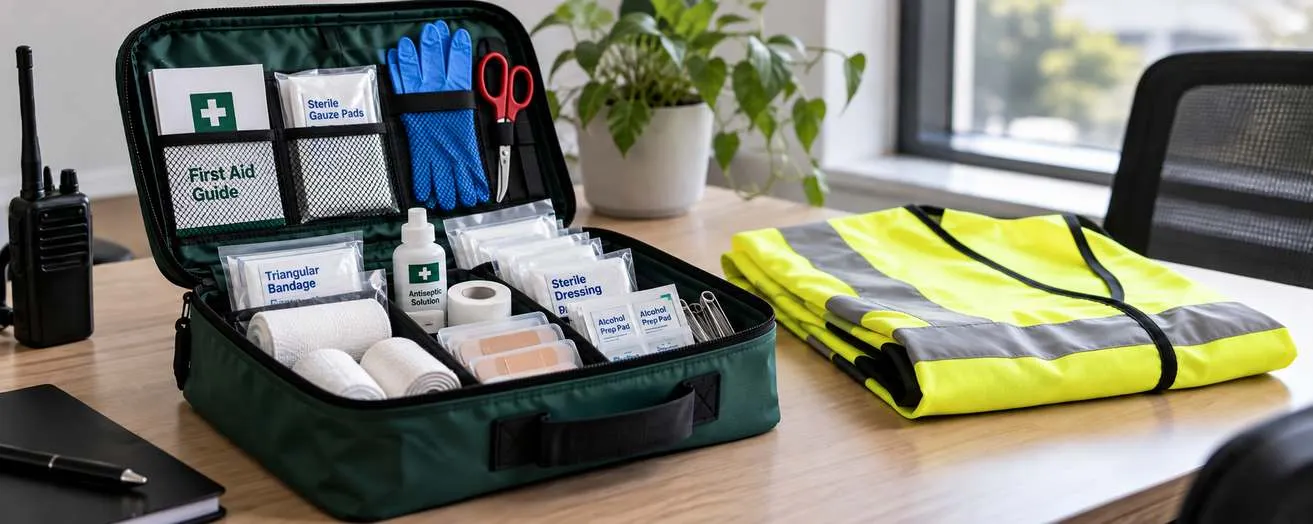
If you’re training as a Door Supervisor or Security Guard, you already need a valid Emergency First Aid at Work (EFAW) certificate, or an accepted equivalent, before you can even start. Close Protection requires a higher bar. EFAW alone doesn’t satisfy it; you need a Level 3 qualification such as First Aid at Work (FAW), First Person on Scene, or First Response Emergency Care.
That’s a genuine requirement, but it’s a gate, not an ongoing obligation. Once you’ve cleared it and completed your training, nothing currently checks whether your first aid certificate is still valid while you’re out working, licensed, and on shift for the next three years. It matters at the door to training. It doesn’t currently matter to the licence itself.
Recommended Reading: The Difference Between EFAW and FAW
What’s Being Proposed
The SIA’s consultation proposes that holding an in-date first aid qualification become an actual condition of the licence for close protection operatives, door supervisors, and security guards. The regulator is also proposing a new, security-specific first aid qualification, designed to align more closely with the kinds of incidents security staff actually encounter on the job, rather than a generic workplace first aid course.
Read the word “condition” carefully. A licence condition is something the SIA can act on. If it goes ahead as proposed, letting your first aid certificate lapse wouldn’t just be a training-day technicality; it would put your actual licence at risk, in the SIA’s own words, meaning it “may take action against operatives who let their first aid certificate lapse.”
| Now | Proposed | |
|---|---|---|
| When it’s checked | Once, before training starts | Ongoing, for the life of the licence |
| What happens if it lapses | Nothing, once you’re already licensed | Could affect your licence itself |
| Qualification type | General EFAW / FAW / FPOS / FREC | A proposed new security-specific first aid qualification |
| Who it applies to | Door Supervisors, Security Guards, Close Protection | Same three categories |
The consultation closes on 23 October 2026, with final specifications expected in winter 2026 and new qualifications launching in 2027 — the same timeline as the SIA’s parallel proposals on language testing, which we’ve covered in our blog on English language test requirements.
Why The SIA Is Looking At This
The SIA’s own research found that 91% of licence holders surveyed considered first aid skills important to their role, and over half said they’d actually used their first aid training on the job. That’s a notably higher figure than a lot of people might expect for a role most associate with conflict management and access control rather than medical response, and it’s the evidence the SIA is leaning on to justify the change.
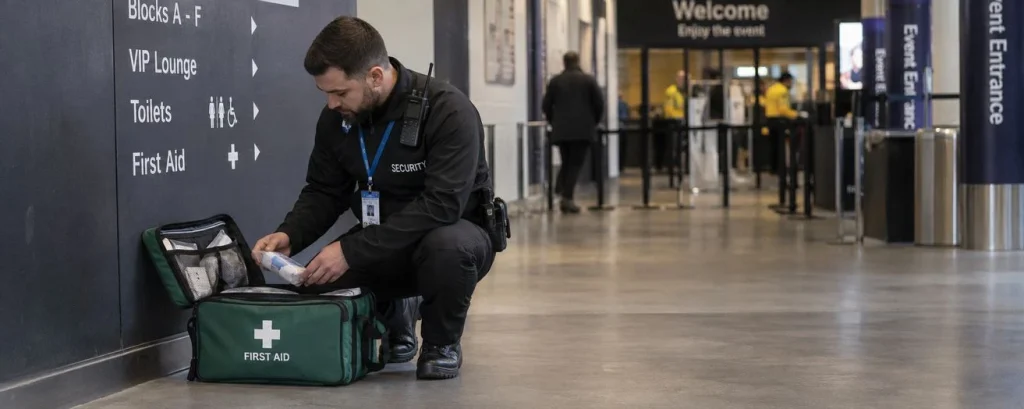
It tracks with the reality of the job. A door supervisor is often the first person to reach someone who’s collapsed, been assaulted, or is having a medical episode in a crowd, well before an ambulance can get through a venue or a festival site. A security guard patrolling a large site alone may be the only person present when something goes wrong.
We’ve written before about why EFAW certification matters for security professionals. First aid isn’t a box-ticking add-on to that work, and for a meaningful share of licence holders, it’s something they’ve genuinely had to use.
What This Means For You
If you already hold a licence: nothing changes yet. This is a proposal, not a confirmed rule, and any change would need final specifications and a transition period before it applied to existing licence holders.
If you’re currently training or about to book a course: you’re under the current system — first aid as an entry requirement, not an ongoing one. That won’t change retroactively.
If this does go ahead: the practical shift is that letting your first aid certificate lapse would stop being a non-issue once you’re licensed, and start being something worth tracking the same way you’d track your licence expiry date. Renewing it before it lapses, rather than after, would go from “good practice” to “how you protect your licence” — much like the qualification changes already introduced for top-up refresher training, which show the SIA has tightened first aid expectations before.
If you think this is a good idea, or a burden on top of an already demanding renewal cycle: the consultation is open to licence holders directly, not just employers and training providers. You can respond via the SIA’s consultation page before 23 October 2026.
Read the full breakdown of expected SIA training changes for more insights.
The Wider Review
First aid is the single biggest change on the table, but the same consultation touches a few other areas worth knowing about in brief: whether close protection licence holders should still be able to work door supervision and security guarding without holding those licences separately, a refreshed counter-terrorism training package developed with policing partners, Martyn’s Law awareness being added to training content, and spiking-awareness training extending to security guarding and CCTV courses.
None of these have been decided yet either. They’re all part of the same consultation, closing 23 October 2026.
Keep Your First Aid Current Either Way
Whatever the SIA decides, a lapsed first aid certificate is already a genuine gap for anyone actually doing the job. The 91% and “over half” figures aren’t hypothetical; they’re describing situations licence holders are already in. If your EFAW or Level 3 qualification is due for renewal, book your course today to keep your certification current, regardless of how the consultation resolves.