

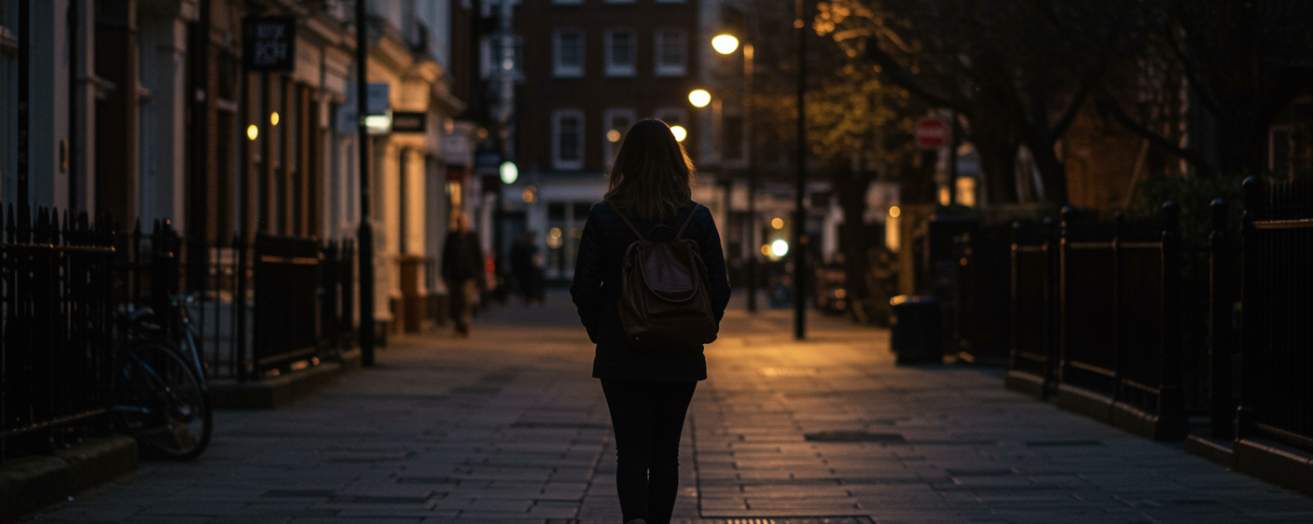

How to stay safe walking alone as a woman in the UK: know when and where risk actually concentrates, use body language and technology to your advantage, and learn what to do if something goes wrong (All backed by real data, not generic advice).
There’s a mental calculation most women in the UK do without a second thought. Which route is best lit? Are those footsteps behind me getting closer? Is the shortcut through the park worth the risk?
It’s a routine so ingrained it barely registers. But the numbers tell a stark story. A recent ITV/Savanta survey found that 81% of young women aged 18 to 25 feel unsafe walking home in the dark. And official ONS research confirms women consistently feel less safe than men across all settings after dark. The disparity is greatest in parks or open spaces, where 82% of women feel unsafe.
This isn’t a guide about why that’s wrong — you already know it is. It’s a practical guide on women’s safety, covering what you can do to feel safer and be safer when you’re walking alone. It’s part of a wider look at safety across the UK, but this one focuses specifically on the reality women face when they step outside alone.
Understanding the Risks to Women’s Safety: Time, Place, and Threats
Being informed isn’t about being scared; it’s about being prepared. The data reveals a nuanced picture, showing that risk isn’t random — it’s concentrated. Understanding these patterns is the first step to navigating them.
What Are The Biggest Threats?
When women feel unsafe, it’s not a vague anxiety. It’s a response to specific, prevalent threats. A 2024 survey by security firm Mitie revealed what women fear most when walking in the dark: being followed by a stranger (51% of women) and sexual assault (34% of women).
These fears are grounded in reality. The latest ONS Crime Survey for England and Wales found that in a single year, 1 in 8 women (13%) experienced at least one form of harassment. For women aged 16 to 24, that figure jumps to nearly 1 in 4 experiencing sexual harassment. The most common forms include inappropriate sexual jokes, comments, or gestures; unwanted messages or calls; and unwanted touching.
Crucially, three-quarters of all in-person harassment happens in a public space, and the perpetrator is a stranger in over 70% of cases.
Note: These figures come from the ONS Crime Survey for England and Wales (CSEW), which measures harassment using a comprehensive module launched in 2022. Earlier ONS surveys using a different methodology reported higher headline figures. The CSEW data is the most current and methodologically robust measure available.
When and Where is the Risk Highest?
The data shows that risk is not evenly spread across time or location. It’s hyper-concentrated.
Time of Day
While a GLA report on London found there is less overall crime at night than during the day, certain crimes that disproportionately affect women see a spike after dark. Research shows that violence linked to the night-time economy is most concentrated between 9 pm and 3 am, particularly around closing times for pubs and clubs. One study found that the risk of street robbery in London increased by 2.6 times when moving from daylight to darkness.
However, it’s not just late at night. A groundbreaking College of Policing study found that for teenage girls (12-18), the peak time for harm from public space violence was between 3 pm and 6 pm — the hours immediately after school.
Location
Violence against women and girls (VAWG) is not an everywhere problem; it’s an anywhere problem that is highly concentrated in specific hotspots. The same College of Policing research found that 50% of all harm from public space VAWG was concentrated in just 0.48% of public spaces. Over 90% of public spaces had no reported incidents at all.
This means that most places are safe. The key is that these VAWG hotspots are often not the same as general violent crime hotspots. This is critical: the places you might avoid for fear of a fight are not necessarily the same places where women are most at risk of harassment or assault.
While it’s impossible to map every hotspot, you can get a general sense of crime levels in different areas. Our blog on the UK’s most violent cities provides an overview of crime rates by region.
Before You Leave: Why Your Mental Map Might Be Wrong
Most people’s sense of which areas are “dangerous” comes from general crime data: the rough part of town, the street where fights happen on a Saturday night. But the College of Policing research cited above found that the places where women are most at risk of harassment or assault are often not the same as general violent crime hotspots.
VAWG concentrates in specific micro-locations — a particular stretch of road, an underpass, a poorly overlooked car park — not across entire postcodes. That means “I’ll avoid the rough area” may not actually be protecting you from the risks most relevant to you.
So the most valuable thing you can do before leaving isn’t just picking a “safe” route; it’s checking whether your route has those micro-risk points. Preview unfamiliar routes on Google Maps Street View (look for lighting, sightlines, open shops). Apps like WalkSafe map crime hotspots using police data, which gets you closer to the real picture than gut feel alone. The City Safety Index can help you understand the broader safety profile of your area.
The 60-Second Checklist
- Tell someone your plan: Be specific. “Walking from the station via the high street, home by 10:15” is far more useful than “on my way.”
- Charge your phone and register for 999 text: Text “register” to 999 once, and you can text emergency services if you ever can’t speak.
- Bag cross-body, phone in an inside pocket: Phone theft is surging across UK cities, and losing your phone means losing your primary way of calling for help.
On the Walk: Awareness Without Anxiety
There’s a balance between being alert and being terrified. The goal is to build habits that keep you aware without ruining your evening.
Walk with Purpose (The Science Behind It)
Body language matters more than you think. Criminological research, starting with the landmark Grayson & Stein study, has shown that predatory criminals are adept at spotting non-verbal cues of vulnerability. They look for people who appear distracted or uncertain. A key factor they assess is your gait: a hesitant, uncoordinated walk with strides that are too short or too long can signal an easy target.
Actionable Tip: Walk at a steady, natural pace with your head up and your eyes scanning ahead. This projects confidence and, more importantly, creates a fluid, coordinated gait that makes you a harder target. It also ensures you’re more likely to notice if something isn’t right.
Limit Distractions
This is the single most impactful thing you can do. Wearing headphones in both ears or being absorbed in your phone screen means you can’t hear footsteps, approaching vehicles, or someone calling out. If you must listen to something, keep the volume low and use only one earbud.
Trust Your Instincts (The Science Behind It)
If something feels off, it probably is. That gut feeling is a powerful survival mechanism. As security expert Gavin de Becker explains in The Gift of Fear, your brain’s amygdala processes danger signals from your environment far quicker than your conscious mind. That feeling of unease is your subconscious picking up on micro-cues that something is wrong.
Actionable Tip: Don’t dismiss a gut feeling because you’re worried about overreacting or being rude. Your safety matters more than being polite. If a situation or person makes you feel uncomfortable, cross the street, change direction, or walk into a shop. Your brain is trying to tell you something.
If You’re Verbally Harassed
Street harassment (e.g. catcalling, aggressive comments, or someone demanding your attention) is the most common form of harassment women experience in public. In most cases, the safest response is no response. Don’t engage, don’t make eye contact, and keep moving. Responding can escalate a situation unpredictably. If someone is persistent or following you, head for the nearest busy or well-lit place. You don’t owe anyone your time, attention, or politeness.
Know Your “Safe Spaces”
On any regular route, make a mental note of places you could go for help — a pub, a late-night shop, a petrol station. If you’re in a venue and feel unsafe, many pubs and bars across the UK participate in the Ask for Angela scheme. Ask bar staff for “Angela”, and they’ll help you discreetly.
Using Technology to Stay Safer
Your smartphone is a powerful safety device. Here are the tools that make a real difference:
Share Your Live Location
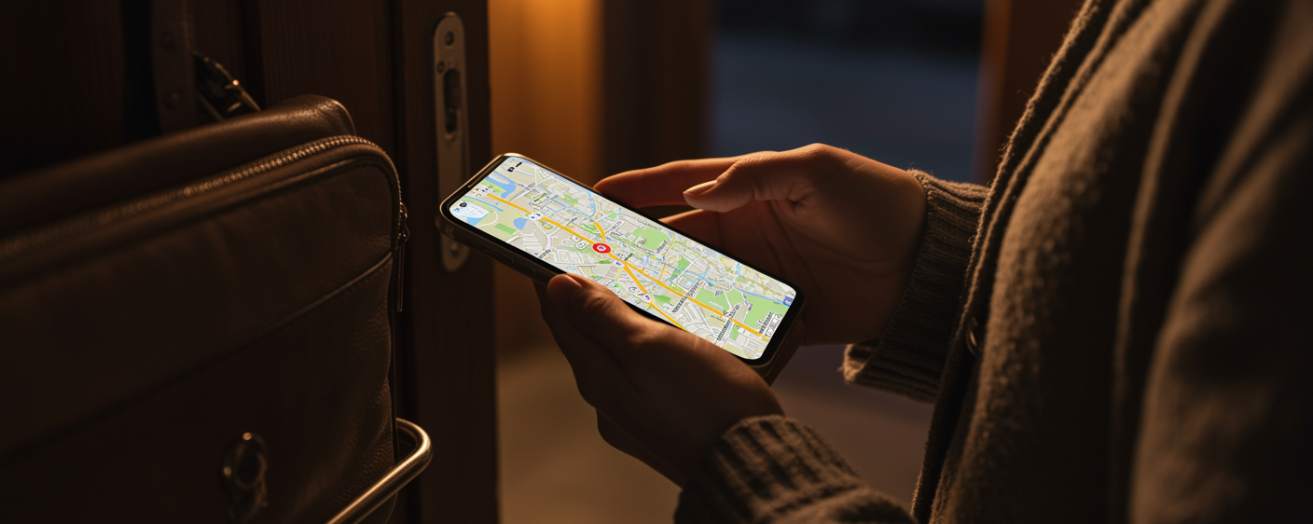
WhatsApp, Google Maps, and Apple’s Find My all let you share your real-time location with a trusted contact. Turn it on before you start walking.
Download a Personal Safety App
- Hollie Guard is one of the most well-known safety apps for women in the UK and is endorsed by the College of Policing. It turns your phone into a personal safety device that can automatically record audio and video. It can also alert emergency contacts with your location if you feel threatened.
- WalkSafe uses police data to show crime hotspots, helping you plan a safer route.
- what3words can help emergency services find your exact location — particularly useful in parks or poorly-addressed areas.
Call Strut Safe
If you’re walking alone and want someone on the line with you, use Strut Safe. This is a free, volunteer-run UK phone service (0786 002 2744). They’ll stay on the phone with you until you reach your destination. No personal information required.
Public Transport: A Different Set of Challenges to Women’s Safety
Walking isn’t the only concern. The ONS found that 58% of women aged 16 to 34 feel unsafe using public transport alone after dark. This is the highest of any group.
If you’re taking a bus or train late at night, sit near the driver or in a carriage with other people. Avoid empty carriages. If someone is making you uncomfortable, move. And if you’re getting a taxi or rideshare, always check the registration plate and driver details match the app before you get in. Never get into an unlicensed minicab.
If Something Goes Wrong
Knowing what to do in the moment can make a critical difference.
If you think you’re being followed, don’t go home
You don’t want someone to know where you live. Head for the nearest busy, well-lit place. Cross the street. If they cross too, that’s confirmation. Call someone and say loudly, “I’m on [street name], I’ll be with you in two minutes.”
If you need to run, run
It sounds obvious, but many people freeze or hesitate because they’re worried about overreacting. Creating distance is almost always the right call. You can feel embarrassed later; the priority is being safe now.
If you’re in immediate danger, shout
“Fire!” can draw more attention than “Help!” Use a personal alarm if you have one. Call 999 or text 999 if you can’t speak (you must be pre-registered). If you can’t do either, making noise and heading for people is your best option.
If you’ve been harassed or assaulted, report it
You can call the police on 101 for non-emergencies or 999 in an emergency. The Suzy Lamplugh Trust also provides advice and support. You can also self-refer to a Sexual Assault Referral Centre (SARC) for medical care and evidence collection without initially involving police.
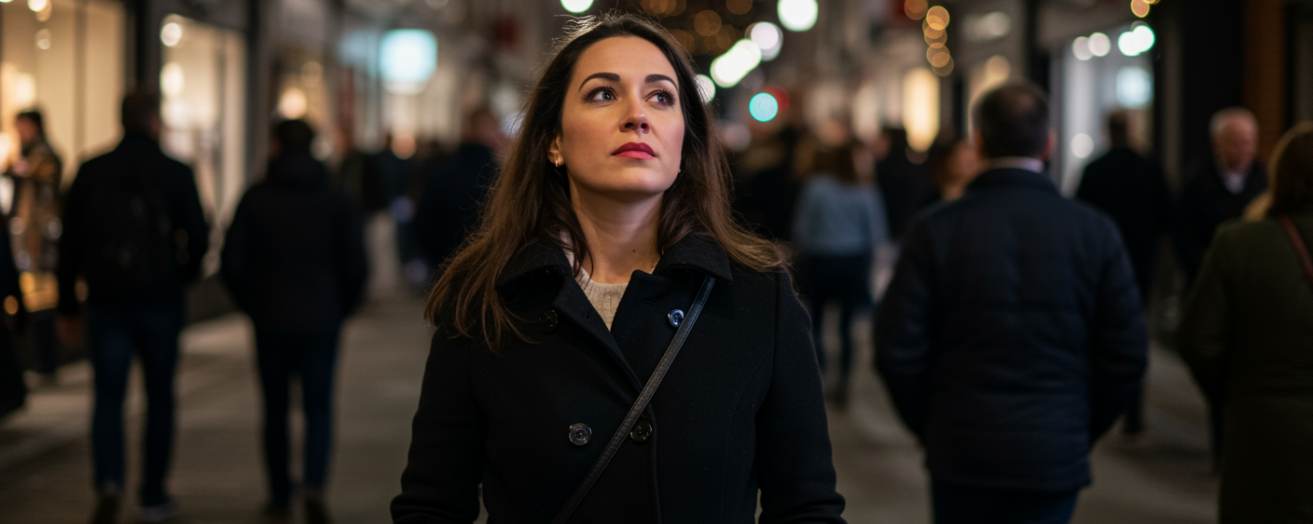
It Shouldn’t Be This Way
None of this should be necessary. The responsibility for harassment and violence lies entirely with the perpetrators. But until the world catches up, these strategies can help you feel more in control.
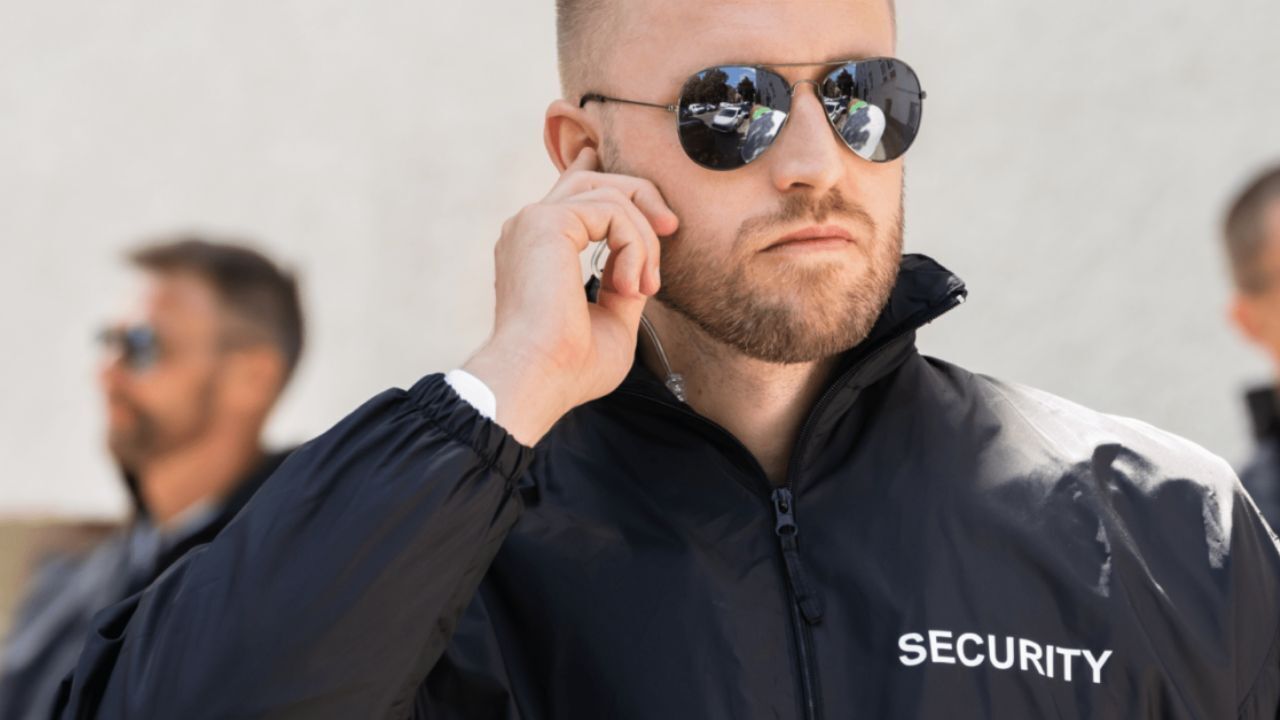
A visible, professional security presence also plays a role in making public spaces safer. The door supervisors managing venues on a Friday night, the CCTV operators monitoring city centre cameras, the event security teams keeping festivals running smoothly — they’re trained specifically in conflict de-escalation, spotting threatening behaviour, and coordinating with emergency services. It’s work that rarely gets noticed, but it’s one of the reasons many public spaces feel as safe as they do.
That’s what Get Licensed does; we train the people who keep the UK’s public spaces secure. From door supervisor courses to CCTV operator training, we’ve helped over 400,000 professionals get qualified and get to work.
For a broader look at personal safety across the UK, including crime trends by city, spiking, and digital safety, our UK Safety Guide covers the full picture.
Frequently Asked Questions
Don’t go home; you don’t want someone to know where you live. Head for the nearest busy, well-lit place: a pub, a shop, a petrol station. Cross the street. If they cross too, that’s confirmation. Call someone and say your location loudly, or call Strut Safe if you don’t have someone to ring. If you feel in immediate danger, call 999 or text 999 if speaking would put you at risk. Don’t worry about overreacting — creating distance is almost always the right call.
According to the ONS Crime Survey for England and Wales, the most common forms are inappropriate sexual jokes, comments, or gestures, followed by unwanted messages or calls and unwanted touching. Three-quarters of in-person harassment happens in a public space, and the perpetrator is a stranger in over 70% of cases. Women aged 16-24 are the most affected, with nearly 1 in 4 experiencing sexual harassment in a single year.
Statistically, the risk of being a victim of violent crime is low, and some reports show less overall crime happens at night. However, certain crimes like robbery and sexual harassment are more concentrated after dark. ONS data shows 82% of women feel unsafe in parks or open spaces after dark. Risk varies significantly by location, but harm is highly concentrated in specific hotspots. Sticking to well-lit routes, staying alert, and using the strategies in this guide can significantly reduce your risk.
The UK is one of the safer countries globally, but women face specific risks that general crime statistics don’t capture. ONS data shows 1 in 8 women experienced harassment in a single year, rising to nearly 1 in 4 for women aged 16-24. The risk is highly concentrated — 50% of public space violence against women occurs in less than 0.5% of locations. So the broad answer is safe, but the experience varies significantly depending on where, when, and what type of risk you’re looking at.
Plan your route using tools like WalkSafe that map crime hotspots, share your live location with a trusted contact, stay aware of your surroundings, and know your nearest safe spaces on any regular route. Register your phone for 999 text so you can reach emergency services silently, and download a safety app like Hollie Guard. If you want company on the phone while walking, Strut Safe is a free UK service that will stay on the line until you’re home. Trust your instincts — if something feels wrong, act on it.