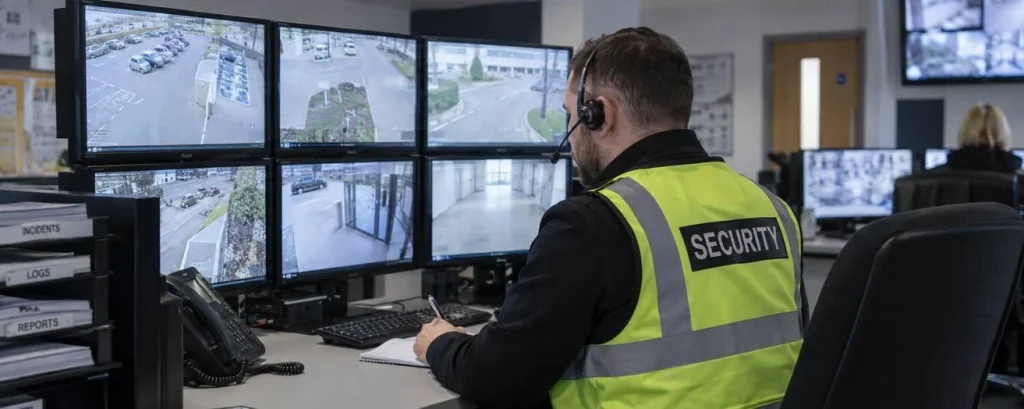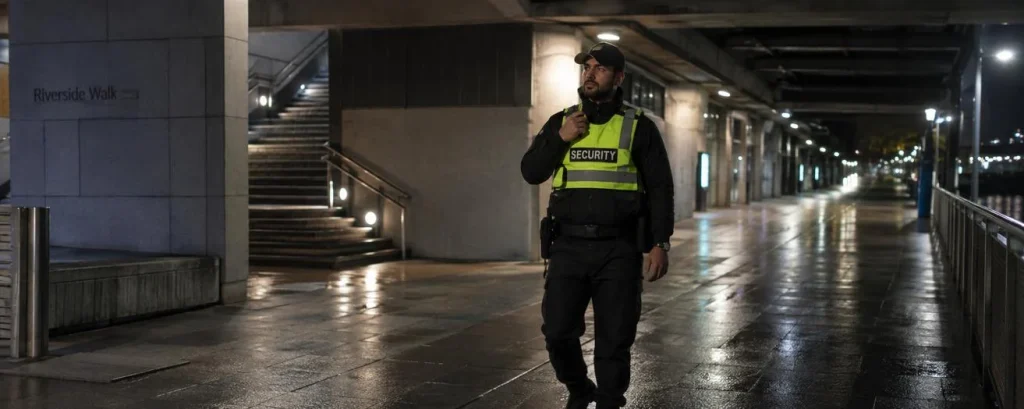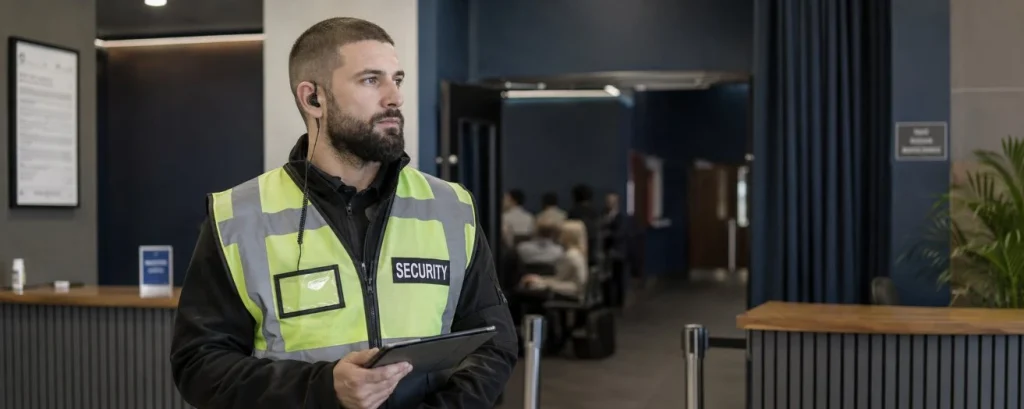




If you’ve worked a door in the last 12 months, you’ve felt it. Door supervisor duties in 2026 are not the duties they were five years ago, or even two. The weapons are different. The radius is different. The crowd is different. And the camera in everyone’s pocket has rewritten the rules of what a “good shift” looks like.
This isn’t a news bulletin. It’s a working field guide to the patterns reshaping door supervisor responsibilities across the UK right now — built from what’s actually happening on British doors every weekend, the lessons coming out of recent high-profile incidents, and what the smartest heads in the industry are doing about it.
If you’re already licensed, treat this as a shift-briefing you give yourself. If you’re thinking about getting licensed, this is the honest picture of what you’re walking into — and why the work matters more than it ever has.
The Weapons List Has Changed
And nothing on it goes through a wand.
The first of the modernised door supervisor duties in 2026 is reading the room for weapons that don’t exist on the old checklist. The mental model of “improvised weapons on a UK door” used to be short: a pint glass, maybe a pool cue, occasionally a bottle. That list is now longer, more varied, and a lot less predictable.
Recent patterns we’re seeing across UK incidents:
- Glass bottles used as clubs, not cutters. The Hertford nightclub conviction earlier this year (man jailed in February 2026 after a bottle-to-the-head attack) is the template. The 2023 Leeds Revolucion De Cuba Boxing Day incident, where a man was permanently blinded by a bottle swung from behind, triggered the national “ban the glass” petition that’s still picking up signatures.
- Vehicles as weapons, intentional and otherwise. The 2025 Liverpool FC victory parade ramming (65 injured, driver arrested for attempted murder) and the Derby ramming in March 2026 (seven hurt) show vehicles are now a realistic edge-case every crowd-facing role plans for. More recently, a car mounting the pavement outside a Soho club has reopened the conversation about kerb edges and dispersal.
- Knives — but not where people think. The stereotype is “knife crime = street, after dark.” The reality is messier: beer gardens, fast-food queues, park viewpoints, e-scooter arguments. We covered this in depth in our blog on knife crime in the UK — the headline stat (knife crime down 9% to September 2025) is often misread, because where it happens has shifted faster than how much of it happens.
- E-scooters, bikes, and street furniture. A-frames, planters, road cones, the e-scooter someone was unlocking. Anything movable within 10 seconds of an argument is now in the threat picture.
Why this matters on your shift: the wand-and-pat-down model catches knives. It catches almost nothing else on this list. The defence is read-the-environment, not search-the-person. If your venue is still running security on the 2018 model, that’s a training and briefing gap — not a kit gap.

The Radius of Responsibility Has Expanded
Call it the 300-metre rule.
The clean line between “inside the rope” and “outside the rope” is gone. Almost every significant nightlife incident in the UK in the last 18 months happened outside the venue — on the kerb, in the beer garden, in the taxi queue, three streets over as the group was walking to the next place, or in the surrounding park on a warm Tuesday evening.
The working rule of thumb more and more head doormen are applying: your radius of responsibility is 300 metres around the door for the first 90 minutes after dispersal. Not legally — you don’t have powers off-premises — but practically, for what affects your venue, your licence, and your liability.
A dispute that walks from your venue to the pub next door still has your venue’s name on the Sky News alert. A fight that spills into the street still becomes your licensing review. A lone patron who leaves and becomes a victim five minutes later is still on your CCTV as the last trusted adult to see them.
Ops directors and site supervisors are starting to write this into assignment instructions. If yours are still silent on it, ask the question in your next brief. Specifically:
- What’s our policy if a dispute leaves the venue?
- Do we have radio contact with the pub next door / the taxi rank marshal / the BID warden?
- Who’s watching the kerb edge at closing?
- What’s our protocol if a patron leaves visibly intoxicated and alone?
Body Worn Video Is No Longer Optional
It’s evidence infrastructure.
Body worn video has moved from “nice to have” to a core door supervisor duty. Within hours of any significant nightlife incident in 2026, three things happen: footage is online, the venue’s operator is on camera, and the security team’s conduct is being dissected frame by frame in TikTok reply threads.
If you’re not recording, someone else is. And their 15 seconds will be the ones the CPS sees, the ones your employer gets shown by a Sky News producer, and the ones that decide whether you get called back next weekend.
The working standard is now:
- BWV on before any intervention, not after. The minute you’re walking toward a situation, the red light is on.
- Audio where it’s lawful. Make sure your site policy is clear on this — in England and Wales, you generally can, but notice signage has to be in place.
- Chain of custody clear. Who downloads it? Where does it live? Who can pull a clip within four hours of an incident? If the answer is “not sure,” that’s a business risk, not a tech one.
- Pre-intervention de-escalation on camera is your best insurance. The 30-second chat that stops an argument is worth ten times the 3-second physical intervention that ends it.
If you haven’t gotten body worn camera training yet, now’s the time.

The Intervention That Didn’t Happen Is Worth More Than the One That Did
Look at the incidents that dominate the news cycle. The ones that end careers, close venues, or lead to prison time are almost always the ones where intervention escalated. The ones that end with everyone going home are the ones where a door supervisor read the room 90 seconds earlier and moved the problem before it became a problem.
Conflict management and de-escalation are no longer “soft skills.” They’re the core technical skills of a working door supervisor in 2026. The SIA’s top-up training touches on this; a decent standalone de-escalation refresher goes deeper. If you haven’t done one since you got licensed, book one this quarter. If you have, book another.
Specifically, the de-escalation skills being tested on UK doors right now:
- Spotting the “third party” — the person who’s winding up the two people arguing. Take them out of the scenario, and the argument often resolves.
- Reading alcohol vs. stimulant behaviour. They don’t respond to the same approach.
- Group vs individual reading. A group posturing is usually containable; an individual acting erratically alone is not.
- Language downgrading — “mate”, “pal”, “brother”, not “sir” or “oi you”. Tone, not content, does most of the work.
Women’s Perceived Safety is Now the Core Product
Protecting women’s perceived safety has moved to the centre of modern door supervisor responsibilities. The venues thriving in 2026 are the ones making it impossible for a woman to have a bad exit. Safe-exit lanes, taxi marshals, Ask for Angela signage that’s actually briefed to every officer, a named female team lead on shift, and the ability to see a lone patron out to a taxi without it being a favour.
This isn’t a diversity initiative. It’s a commercial one. The last pub in town where a group of women feel unsafe is the first pub in town to lose a licence.
Every licensed officer should know:
- Your venue’s Ask for Angela protocol (what word, who it goes to, what happens next).
- The licensed cab rank numbers — memorised, not looked up.
- Your site’s vulnerable-exit policy.
- What the local women’s safety scheme is called (Safer Streets, Safer Sounds, WAVE, etc. — it varies by city).
Recommended Reading: A Woman’s Guide to Walking Safely in the UK

Public Spaces Are the Next Front
Door supervisor duties increasingly extend beyond the rope and into parks, town-centre benches, transport transitions, and beer gardens. A warm British spring doesn’t help. The traditional SIA career path was door → static guarding → supervisor.
In 2026, there’s a new path opening: door → mobile response/park patrol/BID town-centre team → supervisor. If you’re flexible on where you work, the work is there.
London, Manchester, Birmingham, Leeds, and Glasgow BIDs are all hiring licensed officers for town-centre teams. Summer event cover pays £15+/hour for DS-licensed staff at major festivals. Park patrol contracts are growing in most major city councils. If you’ve been a static doorman for three years, 2026 is a genuine opportunity to diversify.
The Five-Minute Pre-Shift Checklist
Use this before your next shift. Print it, screenshot it, whatever works.
- Weapons awareness — have I done a visual sweep of what could be grabbed within 10 seconds of an argument? Glasses, bottles, furniture, vehicles on the kerb?
- Radius check — do I know who my neighbours are tonight? Radio check with the venue next door, the taxi rank, and the BID warden, if applicable.
- BWV — charged, on, pointed correctly. Chain of custody confirmed with the DPS/manager.
- De-escalation language — am I in the right headspace, or did I bring a rough week to work?
- Women’s safety protocol — Ask for Angela, safe-exit, licensed cab numbers all briefed in my head, not on a laminate.
Do this every shift. It’s 90 seconds. It’s the difference between “routine Saturday” and the shift that ends up on the news.
If You’re Not licensed Yet and You’ve Read This Far
It’s time to get your SIA Door Supervisor licence.
Door supervisor duties in 2026 aren’t about being bigger, louder, or harder. They’re about reading faster, de-escalating earlier, and working across a wider radius than the job used to ask. If the thinking in this guide made sense to you, you already have the disposition — the technical training is the easier part.

You’re in the right industry. The Door Supervisor route is 3–6 weeks from sign-up to on-shift. The work is there — the London Marathon is one Sunday away, festival season starts in May, and every major UK city centre BID is hiring. Pay for licensed officers has moved up to £13.80+/hour on retail, £15+ at major events.
More importantly, if the thinking in this guide made sense to you, you already have the disposition. The technical training is the easier part. Check out the full Door Supervisor syllabus to understand exactly what you’ll be trained in, and book your course now!