

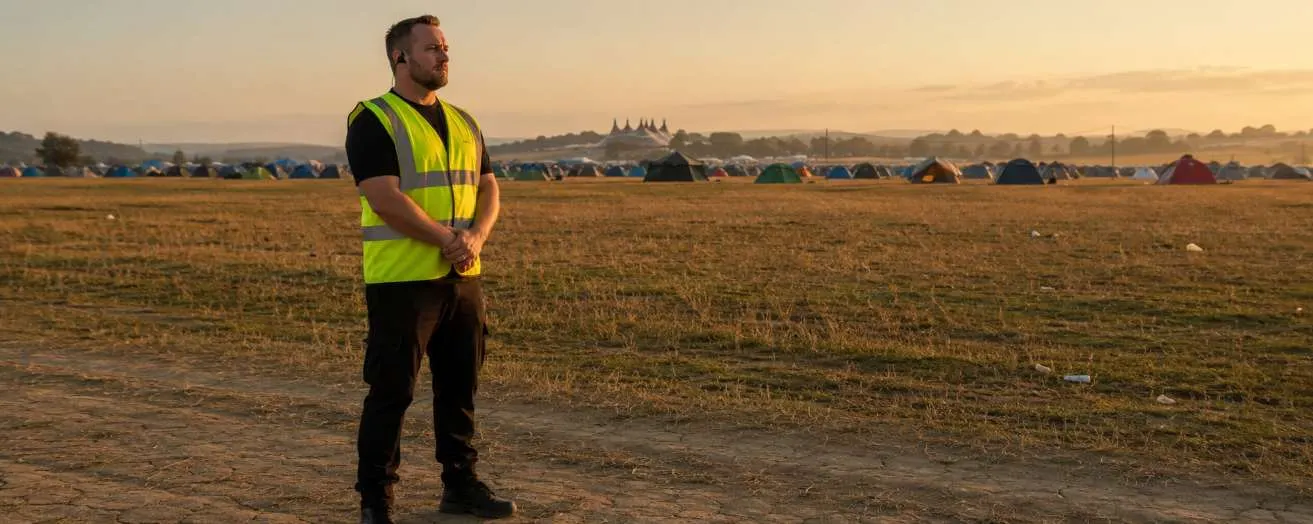


If you’re working an outdoor event this August, there’s something worth knowing before you clock in: a UK festival has already had a real wildfire scare this summer. This isn’t a headline from across the globe. This happened at Dorset, at a festival not all that different from the one you might be working next weekend.
Here’s what you need to know about wildfire risks.
What Actually Happened At Rustic Stomp
On 18 July, a heathland fire broke out near the Rustic Stomp festival at Knolle Farm in Wareham, Dorset. An area of heathland about the size of a football pitch went up close to the campsite. Festival-goers grabbed their tents and moved their cars clear as the fire crews arrived. One person needed treatment for smoke inhalation. Just over three hours later, it was over, and the festival carried on the next day like nothing had happened.
Nobody panicked, nobody got seriously hurt, and the event didn’t even shut down. Honestly, that’s the reassuring bit. This wasn’t a disaster; it was a fire that got handled quickly because people around it kept their heads.
That’s the standard worth aiming for, not some worst-case evacuation scenario.
So What Does This Actually Mean For You On Shift?
While not a huge amount changes about your job, there are a few things that are worth having front of mind if you’re working anywhere with dry grass, heathland, or campsites nearby this summer.
The big one: it’s not your call whether to evacuate. That decision belongs to the fire service and police once they’re there. What actually falls on you is getting people moving away from danger calmly, and getting accurate information to whoever needs to call it in — fast. Where it is, what’s burning, what’s nearby, roughly how many people are around. You don’t need every detail sorted before you say something; a rough picture radioed in quickly beats a perfect one radioed in late.
The other thing worth taking seriously, even if it feels like a small ask: actually enforce the no-naked-flames rule, all shift, not just when someone’s obviously being reckless. Disposable barbecues, camping stoves, and dropped cigarettes near dry grass are how nearly every one of these fires starts. It’s not glamorous work, but it’s probably the single most useful thing you can do to stop this becoming your problem in the first place.
If you’re new to working an outdoor event full stop, our guide to working festival security shifts is worth a read.
What To Actually Keep An Eye Out For
You don’t need to be a fire expert to catch most of this early. Mostly it’s just paying attention to the same things you’d notice anyway:
- A smell of smoke or a bit of haze near tree lines or dry patches of the site
- Anyone lighting a disposable BBQ, campfire, or stove outside the designated area
- Cigarettes or matches near dry grass or scrub
- Ground that’s visibly cracked, brown, or crunchy underfoot — that’s exactly the kind of terrain a small spark turns into a real problem
If your site briefing hasn’t mentioned a no-flame policy this summer, it’s worth asking your supervisor before your shift starts rather than finding out mid-way through. And given how much of this ties back to the heat itself, make sure to check our guide to staying safe on outdoor shifts during a heatwave too — the same dry, hot conditions that raise wildfire risk are the ones making your shift harder in the first place.
Recommended Reading: UK Festival Safety Audit
Is This Actually Relevant To Where You’re Working?
Fair question, and worth being specific rather than vague about it. The Met Office’s Fire Severity Index is sitting at “very high” across most of England right now, with an amber heat-health alert covering London, the South East, the East of England and the East Midlands as the UK heads into its fourth heatwave of the summer. Fire services in England and Wales have responded to 706 wildfires so far this year, with 208 of those in the last fortnight of July alone.
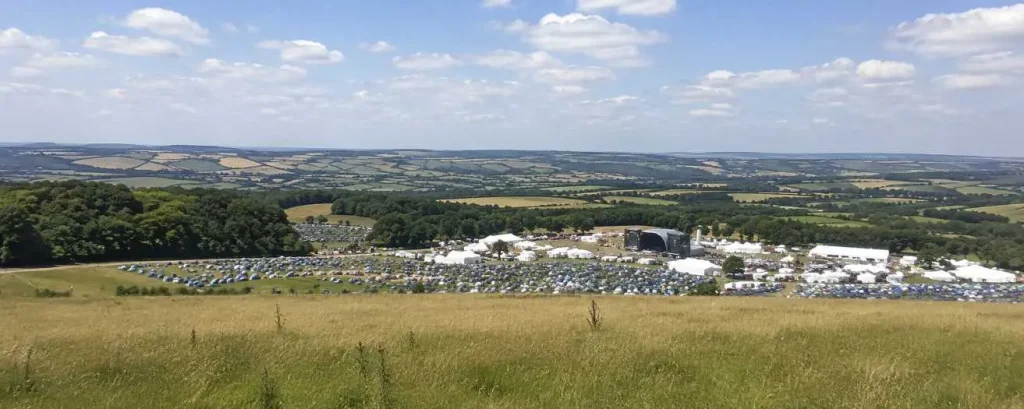
So if you’re working an event on open grassland, heathland, or downland this August, in one of those regions, it’s genuinely worth a bit more vigilance than usual. Boomtown, for example, runs 12–16 August on the Matterley Estate near Winchester — open downland in the South Downs National Park, right in the South East, during exactly this window.
To be clear, that’s not a prediction that anything will happen there. It’s just a real, honest example of the kind of site and timing where this stuff is worth thinking about rather than dismissing.
If It Does Happen On Your Watch
Keep it simple: get the basics called in immediately rather than waiting to have it all figured out: where, what’s burning, what’s nearby, how many people. If you can’t reach your supervisor or control room fast enough, call 999 yourself.
While you’re waiting for a response, keep people moving calmly clear of the area, but leave the actual evacuation call to the people trained and equipped to make it. And keep your radio or phone free; the crews arriving will want someone who can brief them straight away.
Recommended Reading: Fire Safety Tips for Security Officers
Get Properly Set Up Before Your Next Outdoor Shift
This isn’t about turning every door supervisor into a firefighter. It’s about not being caught flat-footed by something that’s now happened at a real UK festival this summer.
If you want the actual grounding rather than picking it up as you go, Get Licensed’s fire safety training covers exactly this — common causes, fire risks, prevention, emergency procedures, extinguisher use, evacuations, drills, and compliance requirements. Additionally, it’s also recommended you brush up on your Emergency First Aid at Work knowledge so you’re prepared for scenarios involving first aid assistance.
Beyond that: if your employer runs a briefing this season on heat, fire, or major-incident response, actually go. It matters far more in the moment than it feels like it will in a training room. While there’s likely no imminent threat to festival goers and security officers this season, it’s best to be prepared for all possible outcomes, and a little training goes a long way!
Frequently Asked Questions
Yes. A heathland fire broke out near the Rustic Stomp festival in Wareham, Dorset, on 18 July 2026. Nobody was seriously hurt, and the event continued the next day.
No — that’s down to the fire service and police once they’re on scene. Your part is calm crowd management and getting good information to them quickly.
London, the South East, the East of England and the East Midlands are currently under an amber heat-health alert, with fire severity rated “very high” across most of England.