




June is when the festival circuit goes into overdrive. If you’ve got a door supervisor licence and a free weekend, you’re probably already booked. If it’s your first outdoor event, this is the brief nobody quite gets around to giving you before they hand you a hi-vis and point at a gate.
A festival security job isn’t club work with grass underfoot. The crowds are bigger, the shifts are longer, the weather has opinions, and the radio chatter never stops. Here’s what an actual weekend on the gate looks like — and how to get through it without losing your voice, your temper, or your deposit on the campsite shower block.
Before You Arrive: The Prep Nobody Talks About
Read the deployment email twice. Note your call sign, your supervisor’s name, your gate or zone, your shift pattern, and the muster point. If you don’t know what a time briefing is, you’re already late.
Pack like you’re going camping, because you basically are. Waterproofs that actually work. Two pairs of boots if you can manage it — wet feet for 12 hours is a special kind of misery. Sun cream, a refillable water bottle, snacks that don’t melt, blister plasters, and a power bank. Your phone will be your lifeline between shifts.
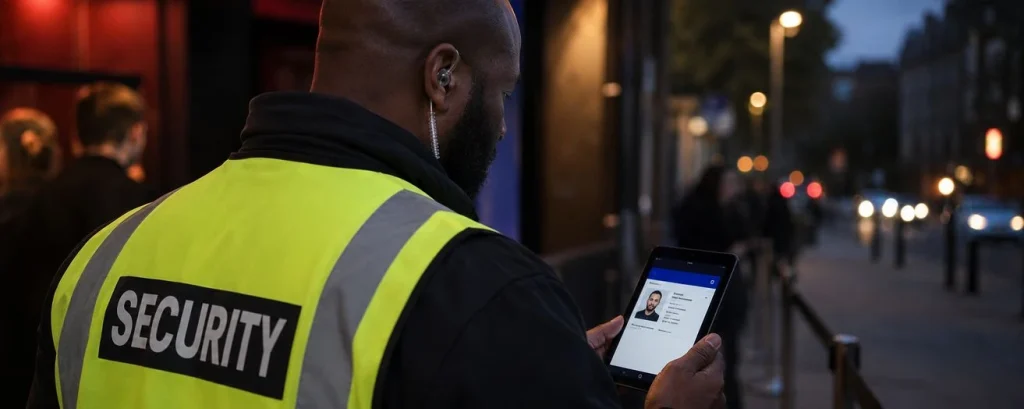
Bring your SIA licence. Bring photo ID. Bring a paper copy of your booking confirmation. Signal at festival sites is famously terrible, and you don’t want to be arguing with accreditation at 6 am because your email won’t load. If your licence expiry date is creeping up, sort it before you travel — our guide on how to renew your SIA licence without losing shifts walks through the steps.
Access Control: The Gate Is the Festival
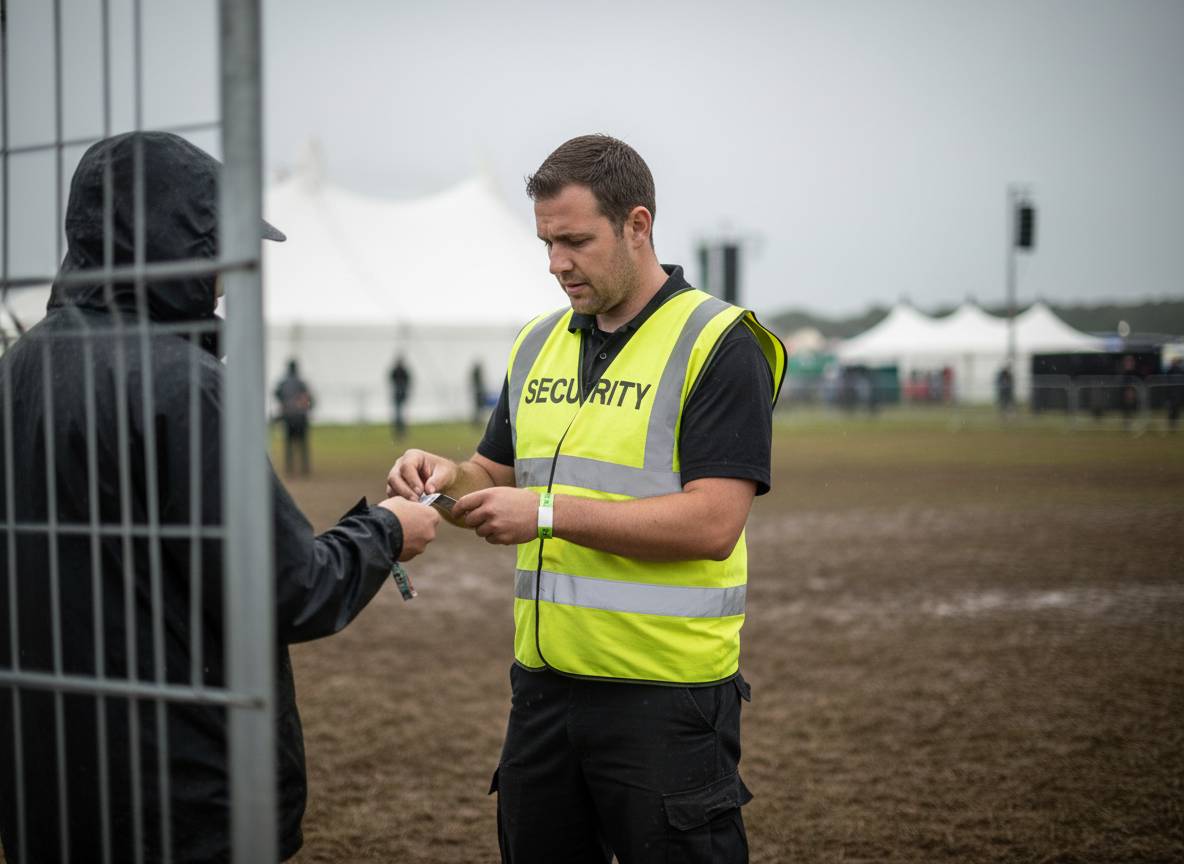
Whatever role you’ve been assigned, access control sits at the heart of it. Wristbands, lanyards, passes, vehicle plates — every festival has a colour-coded system, and you need to learn it before the gates open. Ask your supervisor for the access matrix at briefing. Memorise it. Crew red doesn’t get into artist gold, artist gold doesn’t get backstage, and nobody gets in without the right band on the right wrist.
The two questions that solve 90% of access disputes:
- Does the pass match the person?
- Does the pass match the zone?
If either answer is no, they don’t come through. Polite, firm, no debate. “I can see your wristband is for general camping, mate — accreditation tent is back that way, they’ll sort you out.” Then radio it in if they push.
Spotting Tampered or Swapped Wristbands
Look at the closure. Genuine festival bands are one-time fasteners — once they’re on, they’re on. If you can see tape, glue, a knot, or a band that’s clearly loose enough to slip off a wrist, it’s been off someone else first. Check both sides. Check the print quality. If something feels off, call your supervisor before you escalate. Don’t accuse — verify.
Searching in the Open Air
Search procedure at a festival follows the same principles as any other venue — consent, dignity, same-gender searches where reasonably possible, clear explanation of what you’re looking for. What changes is the environment. If your last refresher on search law was a while ago, the breakdown in this guide is worth ten minutes before you travel.
You’ll be searching for hours, often in direct sun or sideways rain. Keep your gloves on. Keep a search lane that flows — bag on the table, arms out, quick pat-down, thank you, next. Tell people what you’re doing as you do it: “I’m just going to check your bag, then I’ll ask you to step forward.” People who know what’s happening complain less and move faster.
Confiscations go in the bin or the amnesty box per the brief. Don’t pocket anything. Don’t get into long debates about a bottle of vodka — point to the signage, offer the amnesty option, move them on. The queue behind them is your priority.
Crowd Flow: Think Upstream and Downstream
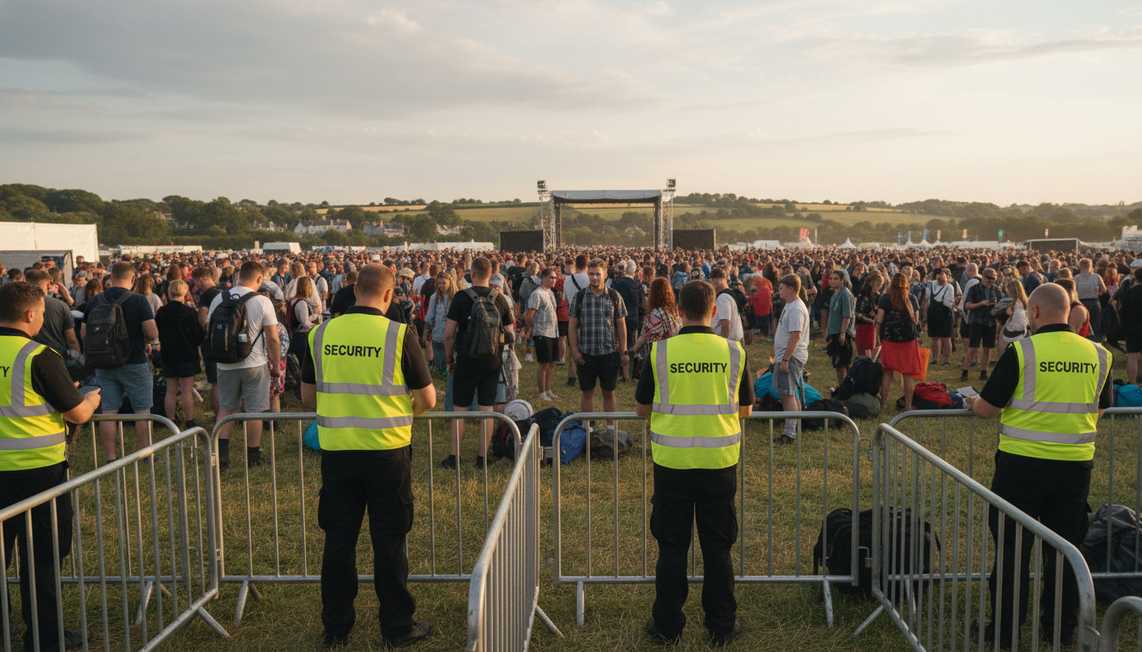
One of the biggest shifts from club work to festival work is scale. You’re not managing a room of 200; you’re a node in a system moving tens of thousands. Your gate has an upstream (the queue building behind you) and a downstream (the path into the site). If either backs up, you have a problem.
Watch the queue. If it’s growing faster than you’re processing, tell control. They can open another lane, send runners, or adjust the flow. Don’t just grind through and hope — communicate.
Inside the site, crowd-flow awareness means knowing where people are heading and when. Headline acts, set changeovers, fireworks, fireworks finishing — every one of those is a surge moment. The principles around recognising and preventing a dangerous build-up are worth reviewing before you start your shift, so you can recall what needs to be done when things take an unexpected turn. Stand tall, project your voice, give clear directions, and don’t block the flow yourself.
Talking to Control: The Radio Rules
Festival control rooms run on radio discipline. Listen before you transmit. Use your call sign. Keep messages short. Standard format: who you are, where you are, what you’ve got, what you need.
“Gate 4 to control, two males attempting entry on swapped wristbands, requesting supervisor.” That’s it. Not a story. Not your opinion on their attitude. Facts, location, ask.
If you hear a code or a casualty call on your channel, get off the air unless you’re directly involved. Medical and emergency traffic takes priority over everything.
Welfare: The Shift Is Longer Than You Think
Twelve hours on a gate sounds doable until hour nine, when your feet are screaming, and you haven’t eaten since breakfast. Welfare isn’t optional — it’s how you stay sharp enough to make good decisions.
- Hydrate constantly. Sip water through the shift, not pints at break. By the time you feel thirsty in the sun, you’re already behind.
- Eat on every break. Even if you’re not hungry. Low blood sugar makes you snappy with the public. Budget-friendly meals go a long way when you’re working back-to-back shifts.
- Use the sun cream. Reapply at every break. A sunburned, dehydrated officer is a liability by hour ten.
- Tell your supervisor if you’re struggling. Heat, illness, an aggressive interaction that’s shaken you — speak up. Rotation off a hot gate isn’t a weakness; it’s good operations.
And sleep between shifts. Properly. The festival is happening to other people. You’re working.
Gate-Crashing Attempts: Stay Boring, Stay Safe
Every festival gets them. The fence-jumpers, the fake-wristband artists, the “my mate’s inside, and he’s got my ticket” merchants, the genuinely lost. Most of them aren’t a fight — they’re a conversation.
Stay calm and stay scripted. Most attempts collapse the moment they realise you’re not going to argue; you’re just going to say no and call it in. Don’t get drawn into a debate about fairness. Don’t engage with insults. “I understand, but I can’t let you through. The accreditation tent is over there.” Repeat as needed. The wider point about staying measured under pressure is something conflict management for door staff drills into — the same playbook works on a festival gate at 2 am.
If someone goes physical or you spot an active fence breach, that’s a control call. Get the description out, get the direction of travel, let response teams handle it. Don’t chase into a crowd alone — you’ll lose them and create a second problem.
The End-of-Shift Bit Nobody Mentions
Hand over properly. Tell the officer relieving you what’s happened on your gate, what’s flagged, and what to watch for. Sign out where you’re meant to. Charge your radio if that’s the procedure. Get your meal voucher.
Then go and look after yourself. Eat. Wash if you can. Sleep. Tomorrow’s another twelve hours, and the crowd doesn’t care that your back hurts.
Ready for the Season?
Festival work is some of the most satisfying work in the industry when it’s done well. You’re part of a huge machine that lets tens of thousands of people have one of the best weekends of their year. Do the basics properly, look after the people next to you, and you’ll be booked again next June.
If you’re still sorting your paperwork or thinking about a top-up before the season hits, book your door supervisor training course and get yourself on a gate this summer. Already qualified and just chasing shifts? Our SIA licence application guide will keep your badge in date while you work.