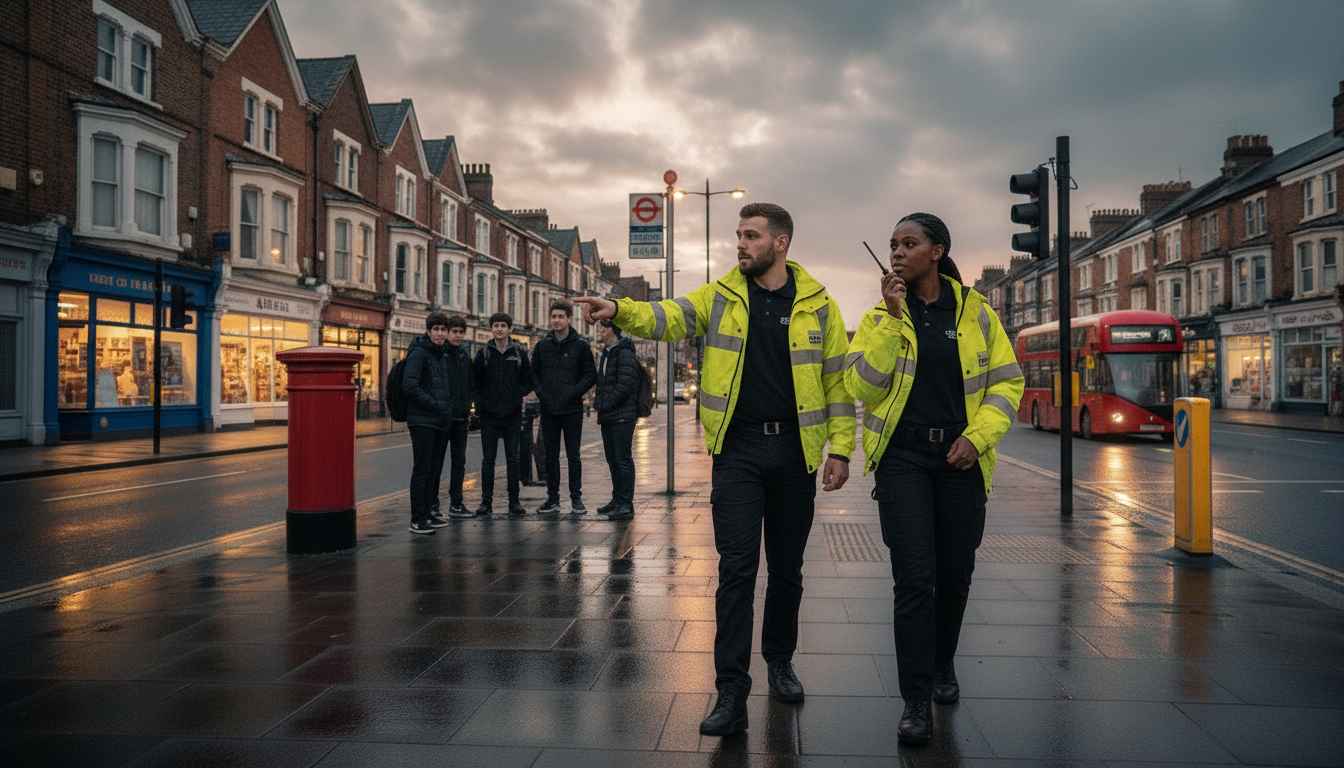


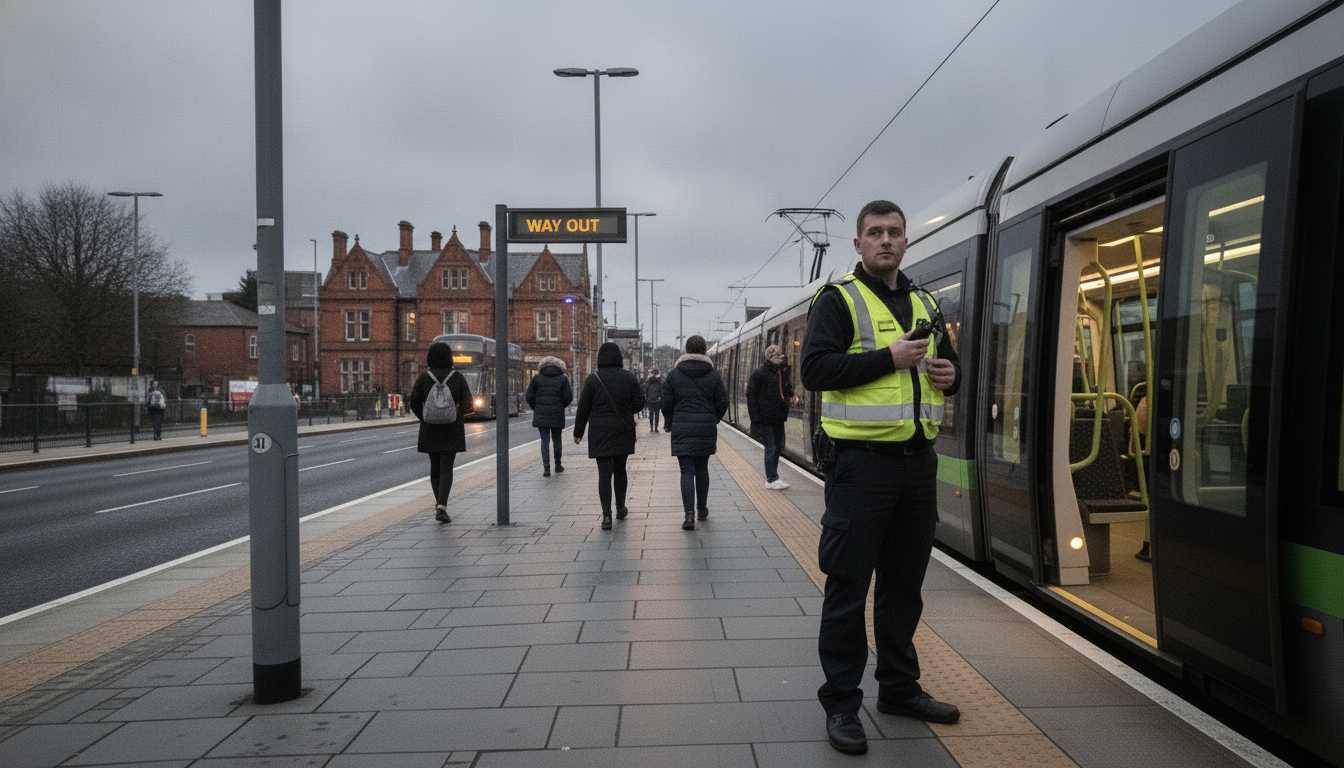


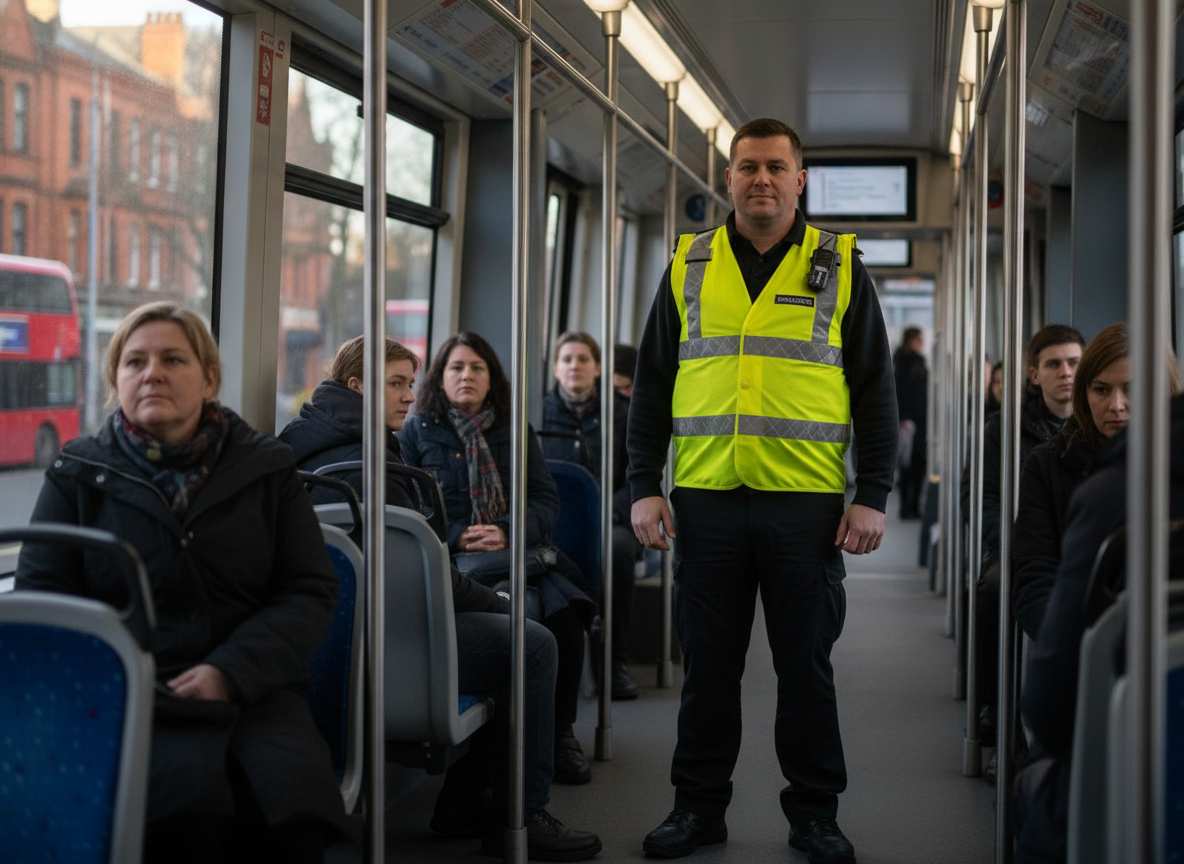
Nottingham’s trams and buses now have a new kind of passenger riding alongside you: licensed security officers, deployed as extra eyes and ears across the network to tackle anti-social behaviour. According to BBC News, Nottingham City Transport has rolled out officers across its services, joining operators in London, Manchester and Edinburgh who’ve already gone down this road.
For anyone holding an SIA licence — or thinking about getting one — this matters. Transport security is one of the most stable corners of the industry, and the contracts are growing.
Why Transport Operators Are Hiring Security Right Now
Anti-social behaviour on public transport has crept up the agenda over the past two years. Drivers report being shouted at, spat at, and worse. Passengers say they feel less safe at night. Operators have responded the obvious way: put trained, uniformed staff on the network.
Nottingham City Transport’s deployment is part of that wider shift. Transport for London has its own enforcement and revenue officers. Greater Manchester’s Bee Network uses TravelSafe officers. Edinburgh Trams runs a customer service team with a strong security remit.
The job titles vary. The work, broadly, does not.
What the Role Actually Involves Day to Day
Transport security is less about confrontation and more about visible presence. You’re there so that the trouble doesn’t start in the first place.
A typical shift on a tram or bus network looks something like this:
- Ride scheduled routes, often in pairs, providing reassurance to passengers and drivers.
- Patrol key interchanges and stops, especially during the evening rush and late-night services.
- De-escalate disputes — fare disputes, drunk passengers, arguments between travellers.
- Report incidents to the control room and, where needed, request police attendance.
- Support drivers and revenue inspectors when fares are challenged.
- Help vulnerable passengers, including those who’ve had too much to drink or missed a connection.
It’s a customer-facing job dressed in a uniform. The best officers on these contracts are the ones who can have a chat with a stranger as easily as they can stand their ground.
Which SIA Licence Do You Need?
This is where it gets interesting — and where applicants often get it wrong.
Most transport security roles ask for a door supervisor licence rather than a security guard licence. The reason is simple: trams, buses and stations are environments where alcohol is sometimes in the picture, where physical intervention may occasionally be needed, and where the conflict management training that comes with the door supervisor qualification is directly relevant.
A standard security guard licence will get you static guarding work. But if you want to apply for transport contracts, you’ll be more competitive — and often only eligible — with the door supervisor ticket.
Some larger operators also like to see:
- A First Aid at Work certificate.
- Mental health first aid training.
- A clean enhanced DBS check.
- Customer service experience, even from outside the industry.
If you’re starting from scratch, a door supervisor training course is the right entry point.
Recommended Reading: Which SIA Licence Do I Need?
Shift Patterns and Pay
Transport security shifts tend to follow the network. That means earlies starting around 5 am to cover the morning commute, lates running until midnight or beyond on weekends, and a chunk of work concentrated on Friday and Saturday nights.
Pay varies by contractor and city, but transport contracts generally sit above the floor for static security work. Expect £13 to £15 an hour as a working range outside London, with London contracts pushing higher. Overtime and night premiums are common.
The trade-off: shift patterns aren’t always sociable, and you’ll spend a lot of your working life standing up or walking. The upside: it’s regular hours on a long-term contract, not the boom-and-bust of pure night-time economy work.
Recommended Reading: Door Supervisor Licence Cost
How to Find Out Who’s Hiring Locally
Transport operators rarely employ security officers directly. They contract the work out to specialist security firms — and that’s where you apply.
To find the contractor on your local network:
- Look at the uniforms on the trams and buses. The branding on the high-vis often gives away the security firm.
- Check the operator’s procurement pages — local authorities publish contract awards.
- Search job boards for terms like “transport security officer”, “revenue protection”, “travel safe officer”.
- Ask working officers. The industry is small, and a polite question goes a long way.
Tailoring Your CV for a Transport Contract
Most security CVs are written for door work. If you want a transport role, rewrite it for that audience.
Lead with customer service. Operators are hiring people who can talk to the public, not just stand at a door. If you’ve worked in retail, hospitality, or even as a delivery driver dealing with members of the public, put it near the top.
Highlight your conflict management training. The fact you’ve passed the door supervisor course’s conflict module is more relevant here than your physical intervention scores.
Mention any experience with vulnerable people — pub work counts, care work counts, even volunteer stewarding at events counts.
Keep your SIA licence application details current on the CV: licence number, expiry, sector. Recruiters check.
The Bigger Picture
Nottingham’s deployment isn’t an isolated decision. It’s part of a quiet but steady professionalisation of transport security across the UK. For licensed officers, that’s good news: more contracts, more variety, and work that doesn’t depend on a busy weekend in the night-time economy.
If you’ve been working doors and fancy a change of scenery — or you’re newly licensed and looking for a way in that isn’t a city-centre club — your local tram or bus network is worth a serious look. And if you’ve been wondering if you should upgrade from an SIA security guard licence to a door supervisor licence, book your training course today to make the most of this opportunity.