

 Add to Google



Six hours on a freezing door, no feeling in your toes by hour three, and three more shifts to go before the weekend. Here’s how to get through a UK winter on the door properly, from what your employer should provide to how to layer, take your breaks and stay sharp.
Key Takeaways
- UK law sets no minimum outdoor working temperature, but employers still have to assess the risks and act on them. HSE guidance sets out what that looks like in the cold.
- HSE says early signs of cold stress include a cough or body aches, not just shivering.
- Most adult workers get one 20-minute rest break on a shift of more than six hours. HSE also expects employers to allow more frequent breaks and somewhere to warm up.
- Three layers (base, mid and a windproof shell) beat one thick coat.
- Cold affects concentration and decision-making, which matters when you’re the one managing a door.
- Numbness, confusion or slurred speech mean getting warm and getting help, not pushing through.
What Your Employer Has To Do
There’s no minimum temperature in UK law for outdoor work, which surprises a lot of door staff. But that doesn’t mean your employer gets a free pass. Employers have to assess the risks to your health and take sensible action, and HSE’s guidance on managing workplace temperature says that includes cold.
For outdoor work, HSE’s guidance expects employers to:
- make sure the protective clothing they issue is suitable for the cold, not just hi-vis over a uniform shirt
- provide somewhere to warm up, plus soup or hot drinks
- introduce more frequent rest breaks
- make sure workers can recognise the early symptoms of cold stress
If none of that is happening on your site, raise it with your supervisor or employer early in the season, not in the middle of a freeze. Our article on what security professionals wear explains that any uniform item needed for your safety, such as a foul-weather jacket, counts as PPE.
If you end up buying your own kit, you’re not alone: in our Security Worker Standards Gap report, 19% of the 271 security professionals surveyed said they provide their own protective equipment because their employer doesn’t.
Recommended Reading: Security Shifts at Christmas Markets
Build A Kit That Works
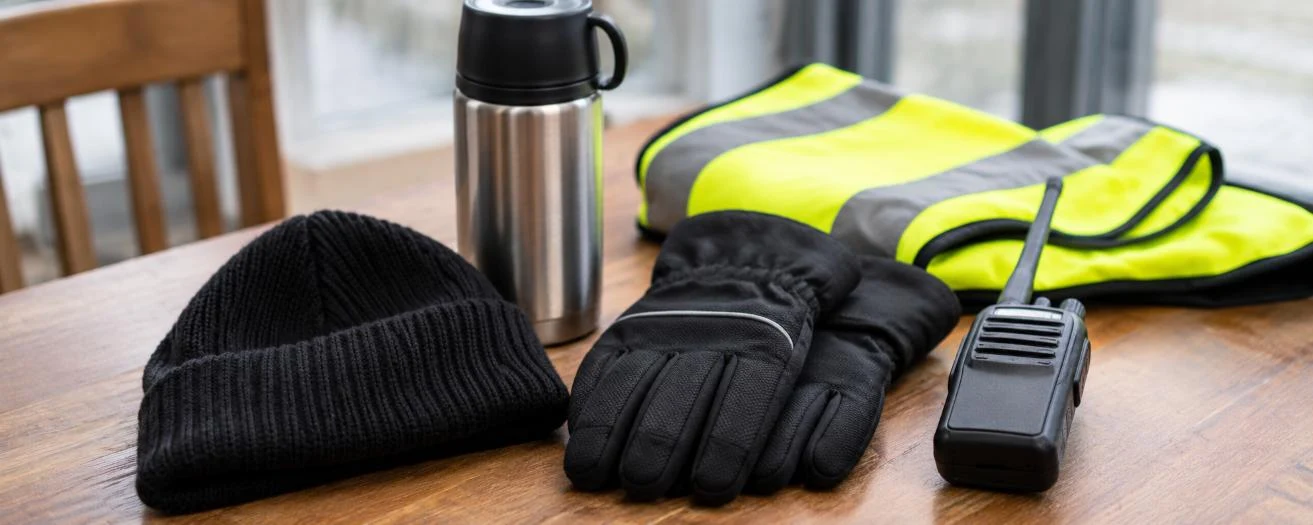
Forget one big coat. Three thinner layers beat a single thick one, because you can adjust as the night goes on. HSE’s advice for workers is the same: add layers and take regular breaks to warm up.
- Base layer: a thermal, moisture-wicking layer against your skin. Cotton holds sweat and gets cold fast, while synthetic or merino thermals don’t.
- Mid layer: a fleece or thermal jumper to trap heat.
- Outer shell: windproof and waterproof, roomy enough to move in. This is where your uniform jacket or hi-vis usually sits.
- Feet: thin dress socks under boots is a recipe for cold feet within the hour. Wear proper thermal socks and boots with room for your toes, since tight boots restrict circulation.
- Hands: thin liner gloves under a thicker pair if you need dexterity for ID checks or radios. Disposable hand warmers in your pockets can help.
- Head and neck: a beanie that fits under any required headwear, and a neck gaiter or snood, keep exposed skin covered.
Your Breaks
Most adult workers have the right to one uninterrupted 20-minute rest break if they work more than six hours in a day. It doesn’t have to be paid, your contract decides, and your employer chooses when you take it, though you should be able to spend it away from your post. Some shift workers have different arrangements, so check your contract.
Separately, HSE expects employers to allow more frequent breaks and somewhere to warm up when it’s cold. A heated room or vehicle is a better break spot than a doorway out of the wind.
Fatigue: Why Cold Nights Feel Longer
Cold doesn’t just make you uncomfortable. HSE’s head of operational strategy has said people working in uncomfortably cold conditions are less likely to perform well and more likely to behave unsafely, because their ability to make good decisions deteriorates. That matters when you’re deciding who to let in or stepping in on an incident. If your shifts finish late, our look at later licensing hours and what they mean for door staff is worth a read.
A few practical things that help:
- Eat before the shift. Staying warm takes energy, so going in hungry makes a long night harder.
- Have hot drinks or soup on your breaks. HSE lists them among the ways to stay warm.
- Rotate positions if your team can. Standing completely still in the cold is worse than a role that lets you move, so swap between the static door post and patrolling if you can.
- Know your own warning signs. Sudden clumsiness, slurred speech or a drop in alertness aren’t just tiredness.
If you work nights on your own, our guide to lone working as a security officer covers fatigue and wellbeing, and our mental health guide for security officers has more on looking after yourself.
When To Step Off The Door
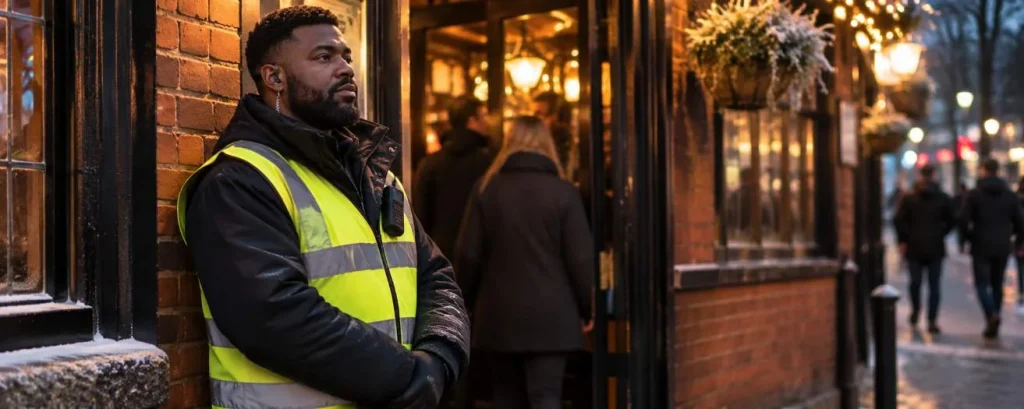
This is the part people skip. If you notice numbness that doesn’t go away after warming up, confusion, slurred speech or you’re struggling to think clearly, take it seriously. The NHS lists confusion and slurred speech among the signs of hypothermia. That’s not weakness. Go inside, tell your supervisor so cover can be arranged, and warm up properly.
Frequently Asked Questions
No. UK law doesn’t set a minimum outdoor temperature, but employers still have to assess the risks. HSE guidance expects suitable protective clothing, somewhere to warm up, hot drinks and more frequent breaks in the cold.
HSE says early symptoms can include a cough or body aches, not just feeling cold. Numbness, confusion or slurred speech are more serious, so get warm and get help.
Most adult workers get one uninterrupted 20-minute rest break if they work more than six hours. It doesn’t have to be paid, and your employer chooses when it’s taken. HSE also expects employers to allow more frequent breaks and somewhere to warm up in cold conditions.
Layering lets you adjust through the shift. HSE advises workers to add layers of clothing, and a base layer, mid layer and windproof shell is a simple way to do it.
Yes. HSE has said people in uncomfortably cold conditions are less likely to perform well and more likely to behave unsafely, because decision-making deteriorates.
Staying Sharp All Winter
If your licence renewal is coming up, door supervisor and security guard renewals now need refresher training, so book your Door Supervisor refresher before the coldest stretch.
New to the door? Our Door Supervisor training and Security Guard training are the places to start, and our night shift security officer guide covers what the work involves.
And for quick, handy resources to refer to on the shift, check out our free Security Officer’s Manual.