

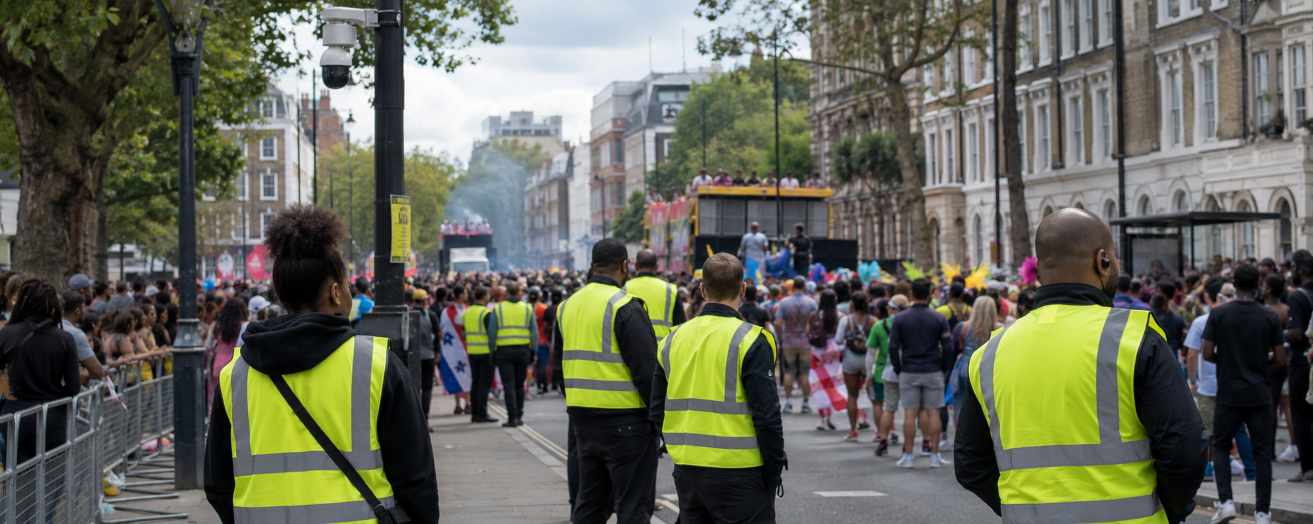



Notting Hill Carnival is almost here, and this year’s security operation is set to be bigger than usual. There will be more stewards, more technology and more teams working together across the route.
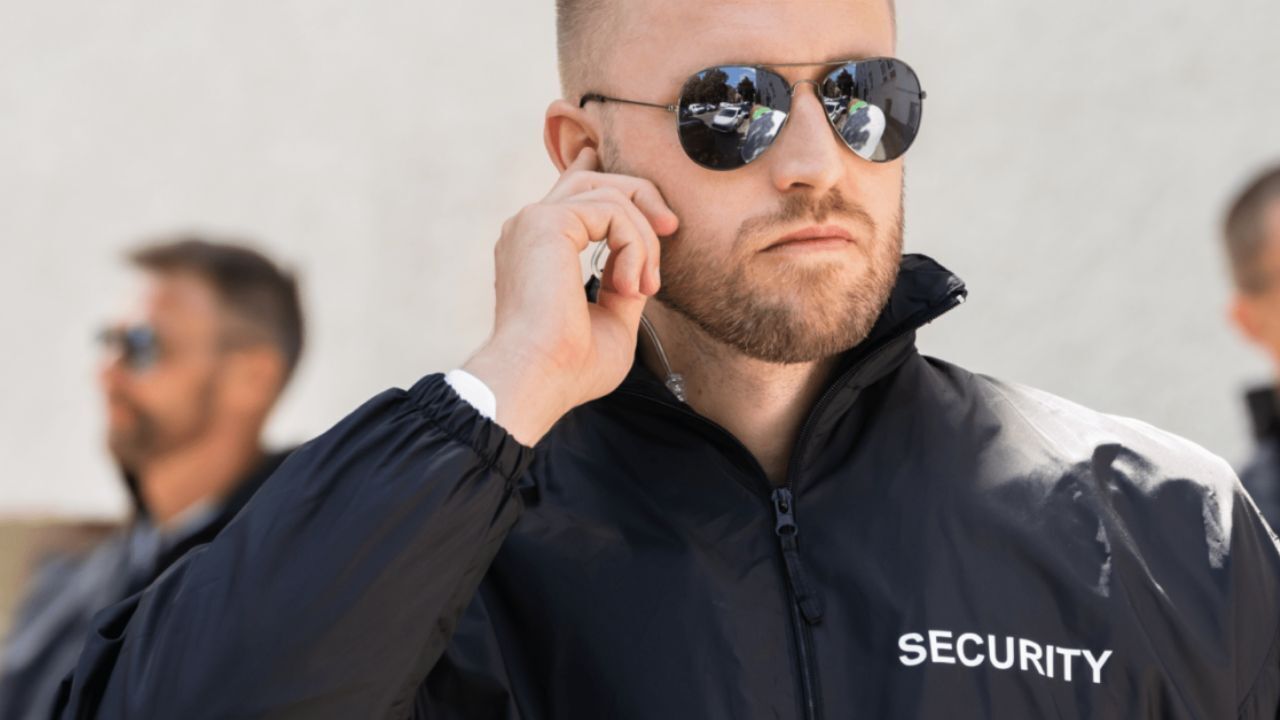
The BBC reports that around 3,500 stewards are expected to work at this year’s Carnival, compared with approximately 1,750 in previous years. Organisers also plan to use around 90 temporary CCTV cameras, 40 large public-message signs and a larger control room. The changes are supported by an additional £4.6 million City Hall grant.
The latest figures put those changes into context. Get Licensed’s UK Festival Safety Audit recorded 528 arrests at the 2025 Carnival, up from 334 in 2024. At the same time, recorded stabbings fell from eight to four, and none of those recorded in 2025 were life-threatening.
Those figures do not tell the whole story, and they should not be used to claim that one particular measure caused the change. They do show why the Carnival’s safety operation cannot be judged by arrests alone. Different measures capture different parts of what happens at an event.
This is not another recruitment guide. We already covered the roles and recruitment context in our guide to working at Notting Hill Carnival. For officers already confirmed to work this year’s event, the more useful question is: how will the expanded stewarding, CCTV and control-room operation fit together when the route is busy?
The Big Change
According to the BBC, Carnival organisers previously had crowd managers who could identify problems but did not always have enough physical resource to act on what they saw. This year, expanded stewarding is intended to help close that gap.
A camera can show movement, a control room can coordinate information and a crowd manager can identify a developing problem. Staff on the route are still needed to provide visible presence, pass on what they can see and support the agreed response.
The event briefing is the source of truth for each role.
Cameras Need People
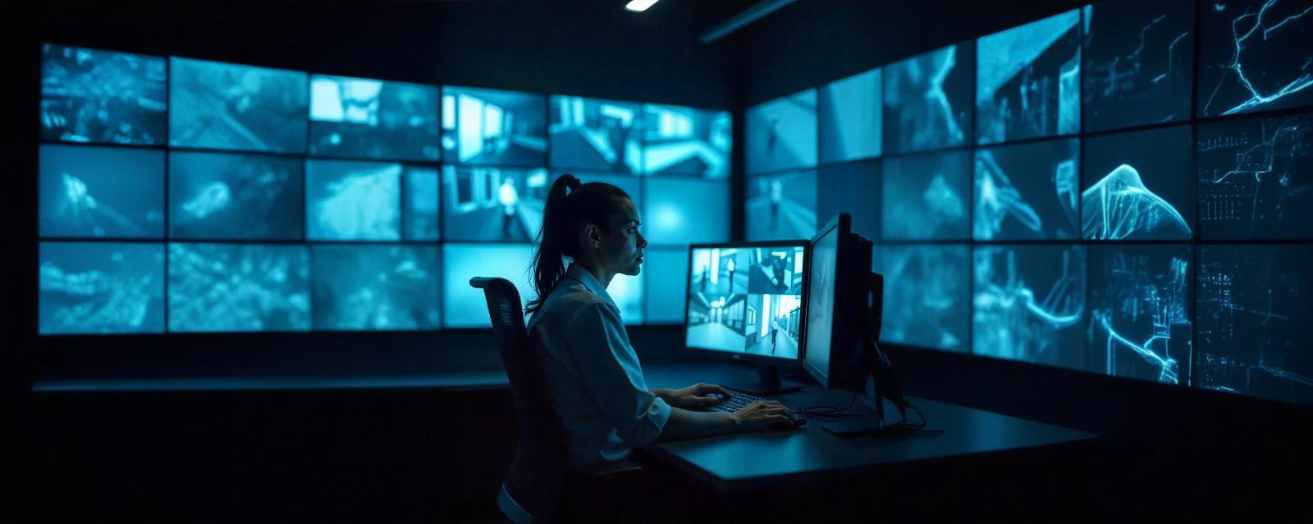
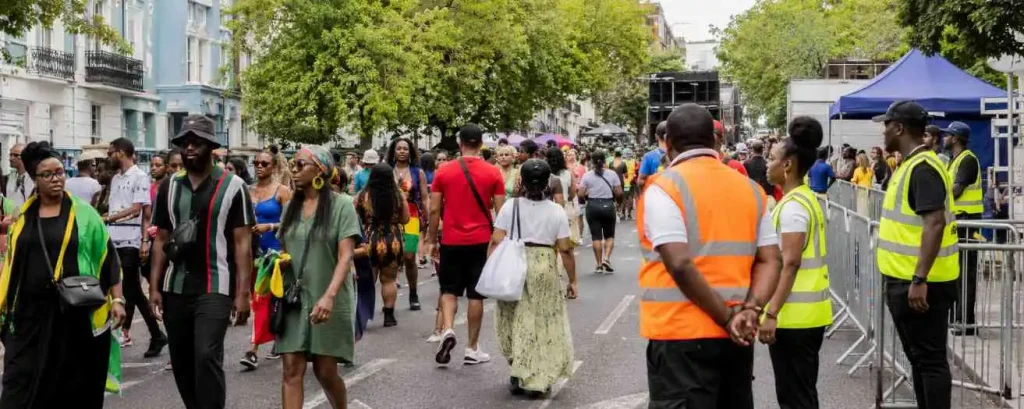
Around 90 temporary CCTV cameras are due to be linked to the central control room, compared with 20 cameras used along the route the previous year, according to the BBC.
That should give the control room a wider view of what is happening, but cameras cannot provide every detail from ground level. An operator may see a concentration of people forming. Staff on the route may be better placed to describe access, barriers, direction of movement or whether people can move through an area comfortably.
This is where clear communication becomes more valuable than dramatic reactions. When using the event’s agreed radio or reporting system, use the landmarks, post names, gates and route references in your briefing. Say what you can see, rather than guessing why it is happening.
CCTV supports the operation; it does not change an officer’s SIA licence, employer instructions or legal authority.
Clear Messages Help
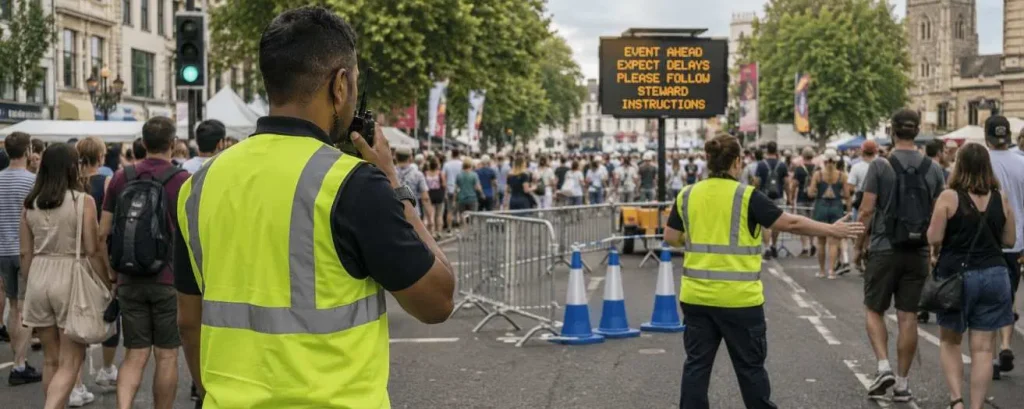
The BBC says the Carnival will have 40 large “hiker” signs this year, compared with 14 last year. Linked to the control room, the signs can display messages about delays or movement around the route.
Public information matters when people are redirected or held. People are more likely to stay calm when they understand what is happening and what to do next.
The signs are not a substitute for staff on the ground. Members of the public may still need directions or misunderstand a message. Use only information authorised by the event operation; if you do not know why a route is closed, refer the question through the designated information or supervisor route.
If an instruction changes, make sure you have understood the new route or holding arrangement before passing it on. One confident but incorrect explanation can create more confusion in an already busy area.
Know Your Place
The BBC also reports that specialist crowd managers and psychology experts are being used to help predict crowd movements, alongside the additional stewarding and technology.
That does not turn every steward into a crowd-management specialist. It shows that the operation is using different roles for different parts of the problem. Some people will be assessing movement. Others will be coordinating information. Others will be providing visible staff presence or supporting an agreed response on the route.
The distinction matters. A steward should not assume that a camera alert, a crowd-management instruction or police activity gives them powers they did not already have. At the same time, a developing concern should not be ignored because somebody else may also be watching it. The sensible middle ground is to pass the information through the event’s agreed chain of communication and follow the instruction that comes back.
The BBC also says the Metropolitan Police expects to use more live facial recognition at the Carnival. That is a police-led technology deployment. It is not a new power for private stewards, and staff should not make claims about whether a person has been identified. Questions about police technology should go through the relevant supervisor or police contact.
What This Looks Like In Practice
The public information does not provide a post-by-post manual, but it shows the broad structure staff are working within: around 3,500 stewards, 90 temporary CCTV cameras, 40 public-message signs, a larger control room and specialist crowd managers.
The resources only work if information travels between them. The control room needs useful observations from the route; ground staff need clear instructions; the public needs accurate messages. That is why listening properly, using agreed references and reporting accurately matter. It does not require an officer to invent a tactic or take responsibility for decisions outside their role.
Use The Briefing
Get Licensed’s festival-security guide provides wider context on the environment in which event security work takes place. It is not a replacement for the briefing issued by the employer or event organiser.
For confirmed staff, the briefing should cover what public reporting cannot: the post, supervisor, radio channel, escalation route and available support.
Whether your event role requires an SIA licence depends on the activity and any applicable exemption. Get Licensed explains the distinction in its event-security licence guide. This is not a last-minute qualification suggestion; for future event work, see Door Supervisor Training, which lists event security among its routes.
The Takeaway
The 2026 operation is bigger, but an officer’s job remains straightforward: understand the assignment, use the communication route, report what is visible and work within the employer’s procedures.
Around 3,500 stewards, 90 cameras and 40 signs create more potential for a coordinated response—but only when the people and systems are connected. If you are working Notting Hill this weekend, treat your live briefing and supervisor as the operational source of truth. For future event-security work, explore Door Supervisor Training with Get Licensed.