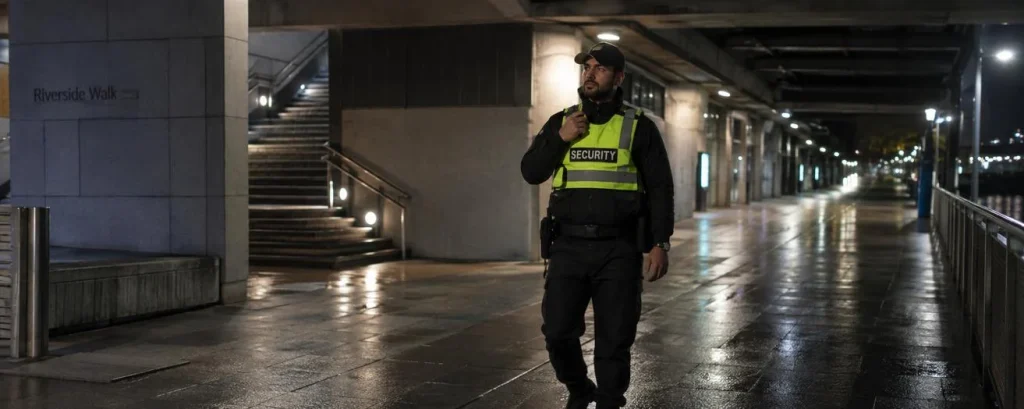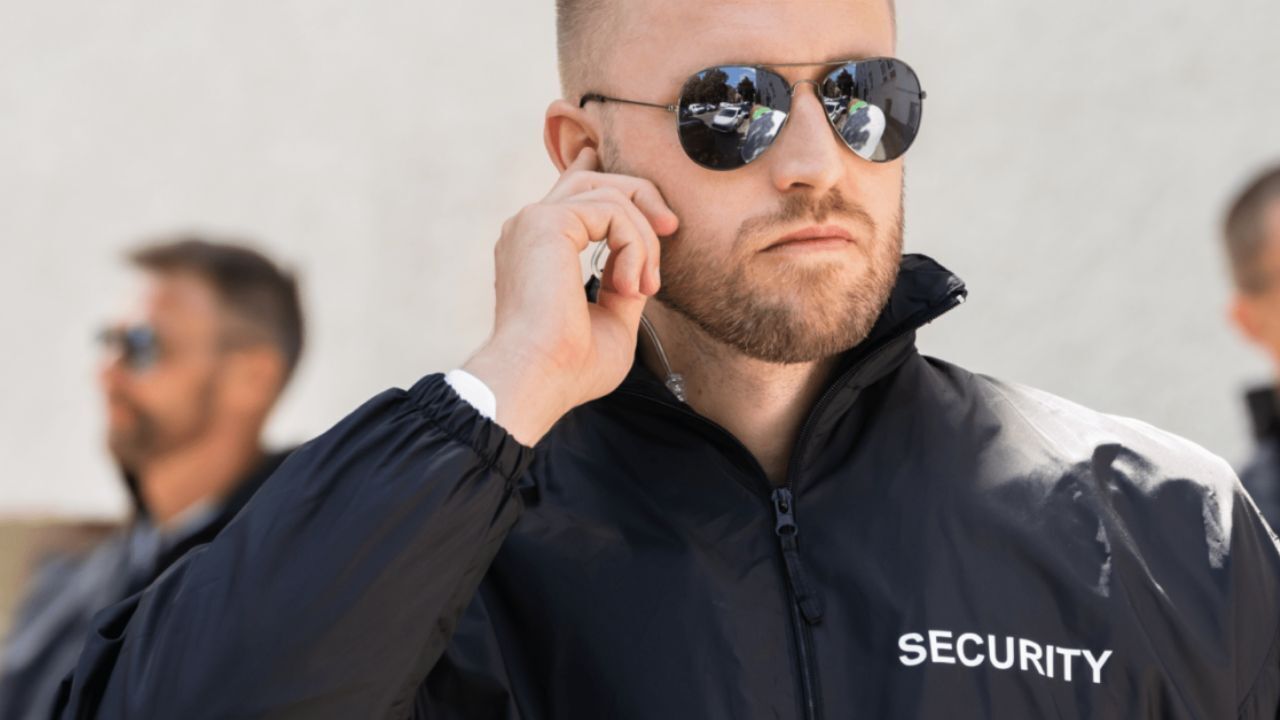


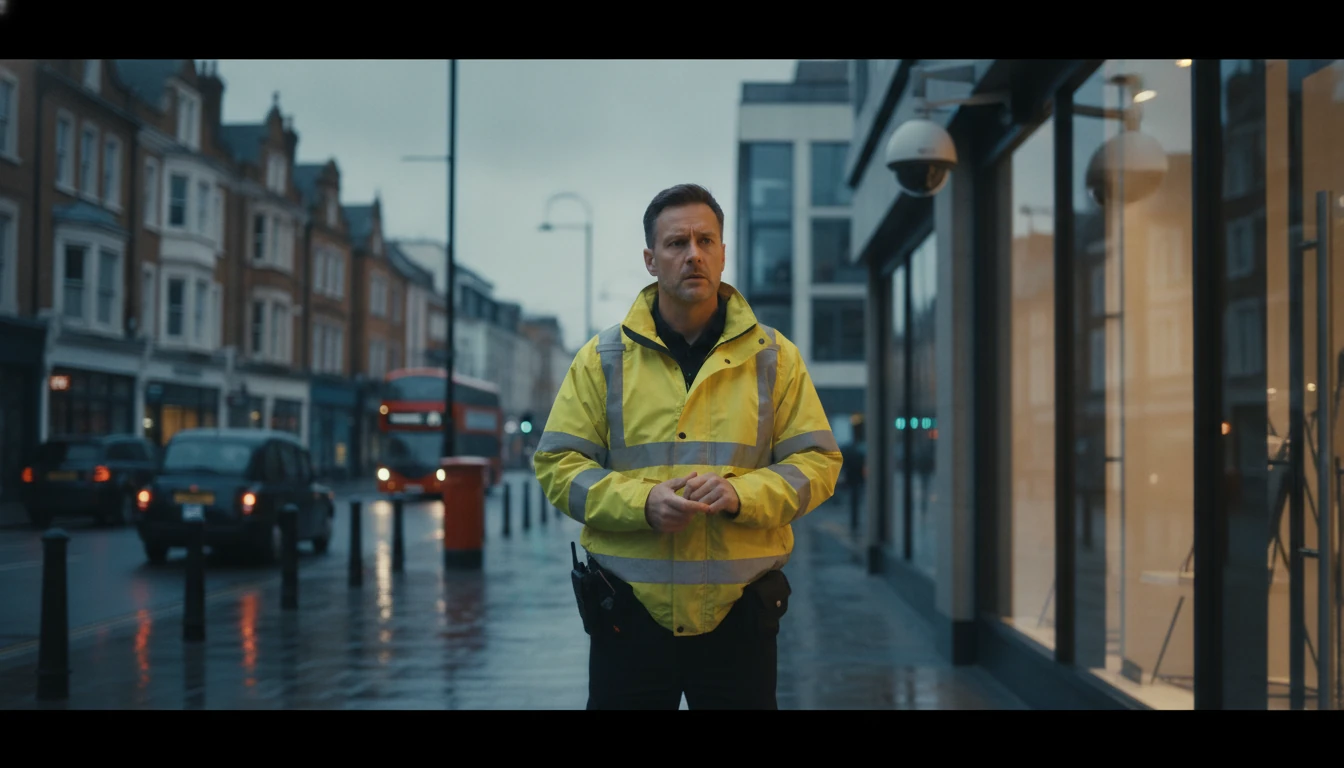



Live facial recognition (LFR) has quietly moved from airports and football grounds onto the high street. Retail crime is rising, and according to The Guardian, systems in a growing number of UK shops now match faces against watchlists and, in some setups, ping police directly. If you’re working retail loss prevention, your job just got more complicated — and more scrutinised.
This isn’t a piece about the tech. It’s about what you, the operative on the floor, actually do when the system flashes an alert — and what you say when a shopper asks why a camera just scanned their face.
What The System Actually Does
In plain English: a camera at the door captures faces, converts them into a numeric template, and checks that template against a watchlist of people the retailer (or a shared industry database) has flagged as previous offenders or persons of interest. If there’s a match, someone gets an alert. That someone might be you. In newer setups, it might also be the local police control room.
Two things worth burning into memory:
- A match is a suggestion, not a conviction. False positives happen — more often with some demographic groups than others.
- You are still the decision-maker on the floor. The camera doesn’t detain anyone. You do, and only within the law.
Alert On Your Earpiece — Now What?
Your response depends on what kind of alert it is and what your site’s Standard Operating Procedure says. If you don’t have a written SOP for facial-recognition alerts, ask your manager for one today. Working without one leaves you exposed.
If The System Alerts You, But Not Police
Treat it like any other intelligence tip. Observe first. Confirm the person matches — clothing, gait, behaviour — before you approach. Do not challenge someone purely on the basis of a camera match. You need your own reasonable grounds if you’re going to make a citizen’s arrest under Section 24A of the Police and Criminal Evidence Act 1984, or otherwise use reasonable force to prevent a crime under the Criminal Law Act 1967. A camera match alone is not reasonable grounds — it’s a prompt to look closer, not a basis to act.
Recommended Reading: What Rights Do Security Officers Have?
If The System Alerts Police Directly
Your job shifts. You are now a witness and a steward of the scene, not the primary responder. Keep the person under observation if it’s safe. Do not attempt a physical detention unless you’d have done so anyway based on what you’ve seen with your own eyes. Brief the responding officers clearly: what you saw, what the system flagged, and when.
The Questions Customers Will Ask You
Once shoppers realise their faces are being scanned, some will have opinions. Loudly. You’re not the Data Protection Officer, but you are the human they can see, so you’ll get the questions. Know the basics.
- “Is this legal?” — Yes, LFR in private retail settings is lawful in the UK when operated in line with UK GDPR and the Data Protection Act 2018. The Information Commissioner’s Office has issued guidance on it.
- “Did you scan my face?” — Be honest. Yes, the camera scans everyone who enters. Templates of people who aren’t on a watchlist are typically deleted within seconds, but confirm the specifics for your site.
- “I want my data deleted.” — Take the request seriously. Direct them to the signage, which should list the data controller and a contact. Don’t promise deletion yourself — you’re not the one who does it.
- “Where’s the sign?” — Know where your site’s privacy notice is displayed. If it isn’t clearly visible, flag that to your manager. Missing signage is one of the fastest ways for a retailer to end up in trouble with the ICO.
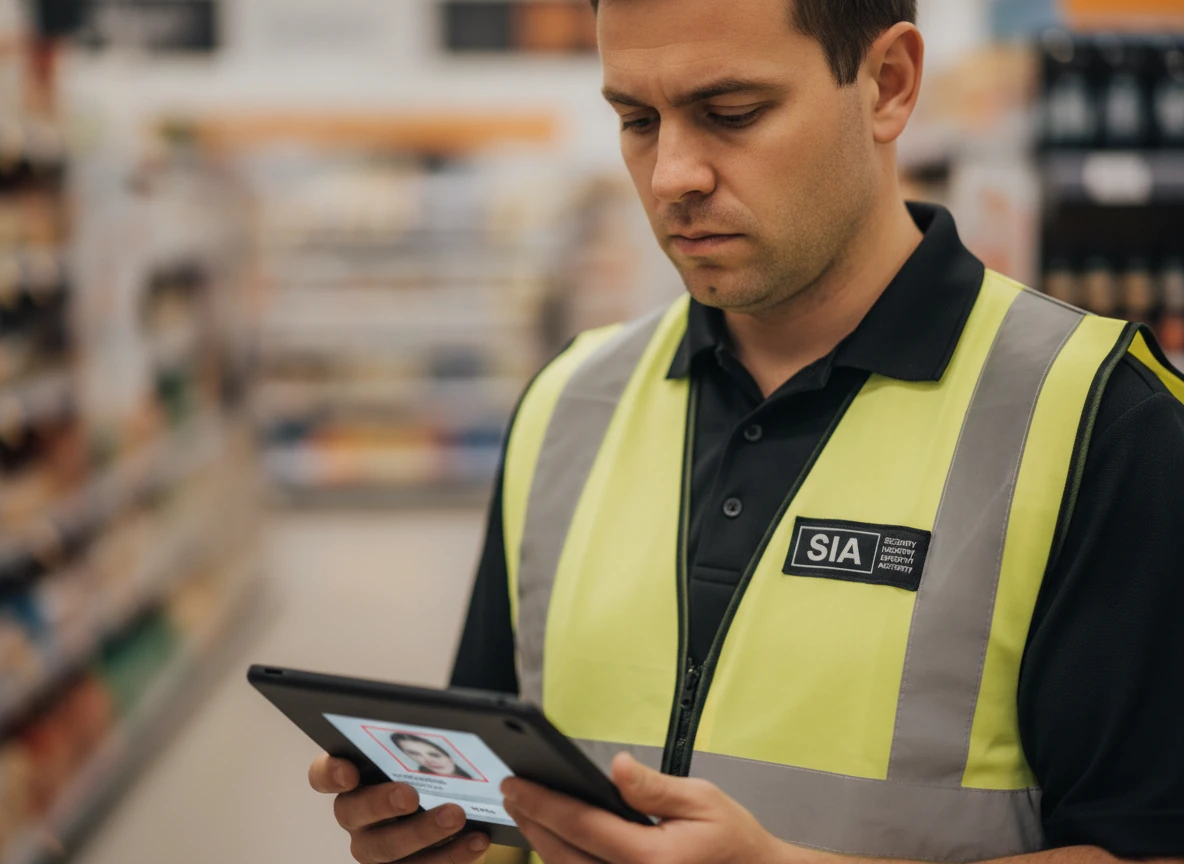
Documenting a Facial-Recognition Interaction
If you act on an LFR alert — whether you approach, refuse entry, or detain — your notes need to be tighter than usual. Assume every incident could end up in a complaint to the ICO, a civil claim, or a criminal court.
At minimum, log:
- Time of the alert and time of your action (they should be seconds apart, not minutes).
- What the system flagged — the watchlist category if you know it (e.g. “previous theft”, “banned from store”).
- What you personally observed that supported the intervention. This is the bit that protects you. “The system alerted” is not, on its own, reasonable grounds.
- What you said, what they said, and any witnesses.
- Whether police were called or auto-alerted, and their reference number.
Body-worn video is your friend here. If your site issues it, use it from the moment you decide to approach.
The Civil-Liberties Bit — Why It Matters To You
Groups like Big Brother Watch have challenged retail LFR in the courts and in the press. Whether you agree with them or not, the political temperature around this tech is high. That means two things for the operative on the floor: the public will be more sceptical of you, and any mistake will travel further on social media than it would have five years ago.
The good news is that solid basics, i.e., communication, proportionality, honest note-taking, protect you regardless of what the camera did. The tech is new. The professional standards aren’t.
What To Do This Week
- Ask your employer whether LFR is deployed at your site and, if so, which provider.
- Read the site’s SOP for LFR alerts. If there isn’t one in writing, ask why.
- Check the privacy signage is visible from the entrance.
- Refresh yourself on Section 24A PACE and your company’s use-of-force policy.
- If you feel underprepared, a dedicated retail conflict-management or LFR-response training module will pay for itself the first time you use it. And if your SIA licence is due for renewal, make sure your mandatory SIA refresher training is booked well ahead of the deadline — not left until the last minute
Facial recognition doesn’t change what makes a good loss-prevention officer. It just raises the price of getting it wrong. If your SOP gap traces back to licensing itself rather than this one scenario, it’s worth checking your door supervisor training is current before your next shift.