



How to stay safe in the UK: stay updated about regional crime trends, take precautions on nights out, protect your phone in public, know how to spot scams before they hit, upgrade your home security, and know what to do if something goes wrong. This safety guide covers the practical stuff, based on real data, not just headlines.
The UK is safer than it’s been in decades. Homicides are at their lowest since 2014. Burglary is down 90%. Violent crime keeps falling. But the risks have shifted: phone theft, spiking, and fraud have surged. The threats your parents worried about are fading. The ones worth watching now look completely different.
Is the UK truly safe? The short answer is yes. The longer answer that we explore in this blog is more interesting.
This UK safety guide cuts through the noise with safety tips that actually work. We’ve broken down what personal safety actually looks like in Britain right now, where the genuine risks are, and what you can actually do about them. Whether you’re a student moving to a new city, a parent worried about your teenager’s online world, someone living alone, or just a person who’d rather be informed than anxious, here’s what you need to know.
Key Takeaways
- Crime is falling, but the risks have shifted. Violence and burglary are down. Fraud, phone theft, and scams have surged.
- Where you live matters. Blackpool’s violent crime rate is 5x higher than Richmond upon Thames.
- Phone theft is surging. 116,000 phones were stolen in London in 2024 (320 every day).
- Women and young people face higher risks. Half of women feel unsafe after dark. 16-24-year-olds are twice as likely to be victims.
- Spiking is vastly underreported. 1.2 million affected annually. 90% never reported.
- Burglary is down 90%, but 73% go unsolved. Prevention is your only reliable protection.
- Fraud is now the UK’s most common crime. £1.17 billion was stolen in 2024. 70% starts online.
- Security professionals keep the UK safe — from venues to city centres — and most people don’t realise it.
UK Crime: The Reality Behind the Headlines
If you only followed the news, you’d think Britain was becoming more dangerous by the day. The reality, as we’ve covered in this safety guide, is more complicated, and in some ways, more reassuring.
The latest national crime data puts the figure at 9.4 million incidents across England and Wales. That sounds alarming until you look at what’s driving it. Fraud accounts for a huge chunk of that number, while the crimes people fear most (like violence, robbery, & burglary) have actually fallen significantly. Homicides dropped 6% to their lowest in over a decade. Knife-related hospital admissions fell 10%.
But the nature of crime has changed. Today’s criminals are far more likely to target your bank account than your wallet. They’re more likely to snatch your phone than break into your house. The threats haven’t disappeared; they’ve migrated to where we’re now most vulnerable.
Where You Live Changes Everything
Crime isn’t spread evenly across the country, and the difference between areas is staggering, which is why knowing the safest places to live in the UK matters if you’re considering a move.
Data on the UK’s most violent cities shows Blackpool tops the list at nearly 770 violent crimes per 10,000 residents. Middlesbrough and Thanet follow. At the other end, Richmond upon Thames sees just 153 per 10,000 — five times lower. That’s not a small variation; it’s a completely different reality.
The picture changes depending on where in the UK you look. Glasgow City recorded the highest crime rate in Scotland at 829 per 10,000 in 2024/25, while the Shetland Islands recorded just 180. In Wales, Cardiff sits roughly in line with the national average for a major city. Previous data on the UK’s crime capitals shows Westminster tops the charts for total recorded crime — but that’s largely theft in tourist hotspots, not violence against residents.
Knife crime data for England shows London has the highest rate at 17.89 serious offences per 10,000 residents, with Cleveland and South Yorkshire following, but the overall trend is downward.
What does this mean practically? If you’re moving to a new area, curious about where you live, or researching the safest places in the UK, the City Safety Index breaks down locations by crime rates, CCTV coverage, reoffending rates, and more. The UK Crime Report 2024 shows patterns by region and time of year. Crime also follows seasonal patterns — July consistently sees the highest levels, February the lowest. Violence peaks in summer; theft spikes in December around Christmas shopping.
Staying Safe in Public: Personal Safety Tips
“Be aware of your surroundings.”
Generic personal safety advice is everywhere. You’ve heard it all before, and most of it is so vague it’s almost useless. This section of our UK safety guide covers what actually makes a difference to yourpersonal safety on the street.
The Phone Theft Epidemic
This is the crime that’s genuinely changed how people behave on UK streets. Over 116,000 phones were reported stolen in London during 2024 ( 320 every single day). But this isn’t just a London problem. Manchester city centre, Birmingham’s Bullring area, and Glasgow’s Buchanan Street all see concentrated phone theft. Anywhere with crowds, distracted pedestrians, and easy escape routes is a target.
The Victoria line is the worst for theft on the tube, and crime on London’s public transport has been rising in recent years. Manchester’s Metrolink and Birmingham’s tram network have their own issues too.
How to protect yourself:
- The thieves — often on e-bikes — look for easy grabs. Phone in hand while walking near a road? Easy. Phone in a loose back pocket? Easy. Phone in a zipped inside jacket pocket or cross-body bag held in front of you? Much harder.
- Step into a shop doorway to check directions rather than standing on the pavement — that removes you from the target pool entirely.
- Act fast if your phone is stolen. Lock it remotely using Find My iPhone or Google Find My Device, report to the police for a crime reference number, and contact your provider to block the IMEI.
Women’s Safety
Women face personal safety challenges that generic advice doesn’t begin to address. ONS research found that half of women feel unsafe walking alone after dark near their home, compared to one in seven men. In parks after dark, that rises to 81%. Three in five women aged 16-34 experienced harassment in the previous year.
Young people face the highest risk of violent crime overall. The UK Victim Report shows 16 to 24-year-olds are twice as likely to be victims as any other age group. Safety apps like WalkSafe let you share your location and flag unsafe areas.
How to protect yourself:
- Vary your routes so patterns can’t be learned.
- Share your live location with a trusted contact — it takes seconds and provides a safety net.
- Trust your instincts. If something feels wrong, act on it. Your brain processes warning signs faster than your conscious mind can articulate them.
- If you’re out late, have your journey home sorted before you leave.
Hate Crime and Community Safety
Hate crime has risen across the UK, with over 140,000 offences recorded in 2023/24 targeting race, religion, sexual orientation, disability, and transgender identity. If you experience or witness a hate crime, report it to police (999 in emergencies, 101 otherwise) or through organisations like Tell MAMA, the Community Security Trust, or Galop.
How to protect yourself:
- Trust your instincts about unsafe situations — if something feels wrong, remove yourself if you can.
- Document incidents when safe to do so. Note the time, location, descriptions, and any witnesses. Photos or screenshots can support a report later.
- You don’t have to report to the police to get support. Organisations like Tell MAMA, CST, and Galop can provide advice, emotional support, and help you decide the next steps.
- Don’t engage with perpetrators if you’re being targeted online. Report and block them, and screenshot evidence before blocking.
- Know your local community networks. Many areas have neighbourhood watch groups, community safety partnerships, or local advocacy organisations that can provide support and solidarity.
Event Safety, Crowds, and Nightlife
Going out should be fun, but certain environments concentrate both people and risk. Knowing what to watch for means you can enjoy yourself without being caught off guard. Public safety in these settings depends on a combination of venue security, your own awareness, and knowing what to do if something goes wrong.
Nightlife and Drink Spiking
Drink spiking is a bigger problem than most people realise. Research by Drinkaware found approximately 1.2 million UK adults experience it annually — and 90% of incidents are never reported. The symptoms are often mistaken for having “too much to drink,” and the drugs used are typically colourless, odourless, and tasteless.

But nightlife safety goes beyond spiking. Alcohol is a factor in around 39% of all violent crime, with city centres across Manchester, Newcastle, Leeds, Cardiff, and Glasgow all seeing predictable spikes between 10 pm and 3 am on weekends. The moments of highest risk aren’t usually inside the venue; they’re the transitions. Leaving at closing time, waiting for transport, walking to a taxi rank with your phone out; those are some of the most vulnerable moments.
How to protect yourself:
- Watch your drink being made and poured. Never leave it unattended.
- If you suddenly feel far more intoxicated than you should, tell someone immediately.
- Many venues now operate the Ask for Angela scheme — ask bar staff for “Angela” if you feel unsafe.
- Have your journey home figured out before you go out. Know the last train time. Know where the taxi rank is. Have a backup plan. Making those decisions at midnight when you’re tired and three drinks in is when mistakes happen.
- Always use licensed taxis or reputable ride apps — never get into an unlicensed minicab.
Festival Safety and Sports Events
Large events bring their own dynamics. Home Office data recorded 1,803 football-related arrests in the 2024/25 season. The breakdown of incidents by club shows which supporter groups and offence types are most common.
Agree on a meeting point with friends in case you get separated, keep your phone charged, and know where the medical tent and security points are before heading to a festival. The same vigilance around spiking that applies in bars applies even more at festivals, where medical help may be further away. Even travel hubs aren’t immune. The Airport Crime Report shows theft is common in crowded terminals.
Protecting Your Home
The good news on burglary is significant: it’s down 90% from two decades ago, with fewer than 250,000 cases in the most recent year. Homes are considerably safer than they used to be.
The less good news: 73% of burglary cases are closed with no suspect identified. Prevention isn’t just the best approach — it’s effectively the only reliable one.
Location matters here, too. London sees the highest absolute numbers, but Yorkshire has the highest rates by household ratio.
Most burglaries are opportunistic. Research into convicted burglars consistently shows they look for signs of absence — piled-up post, bins left out, no lights — and easy access. An unlocked back door beats a well-secured house with expensive contents every time. They want to be in and out quickly; anything that slows them down makes them choose a different target.
How to protect yourself:
- Use timer switches on lights when you’re away.
- Don’t advertise holidays on social media until you’re back.
- Ensure that side gates and back doors are actually locked, not just closed.
- Make your home look like more effort than the one next door.
- For renters or anyone on a budget, smart doorbells, basic CCTV, and portable alarm systems have dropped in price dramatically.
- Even visible deterrents — alarm boxes, camera housings, security lighting — make opportunistic burglars think twice.
Digital Safety: Where the Real Threat Has Moved

Here’s the uncomfortable truth: you’re now significantly more likely to be a victim of fraud than any traditional crime. UK Finance reports that criminals stole £1.17 billion through fraud in 2024, with over 3.3 million confirmed cases. Seven in ten payment fraud cases start online.
UK safety has changed fundamentally in the digital age. Investment scams, purchase scams, romance scams — they all work differently but share the same playbook: exploit trust and create urgency. Investment scams alone caused £144.4 million in losses in 2024. Purchase scams are the most common — someone pays for goods through a social media marketplace that never arrive. Romance scams build relationships over weeks before introducing a financial element.
The common thread? Legitimate opportunities never require you to act immediately. If something creates pressure to decide right now, that’s the moment to step back.
How to protect yourself:
- Never click links in emails or messages; navigate to websites directly by typing the address.
- If you receive an unexpected call from “your bank,” hang up and call back using the number on your card.
- Use strong, unique passwords and two-factor authentication on every account that offers it.
- If an offer seems too good to be true, it is.
Keeping Young People Safe Online
For parents and carers, online risks are one of the most pressing and constantly evolving personal safety concerns. Cyberbullying, grooming, exposure to harmful content, oversharing personal information; the threats are varied, and the platforms keep changing.
What actually helps isn’t surveillance or restriction alone; it’s an ongoing conversation. Young people who feel they can talk to adults about uncomfortable online experiences are far more likely to seek help early.
Know which platforms your children use and understand how they work. Use age-appropriate parental controls, but recognise their limits. The NSPCC provides detailed guidance, and Childline (0800 1111) offers confidential support for young people themselves.
Workplace Safety
If you work in a public-facing role, you face risks that office workers never think about. HSE data shows 689,000 incidents of violence at work in 2024/25 — 370,000 assaults and 319,000 threats. Security, healthcare, transport, and retail workers bear the brunt.
Employers have legal obligations under the Health and Safety at Work Act to assess these risks and put measures in place. For lone workers — delivery drivers, healthcare workers on home visits, security guards on night shifts — this includes check-in systems, personal safety devices, and clear emergency procedures. If your employer isn’t meeting these obligations, that’s worth raising.
De-escalation works more often than people realise. Staying calm, speaking slowly, not matching aggression with aggression, and giving someone space rather than crowding them. These aren’t about being passive; they’re about preventing situations from reaching the point where someone gets hurt. Nobody should accept abuse as “just part of the job.”
The People Keeping the UK Safe
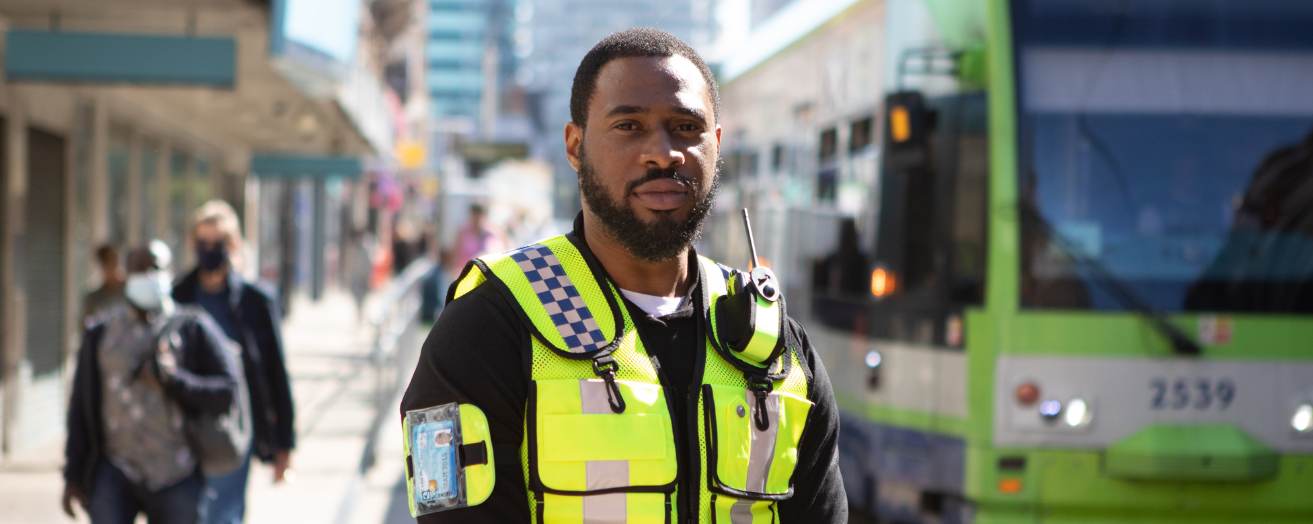
Every safety challenge covered in this safety guide, from phone theft on the streets to violence in nightclubs, from crowd control at football matches to shoplifting in retail, has something in common: they can be prevented with the help of trained professionals.
Security professionals are woven into almost every aspect of public safety, often without most people realising it. The door supervisors managing nightlife venues are trained to spot spiking, handle aggressive behaviour, and coordinate with emergency services. Event security teams at festivals and football grounds manage crowd flow and de-escalate flashpoints before they become incidents.
CCTV operators monitoring city centre cameras flag suspicious activity and direct police to crimes in real time. Retail security officers deal daily with the kind of confrontational situations most people would walk away from.
Behind all of it is a licensing and training framework — overseen by the Security Industry Authority (SIA) — that ensures these professionals meet national standards in conflict management, physical intervention, and legal responsibilities. It’s not glamorous work, and it rarely gets the recognition it deserves. But if you’ve ever felt safe at a concert, walked through a well-monitored city centre at night, or been helped by a calm professional when a situation turned ugly, you’ve benefited from it.
For those interested in what these roles involve and how to get qualified, SIA training courses cover everything from door supervision and CCTV operation to close protection.
If Something Goes Wrong
Prevention is the focus of this safety guide, but sometimes things happen anyway. Knowing the right steps can make a real difference to the outcome.
If you’ve been scammed: Contact your bank immediately — they may be able to freeze or recover funds if you act within hours. Report to Action Fraud (0300 123 2040) or Police Scotland (101) in Scotland. Forward suspicious emails to report@phishing.gov.uk and scam texts to 7726. Change passwords for any potentially compromised accounts.
If you’ve been assaulted: Call 999 in emergencies, 101 for non-emergencies. Victim Support (08 08 16 89 111) provides free, confidential help whether or not you report to police. If you’ve experienced sexual assault, you can self-refer to a Sexual Assault Referral Centre (SARC) for medical care and evidence collection without initially involving police.
If you or someone you know is experiencing domestic abuse: The National Domestic Abuse Helpline (0808 2000 247) operates 24/7. Refuge provides resources and support. ManKind Initiative (01823 334244) supports male victims.
Making Sense of It All
Is the UK safe? Yes, and safer than it’s been in decades for most traditional crimes. For most of the crimes that worried previous generations, like violence, burglary, and robbery, the trend has been downward for years. The risks have shifted, but so can you.
The key to personal safety isn’t constant vigilance; that’s exhausting and counterproductive. It’s knowing where the actual risks are and taking targeted precautions. Secure your phone properly. Don’t leave drinks unattended. Have your journey home planned before you go out. Make your home look occupied. Be sceptical of unexpected approaches online. Talk to young people about their digital lives.
None of this requires living in fear. It requires being informed enough to focus your attention where it actually matters, and then getting on with enjoying your life. Each month, Get Licensed trains hundreds of door supervisors, CCTV operators, and event security teams keeping you safe across the UK. That’s how we play our part in making the world a safer place.
Check out our range of security courses to learn more about how we’re shaping the UK private security industry.

Got Questions? Here’s What People Ask Most
Safer than most countries, and safer than it’s been in decades. The real question is: safe from what? If you’re worried about violent crime, the trends are reassuring. If you’re worried about fraud or having your phone snatched, those risks are higher than ever. UK safety is less about where you are and more about which threats you’re prepared for.
It depends on what you mean by “dangerous.” Blackpool has the highest violent crime rate. Westminster has the highest total crime — but that’s mostly pickpocketing, not violence. Glasgow tops Scotland; Cardiff is average for a major city. The real insight: even within “dangerous” cities, crime clusters in specific neighbourhoods. A postcode can matter more than a city.
Suburban and rural areas consistently outperform city centres. But “safe” depends on what matters to you — low violent crime? Low burglary? Low antisocial behaviour? Richmond upon Thames scores well across the board. The Shetland Islands have the lowest crime rate in Scotland. For a personalised view, Police.uk lets you check crime maps by postcode.
The biggest red flag isn’t a dodgy email; it’s urgency. Scammers need you to act before you think. Any message that creates time pressure (“act now,” “your account will be closed,” “limited time offer”) is designed to bypass your judgment. Slow down, verify independently, and remember: legitimate organisations will never mind you double-checking.
Parental controls help, but they’re not enough — kids find workarounds, and the threats evolve faster than the software. The better protection is making sure your child would tell you if something uncomfortable happened online. That requires ongoing conversation, not surveillance. Ask what they’re watching, who they’re talking to, what’s funny or weird right now. Make it normal to talk about.
No — knife crime has actually been falling. Hospital admissions for knife injuries dropped 10% in the most recent year, and overall knife-enabled offences are down 9%. London has the highest rate at 17.89 serious offences per 10,000 residents, followed by Cleveland and South Yorkshire. Media coverage can make it feel like knife crime is rising, but the data shows a downward trend. That said, it remains a serious issue in certain areas, and preventative work continues through police, schools, and community organisations.
Generally, yes, but risk varies by area and time. Central London tourist areas like Westminster and Camden have high theft rates, particularly phone snatching. Transport hubs are generally safe, though crime on the tube has increased. The highest-risk window is between 10 pm and 3 am in nightlife areas. Stick to well-lit routes, use licensed taxis or ride apps, and keep your phone out of sight.
Visible deterrents work better than hidden ones; burglars choose targets before they break in, not after. An alarm box (even a dummy), security lighting, or a camera housing can be enough to make them pick the next house. Timer switches on lights cost a few pounds, and make your home look occupied. For renters, portable door and window sensors need no installation.
Tell someone you trust immediately — a friend, bar staff, or security. Don’t leave the venue alone. If you feel seriously unwell, call 999 or ask someone to take you to A&E. Many venues operate the Ask for Angela scheme to discreetly signal you need help. If you want to report it, contact the police (101) as soon as possible; drug traces can leave your system within 12-72 hours.
Employers have legal duties under the Health and Safety at Work Act to protect you from foreseeable violence — including risk assessments, training, and safety measures. Report an assault internally and to the police if appropriate. Check if you’re entitled to sick pay. You may also have grounds for a civil claim if the assault resulted from employer negligence. You can also apply for compensation through the Criminal Injuries Compensation Authority within two years.