

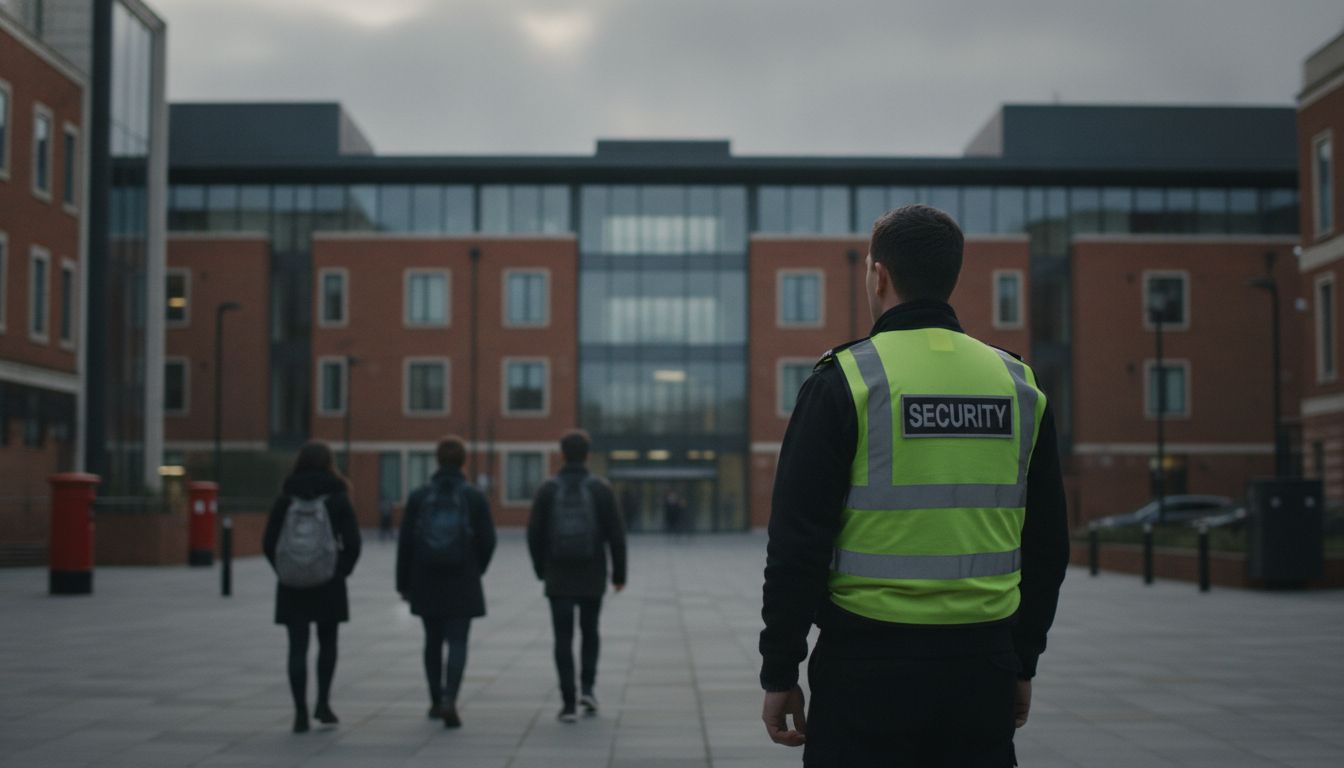


On 5 June, a crossbow attack at the University of Surrey’s Manor Park Student Village left a staff member injured and shook the campus community, according to BBC News. For SIA-licensed security professionals working in education, the incident is a sharp reminder that the threats walking onto campus don’t always look like the ones you trained for.
Knives, fists, the occasional bottle — those are the weapons most door supervisors and campus security officers expect. A crossbow is not on that list. And that is precisely the problem.
What We Know About the Surrey Incident
Surrey Police were called to the Manor Park Student Village on the morning of 5 June. A member of university staff was injured in the attack. A suspect was arrested at the scene, according to BBC News, and the university confirmed there was no wider threat to students or staff.
The university said it was offering support to those affected and working closely with the police. Lectures continued, but the campus was visibly shaken — and rightly so. A crossbow attack is rare in the UK, but it isn’t unheard of. In 2024, the Hertfordshire crossbow killings prompted a Home Office review of crossbow licensing, which is still ongoing.
Why Conventional Screening Misses Unconventional Weapons
Most campus security setups assume a fairly narrow threat profile. Lanyard checks at the library. Maybe a wand at student union events. CCTV in stairwells. That’s it.
A crossbow defeats almost all of it. It can be:
- Carried in a sports bag or guitar case without raising suspicion
- Partially dismantled and reassembled in under a minute
- Bought legally by anyone over 18 without a licence (a fact the Home Office is currently reviewing)
- Used silently — no muzzle flash, no bang, no immediate alarm
Metal detectors will pick one up, but campus accommodation blocks don’t have metal detectors. Nor should they — turning student villages into airports isn’t realistic. Which means the load falls on observation, behavioural awareness, and dynamic risk assessment.
What Dynamic Risk Assessment Actually Looks Like
Dynamic risk assessment is one of those phrases that gets thrown around in SIA training and then forgotten on the job. It shouldn’t be. The Surrey incident is exactly the kind of scenario where it matters.
In practice, dynamic risk assessment on a campus means three things:
1. Constantly Updating Your Threat Picture
You are not assessing the risk at the start of your shift and signing it off. You are reassessing every time something changes — a person, a noise, a vehicle, a mood. A student you’ve never seen, carrying a long case, walking away from the main accommodation entrance towards a quiet corner? That’s a data point. Log it mentally. Watch.
2. Trusting the Prickle
Experienced security staff will tell you that the best alerts come from instinct trained by hundreds of small observations. If something feels off, it usually is. The job is to act on that — by moving closer, by asking a question, by radioing a colleague — not to talk yourself out of it because the person “looked like a student”.
3. Knowing Your Escalation Route Cold
If a threat materialises, you have seconds. Who do you call? Where is the nearest hard cover? How do you get untrained staff and students out of the line of sight? In a campus environment, escalation almost always means buying time for police — not engaging.
Crossbows, Knives, and the Limits of Training
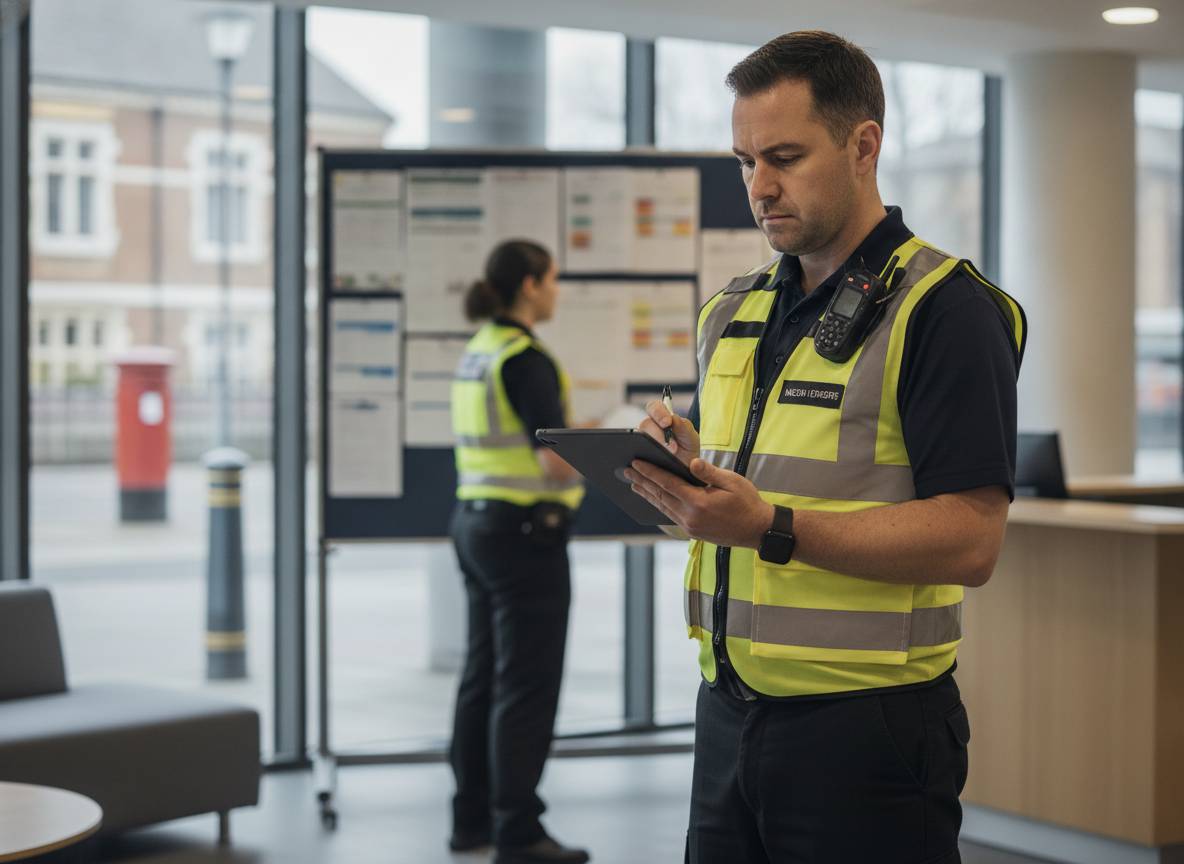
The SIA door supervisor training syllabus covers conflict management and physical intervention, but it does not turn anyone into a counter-terror operative. That is the right call. The role of campus security in an armed attack is to identify, alert, evacuate, and contain — not to confront.
The Surrey incident reportedly ended with a quick arrest, which suggests the response worked. But the lesson for security teams everywhere is not about the response. It is about the assumption gap — the gap between the threats we train for and the threats that actually walk through the door.
What Campus Security Teams Should Do This Week
If you manage or work in education security, three practical actions:
- Brief your team on unconventional weapons. Crossbows, machetes, vehicle ramming, acid attacks. Not to frighten — to broaden the mental library.
- Review your lone-worker procedures. The Surrey victim was a staff member, not a student. Staff in accommodation blocks, security gates, and after-hours offices are often working alone.
- Run a tabletop exercise. Walk through what happens in the first 90 seconds of an armed attack at your site. Who calls 999? Who locks the doors? Who tells the rest of the building?
None of this is glamorous. None of it makes headlines. But it is the work that keeps incidents like Surrey from becoming worse than they already are.
The Bigger Conversation
The Home Office is still reviewing crossbow licensing after the 2024 Hertfordshire killings. Whatever comes of that review, the underlying truth for security staff doesn’t change: legal availability of a weapon is not the only factor. Awareness, training, and a willingness to act on instinct are the things that close the gap.
A solid door supervisor training course teaches the foundations. The job teaches the rest. The Surrey incident is a hard reminder to keep learning — because the next threat probably won’t look like the last one.