

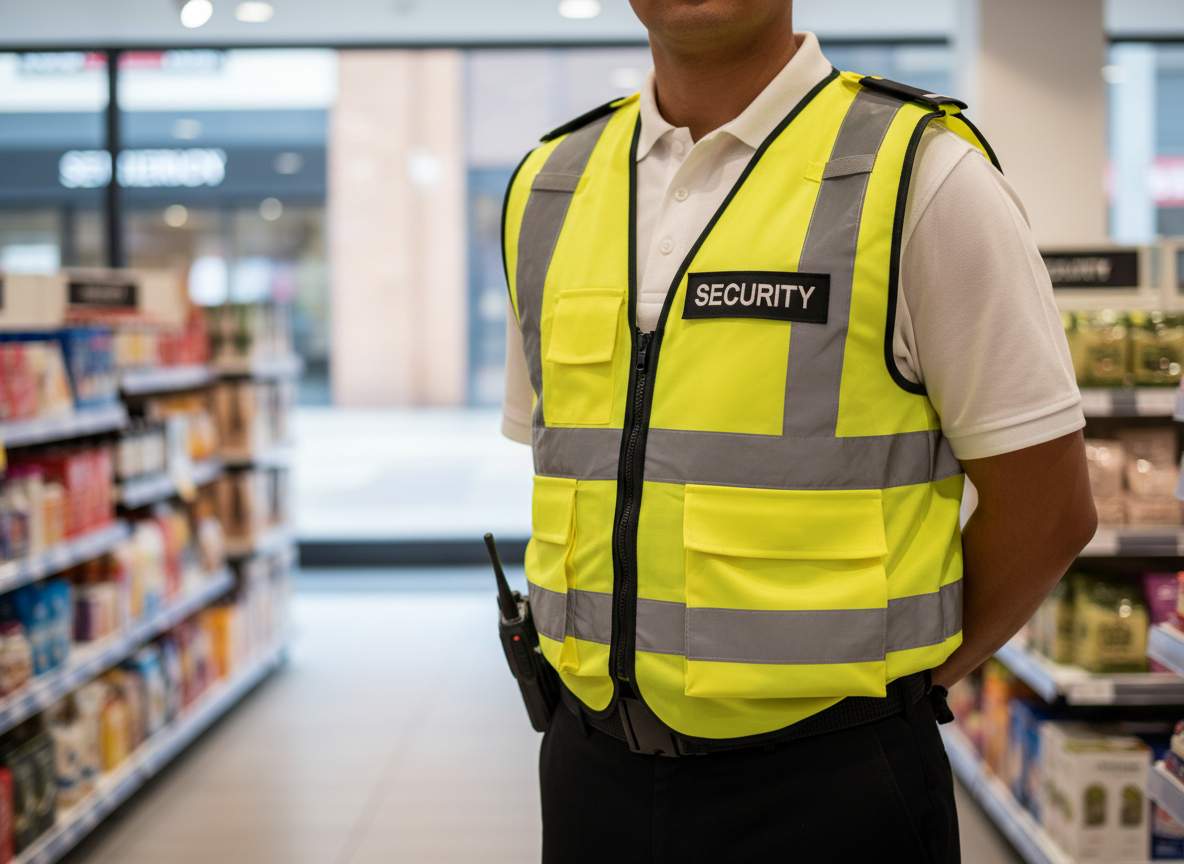


On 16 June 2026, Hove Crown Court jailed a man for four years after he threatened a Tesco Metro security guard at knifepoint during a robbery. The case is worth reading carefully — not because of the sentence, but because of what the security guard did in the seconds before police arrived.
Daniel Bowler, 38, had loaded a basket with alcohol and attempted to leave without paying. As the security guard moved to intercept him near the exit, Bowler pulled a large kitchen knife from his trousers and said: “Move the fuck out of the way or you’ll get poked.” Then: “Let me take it. Don’t be stupid. I don’t want to use it.”
The guard did not freeze. He grabbed Bowler’s wrists, pushed him out of the shop, recovered as many items as he could, and locked the doors to protect staff and customers inside. Sussex Police publicly praised his quick thinking. The body-worn video footage he captured was central to the prosecution.
Bowler was convicted of robbery and possession of a bladed article. He was jailed for four years.
Why This Case Matters for Every SIA Licence Holder
This is not a story about heroics. It is a story about a trained security officer making fast, proportionate decisions under genuine threat — and the outcome holding up in court. That is the standard every SIA licence holder is held to, and it is worth unpacking what the guard got right.
He Controlled the Space Before the Knife Appeared
The guard had already identified Bowler as suspicious and positioned himself between Bowler and the exit before the knife came out. That positioning — placing himself between the threat and the door rather than confronting Bowler in the middle of the shop floor — gave him options. He had a route to push Bowler out rather than deeper into the premises. He had the door behind him. He was not cornered.
Spatial awareness before an incident develops is one of the fundamentals of SIA door supervisor training, and it is the reason this situation did not end worse. By the time the knife appeared, the guard was already in the right position to act.
He Used Proportionate Force and Stopped
Grabbing Bowler’s wrists and pushing him out of the shop is, legally, reasonable force used to prevent a crime and protect others on the premises. It was brief, targeted, and stopped the moment Bowler was outside and the doors could be locked. The guard did not chase him. He did not continue the physical confrontation once the immediate threat was removed.
Under Section 3 of the Criminal Law Act 1967, you can use reasonable force to prevent crime or protect others. “Reasonable” is judged on what you genuinely believed at the time, in the circumstances you faced. A man with a knife threatening you at close range, in a confined space, with staff and customers behind you, is exactly the kind of situation that justifies a physical response. The guard’s actions were proportionate to that threat, and the court’s treatment of the case reflects that.
What the guard did not do is equally important. He did not escalate. He did not attempt a restraint. He did not pursue. He created safety and then stopped. The Dublin shoplifting restraint case from May 2026 is a sharp reminder of what happens when that line is crossed — even when the intention was never to cause serious harm.
Recommended Read: UK’s Top Knife Crime Hubspots
He Locked the Doors and Called the Police
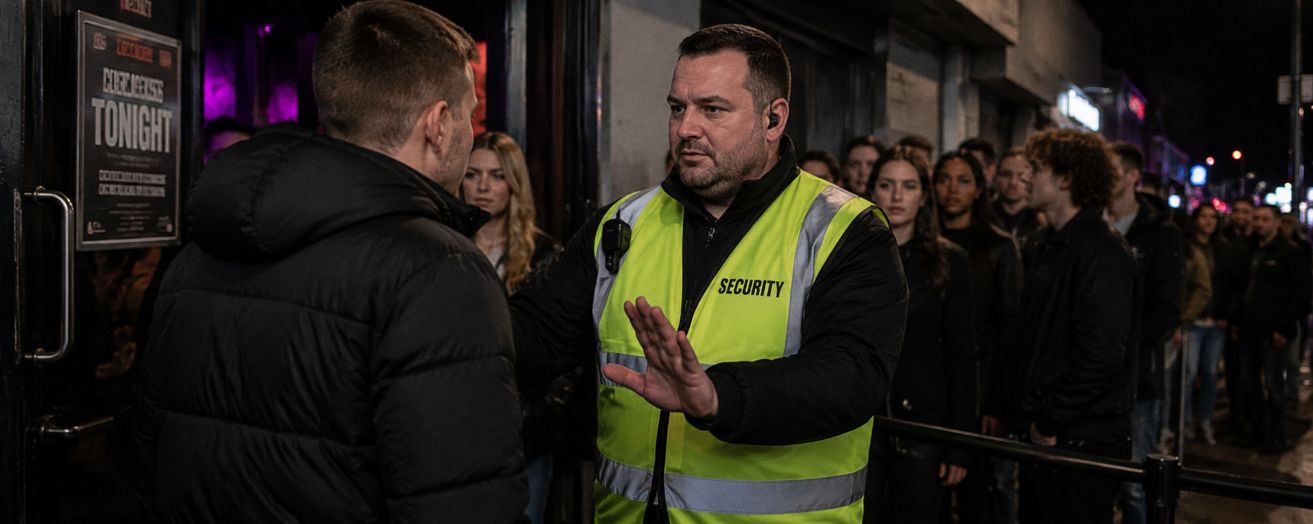
Once Bowler was outside, the guard locked the shop. That single action — securing the premises — protected everyone inside from a man who was still armed and still in the vicinity. It is the lockdown principle applied in real time: when the threat is outside, your job is to keep it outside.
The store manager then called police, who arrived within five minutes. The guard’s body-worn video gave officers a clear record of the incident, identified Bowler, and formed the backbone of the prosecution. Sussex Police confirmed that officers recognised Bowler from the footage.
If you are working retail security without a body-worn camera, this case is a strong argument for raising it with your employer. Body-worn camera training is now considered a core part of the professional security toolkit — footage does not just protect the public, it protects you.
What Happens When You Get It Wrong
Bowler had 42 previous convictions for 120 offences. He was eight days out of a suspended sentence when this happened. He was jailed for four years.
The guard’s clean, documented response meant there was no ambiguity about who did what. There was no question about excessive force. There was no internal review of the guard’s conduct. The footage showed a professional doing his job correctly under pressure, and the court treated it accordingly.
If the guard had chased Bowler, continued the physical contact after the immediate threat was neutralised, or failed to document the incident properly, the legal picture could have looked very different — even with a knife-wielding offender on the other side of it. The law does not give you a blank cheque because the other person was in the wrong. It asks whether your response was reasonable. This one was.
For a full breakdown of where the legal lines sit, check out our guide on what security guards can and cannot do.
The Three Things to Take from This
The Brighton case is a clean example of SIA training working exactly as intended. The guard identified the threat early, used proportionate force to neutralise it, secured the premises, and created a solid evidence trail. Three things stand out as directly applicable to your own practice.
First, your positioning before an incident matters as much as your response during one. Get into the habit of thinking about where you are standing relative to exits, customers, and potential flashpoints before anything happens. This is covered in depth in the new reality of UK door supervision — the threat environment has changed, and so has what good positioning looks like.
Second, body-worn cameras are not optional extras in retail security. They are evidence. If your employer has not issued one, ask why. If you are self-employed or working through an agency, raise it before you accept the deployment.
Third, knowing when to stop is as important as knowing when to act. The guard’s restraint after pushing Bowler out of the shop is what kept this a clean prosecution rather than a complicated one. Proportionate means proportionate — not maximum.
For more on writing incident logs that hold up under scrutiny, our guide on writing professional security reports is worth bookmarking. If you are thinking about moving into retail security specifically, the frontline officer’s career checklist covers what the role actually involves day to day.
If you are not yet licensed and this is the kind of work you want to be doing, your SIA Door Supervisor training is where the decision-making framework that kept this guard on the right side of the law gets built. Book your course today.