Judging by some people’s attitudes towards Door Supervisors – continuing to call them “bouncers” and crediting them with being 95% brawn and 5% brain being two examples of how people act in this regard – it would be easy to get the impression that people working in that role were just as stupid and brutal as the suggestion has it. The history of front-line security personnel is filled with scare stories, many of which are completely made up and which portray the “bouncer” as being a thug who is getting paid to do what he’d be doing anyway on a weekend – hitting people. Anyone who has any experience of the Industry these days, however, knows this not to be the case now – whatever the truth is about the past.
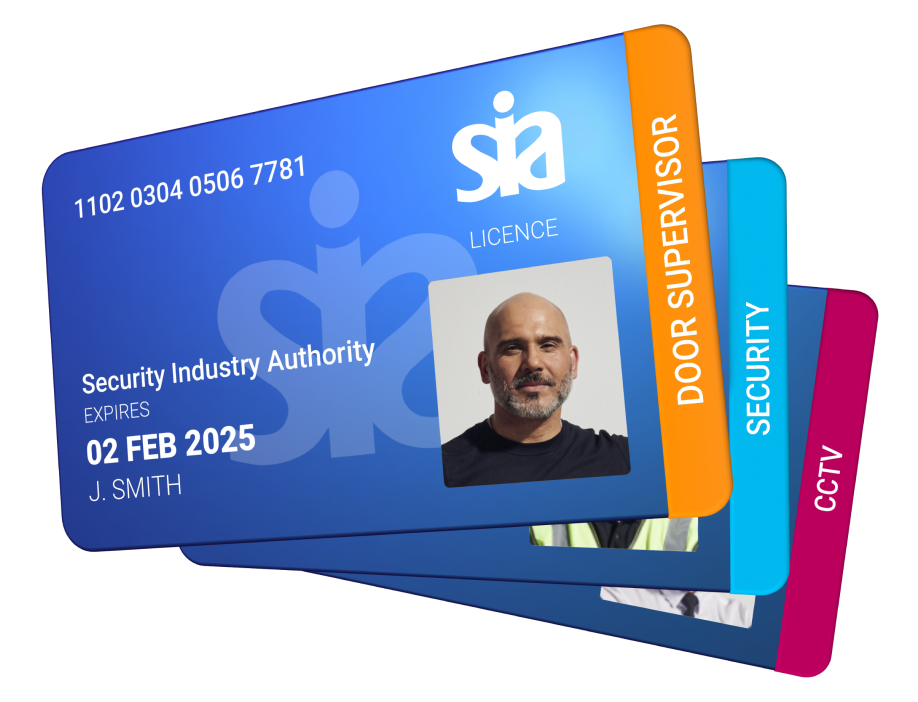
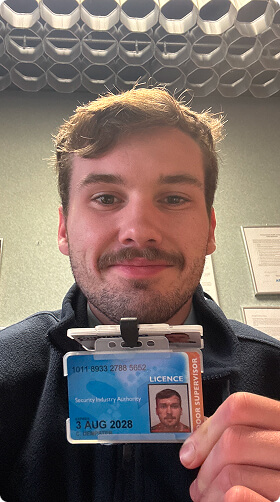
SIA training for a Door Supervisor makes clear just how off-target the old stories are in relation to the qualified professionals who work in the pubs and clubs of our fine capital city. There are no modules on how to throw a punch and nothing about hitting someone where the bruise won’t be visible. Security is a serious business, and people who work in it and wish to continue doing so realise that they need to follow the rules. Rule number one for a Door Supervisor is simple – get licensed. Working without the necessary licence for a Security professional is a criminal offence, and could see you landed behind bars – or severely out of pocket at the very least. An SIA training course lasting just four days, a couple of exams and a positive result are all you need to avoid that happening to you.
Training as a door supervisor is generally your best option if you wish to work within the leisure or retail areas of the security industry. The SIA training course for Dor Supervisors results in an Integrated Licence that qualifies you to work as a Security Guard as well. The course covers more ground, of a more varied nature than that for Security Guard accreditation, but takes the same 30-hour period. It is therefore arguable that the course is considerably tougher, but as a consequence the reward – a stronger Integrated Licence – will be of greater benefit to you in terms of employability. The only higher level of accreditation is Close Protection (or Bodyguarding), but that course takes 150 classroom hours and requires you to sit an independent First Aid qualification – a commitment which demands total certainty and a lot of free time.
A Door Supervisor’s responsibility is to safeguard the security of staff and customers on licensed premises. They have the right to refuse admission to anyone who they deem to be unsuitable, whether this be because they are underage, incorrectly dressed or, in the Supervisor’s view, a potential troublemaker. Should they have reason to suspect that a potential customer is carrying a weapon, drugs or drug paraphernalia, they are entitled to search them prior to admission. After the doors close to prevent anyone else coming in, the door supervisor’s role changes and they patrol the venue watching out for any anti-social behaviour, preventing violence and dealing with anything untoward, including the ejection of anyone who is behaving in a manner likely to cause harm to other customers.
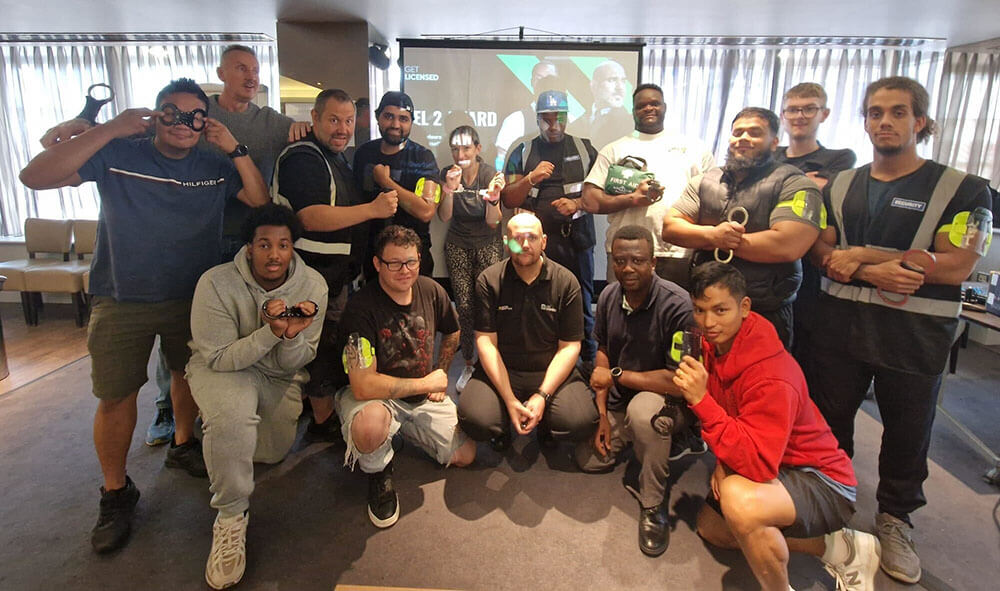
SIA Training courses in London take place at two different venues, one in Central London and the other in the East End of the city. The Central location is at the University of Westminster campus in Marylebone Road, while the East London courses take place in Leyton, at the Borough’s Conservative Club. These courses run for four days with a total of 30 classroom hours. Twenty eight of these hours are spent learning from the syllabus, and two on exams. The syllabus is split into two units. Unit 1 deals with the role and responsibilities of a Door Supervisor, covering such matters as standards of behaviour, drug policy, civil and criminal law, licensing law, searching customers and premises and powers of arrest, as well as how to liase with the emergency services. There are other compulsory elements to this unit of the SIA training course, including issues of Equal Opportunities and Health and Safety.
The second unit of the course is concerned with Communication Skills and Conflict Management. This section of the course entails the parts of the job that Door Supervisors are commonly known for, such as breaking up and preventing fights or removing people from the venue if they break any laws or rules of behaviour. In this part of the course, the regulations concerning reasonable, legitimate force are covered and the Door Supervisor gains competency in the best practice for resolving conflicts.
On completion of this course, and passing the exam at the end, the candidate gains their licence to work as a Door Supervisor – a role that is paid between £7 and £12 per hour, depending on numerous factors.